PitchSTAR💫: Self-Supervised Pitch Style Transfer with Complementary Temporal and Time-Agnostic Style Representations
About
This is the accompanying page for the paper “PitchSTAR: Self-Supervised Pitch Style Transfer with Complementary Temporal and Time-Agnostic Style Representations”, submitted to ICASSP 2027 and currently under review. PitchSTAR is a method for arbitrary pitch style transfer (PST). The PST task is defined as: generating a new pitch curve given a reference ornamented pitch (style) and a source pitch containing the desired notes (content), as shown in the Figure 1.

PitchSTAR is based on a self-supervised flow-matching framework sculpted for the PST task. It models a full context style reference through note-relative pitch modulation, from which style representations are obtained through temporal and time-agnostic branches. The first is designed to capture phrase-level organization (ornament placement, ordering, etc), and the latter to capture local details (ornament slope, frequency, etc). Both enable complementary representations for style while bottlenecking trivial copying in the self-supervised training setting. The method is shown below on Figure 2.

Audio Samples
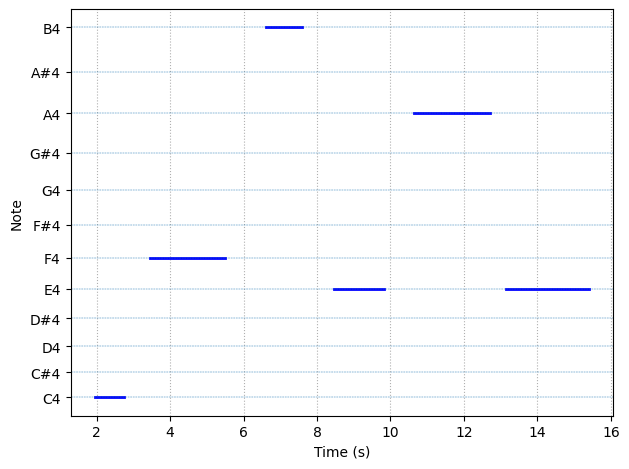
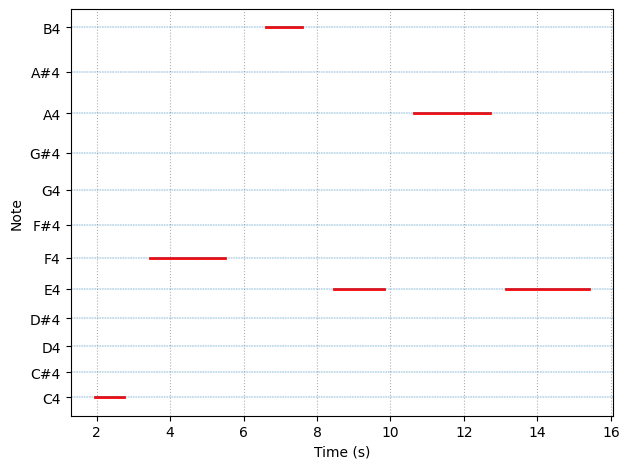
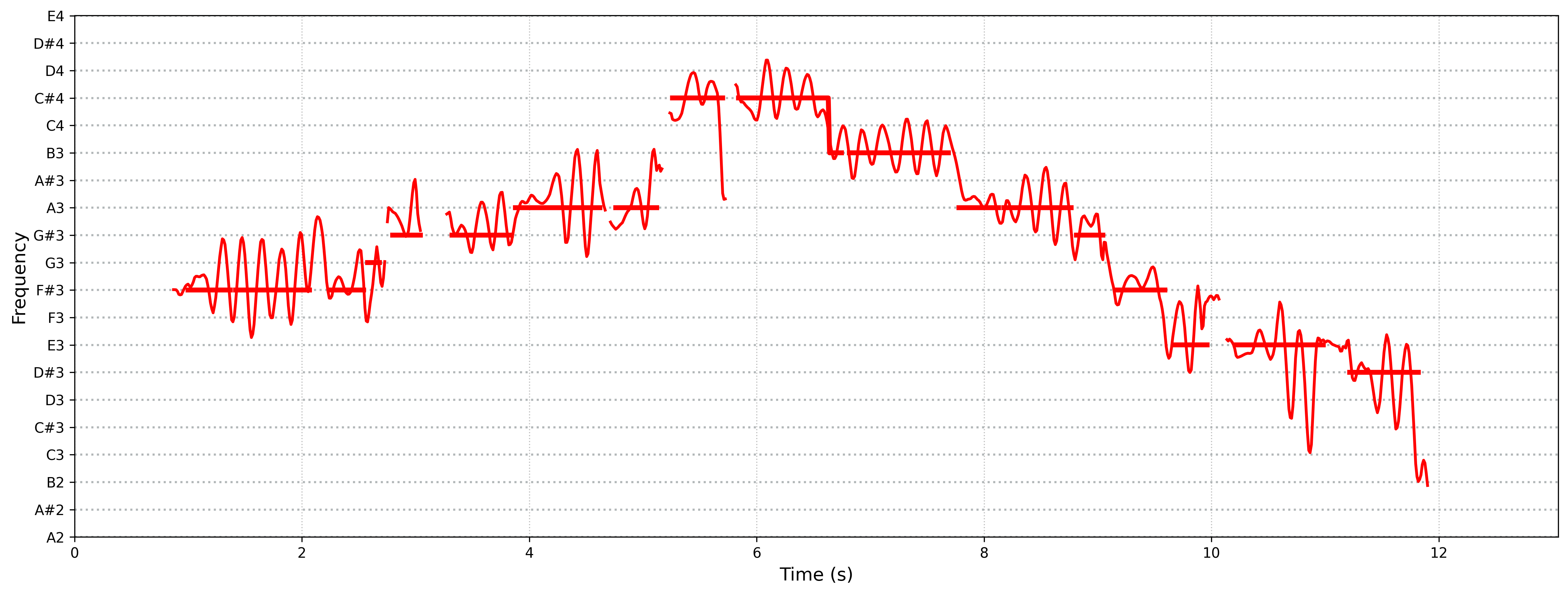
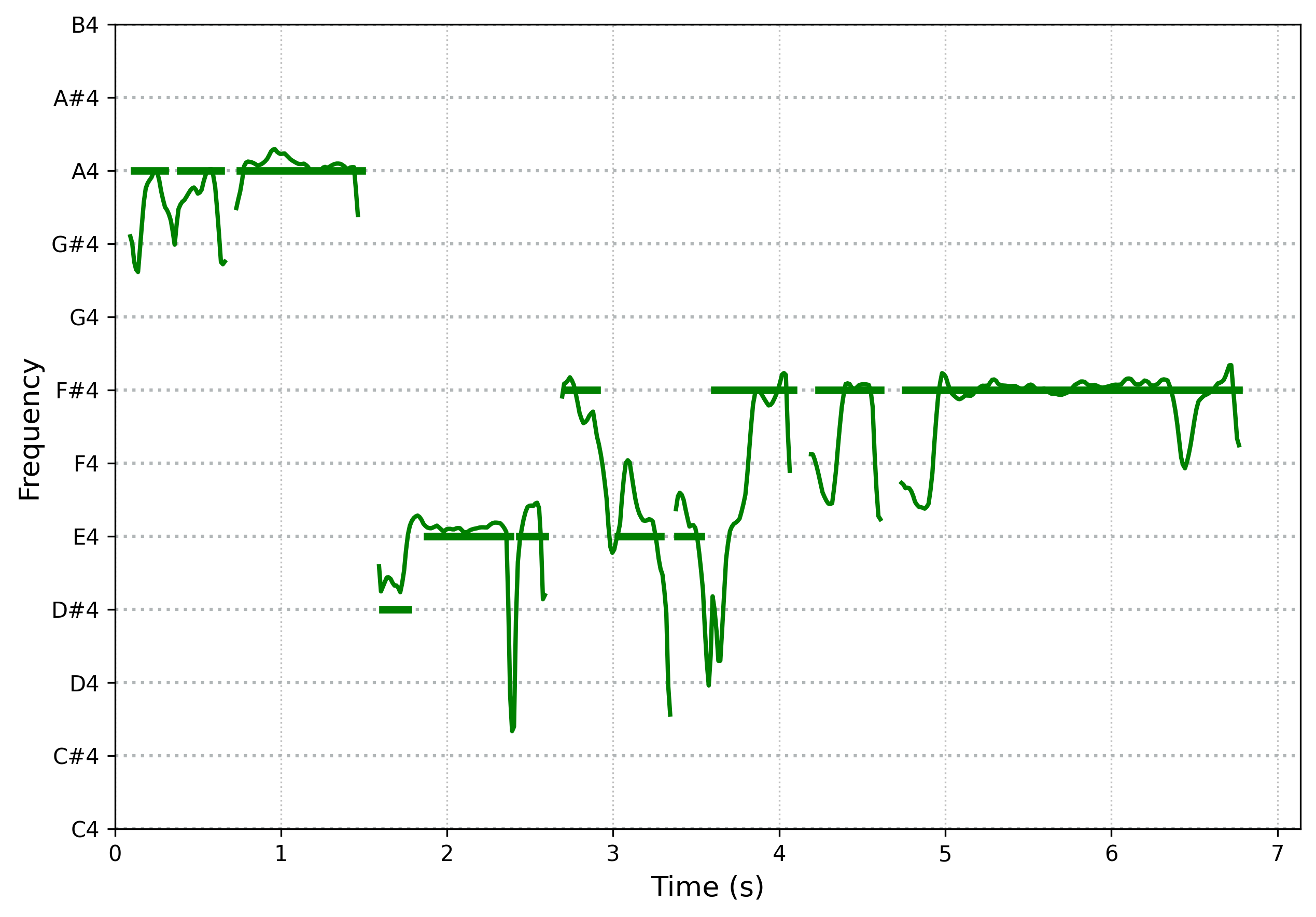
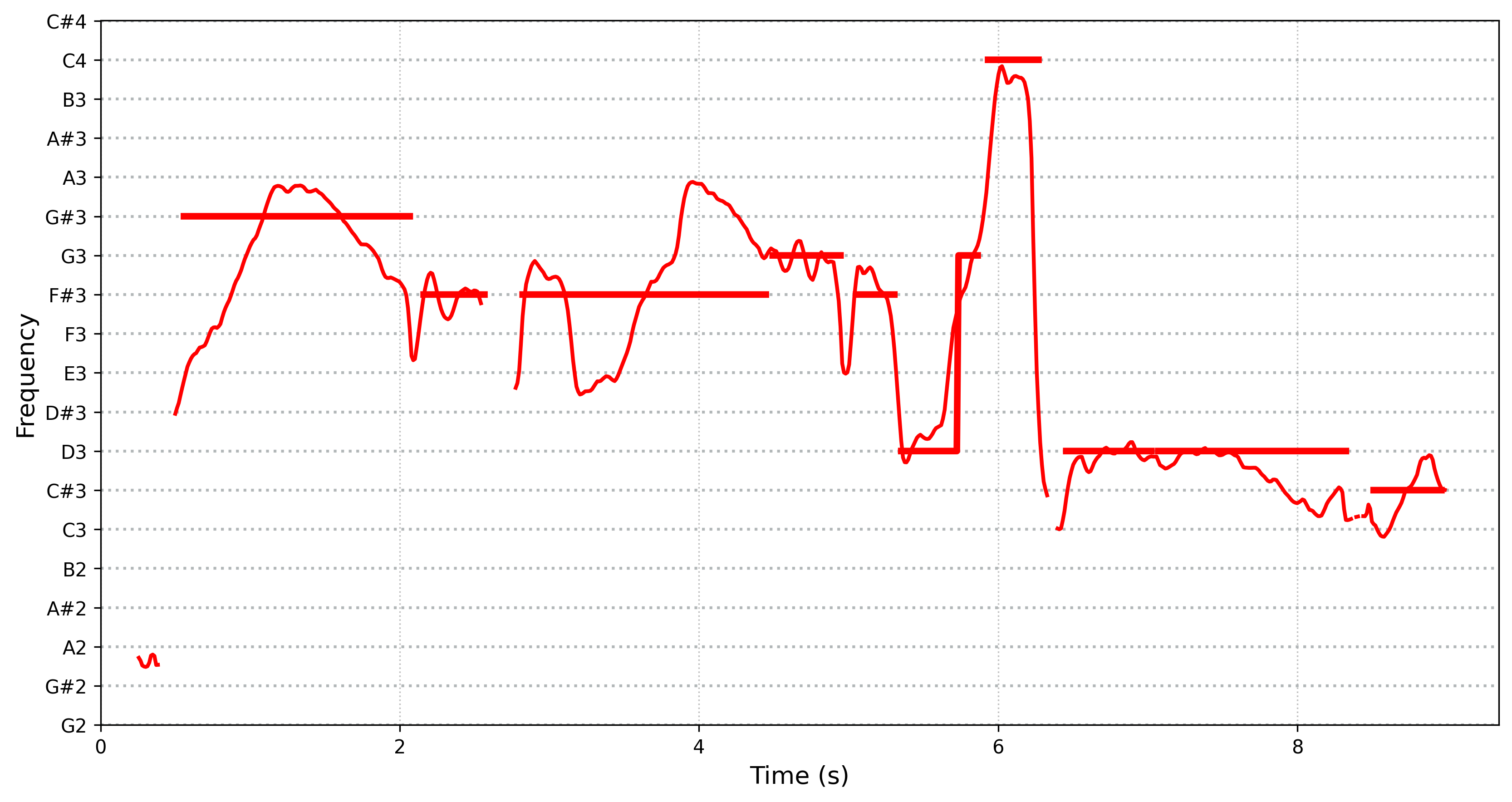
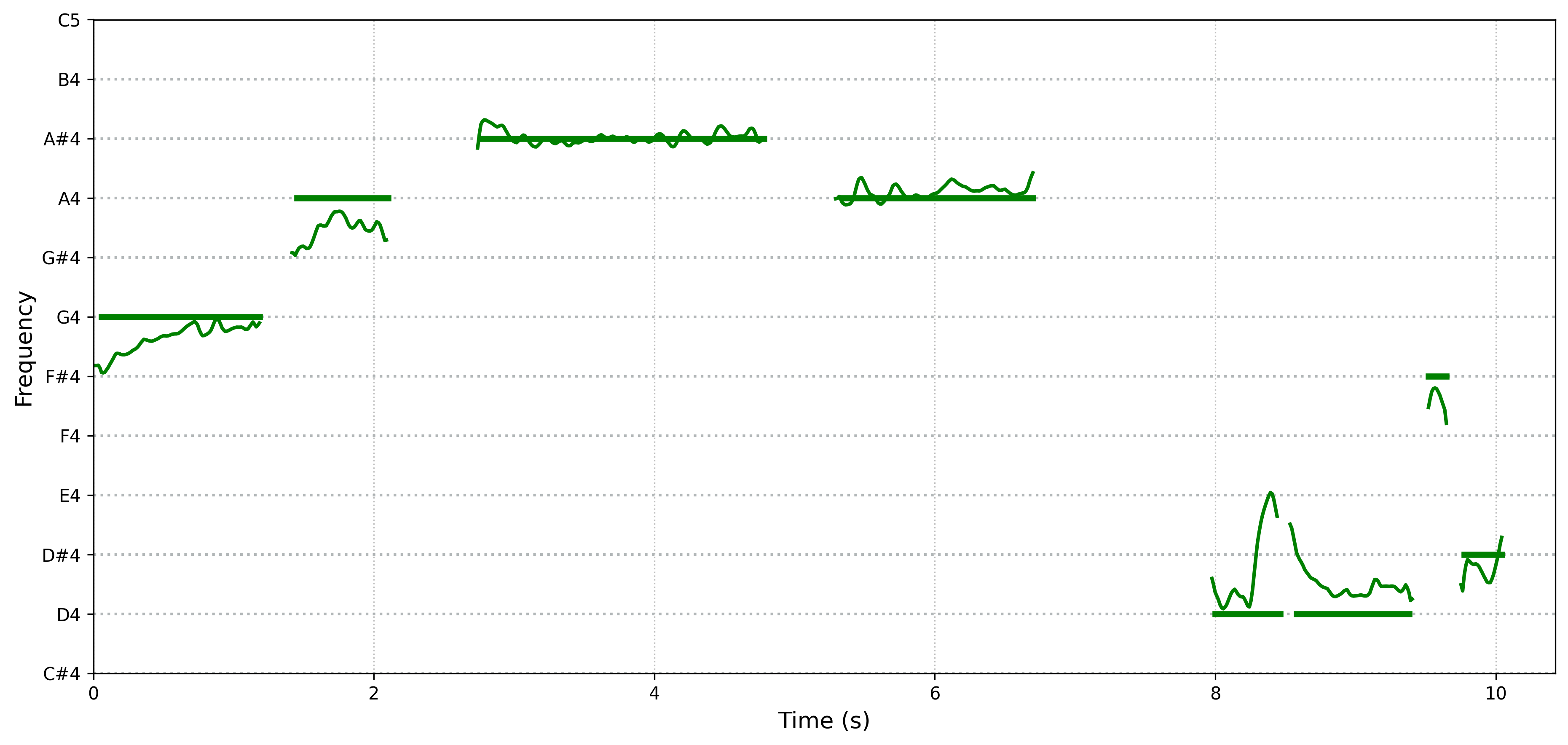
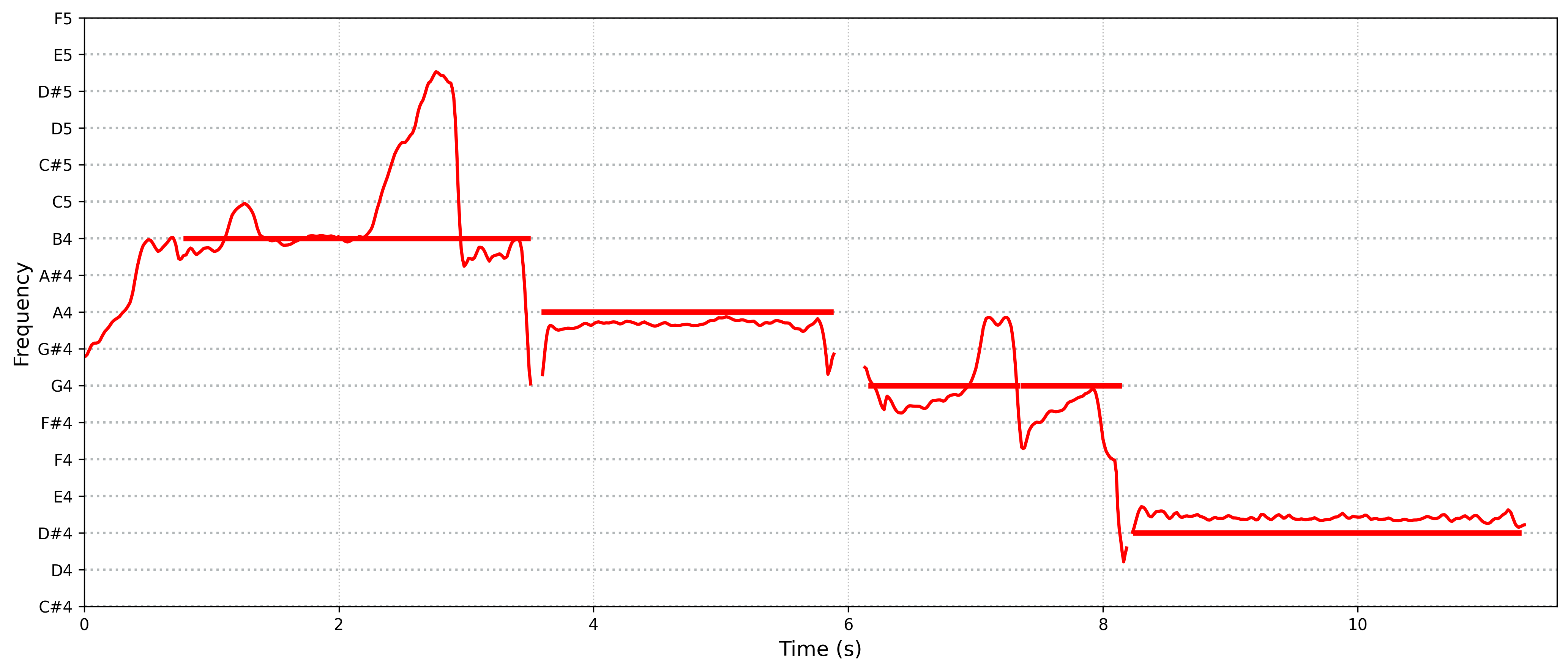
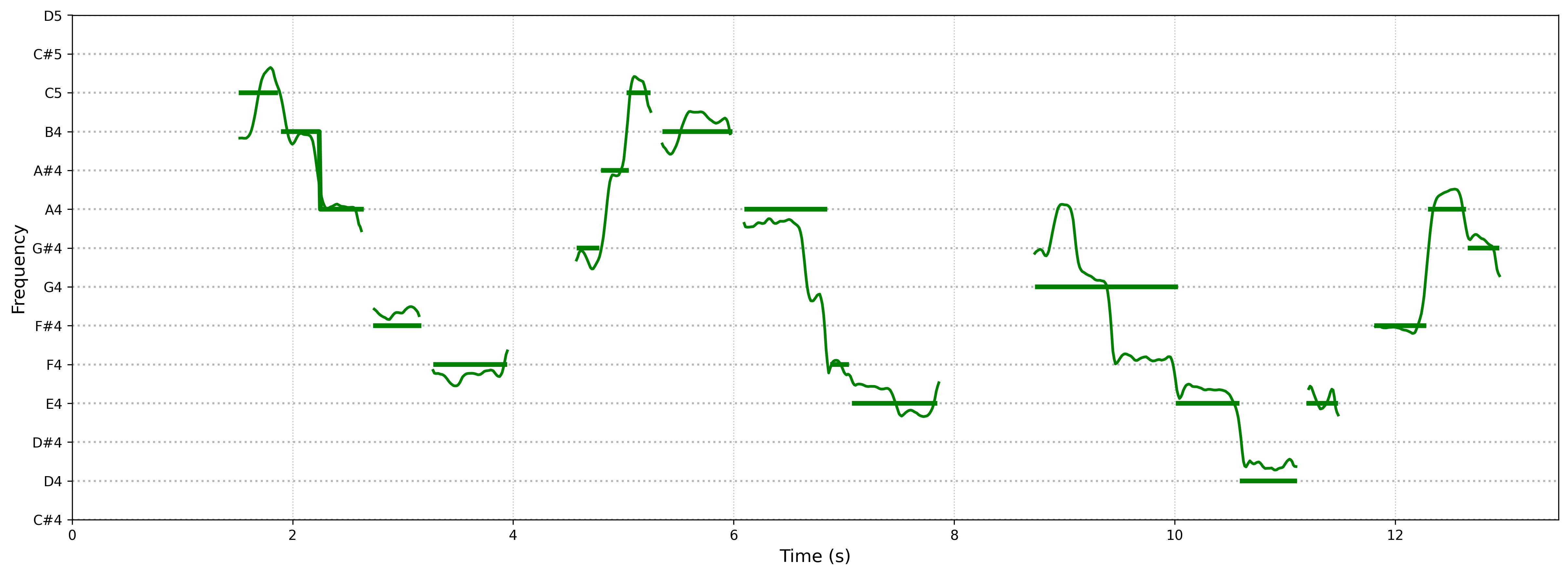
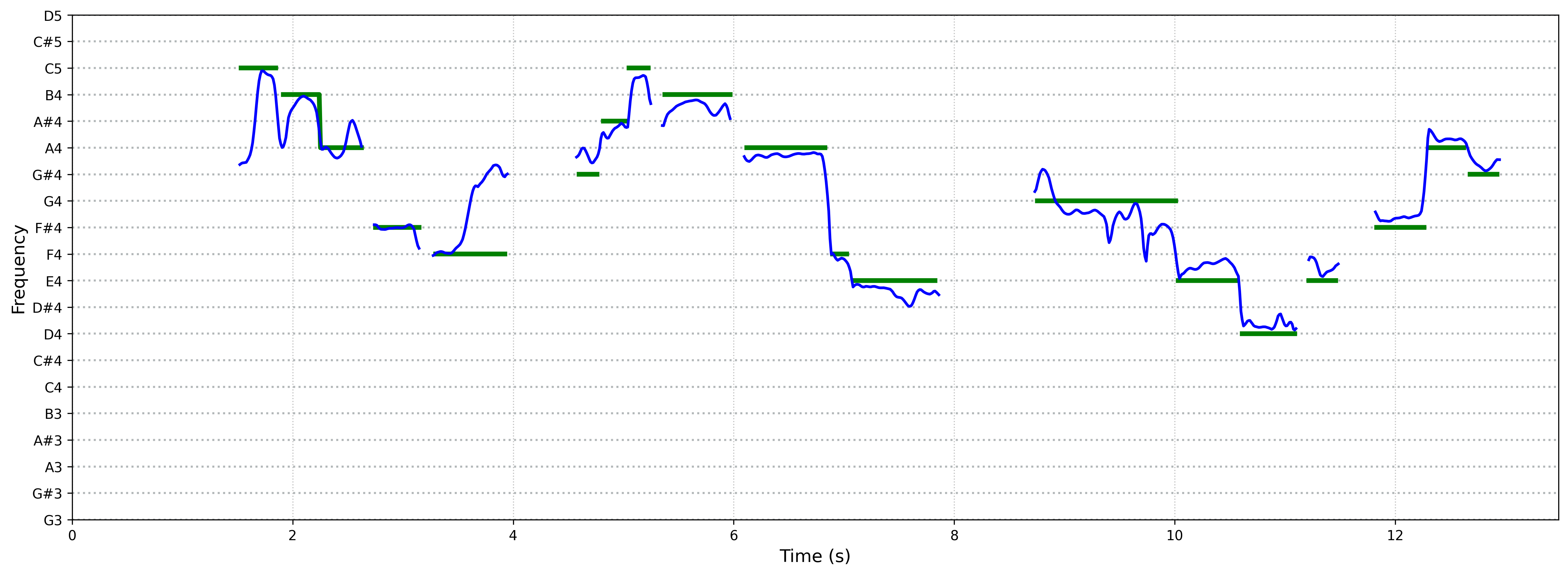
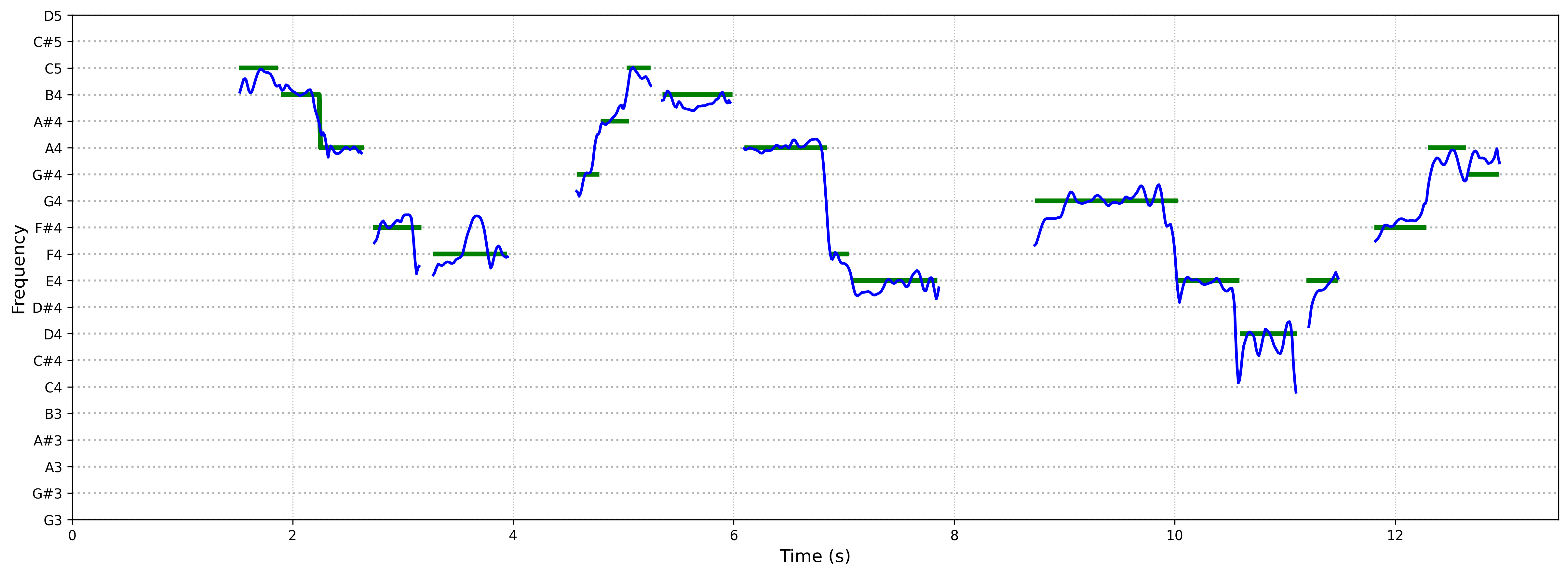
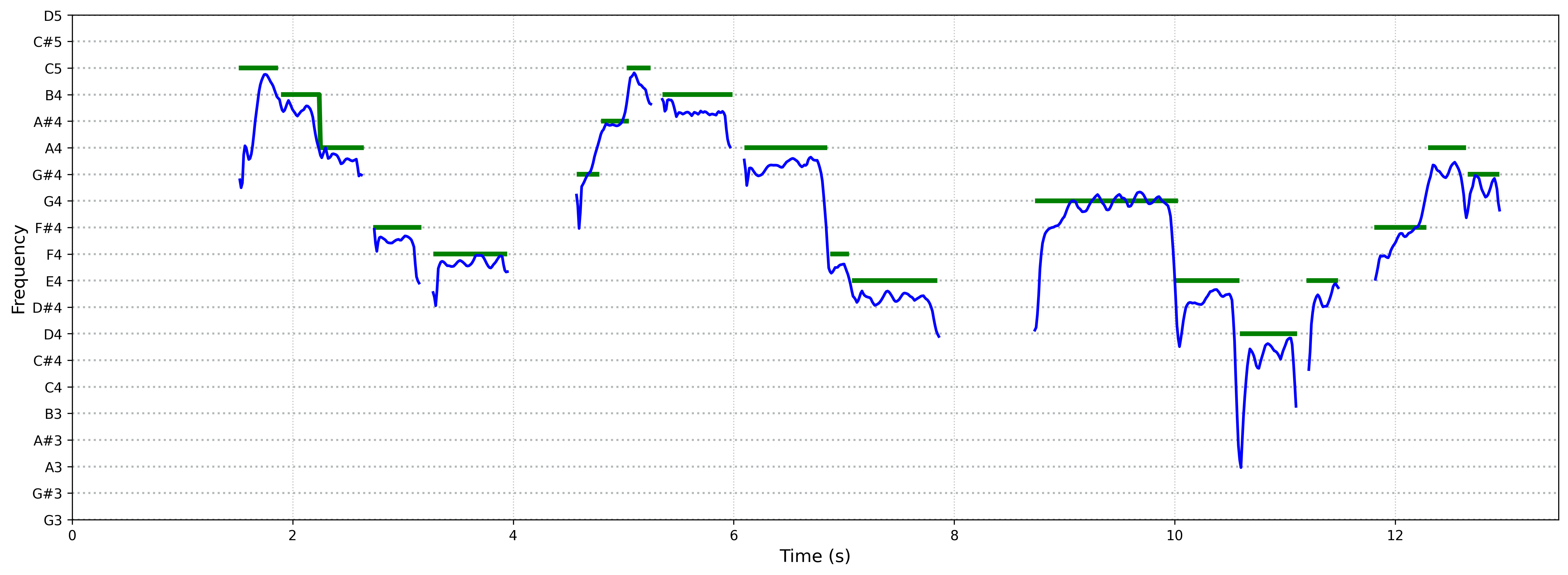
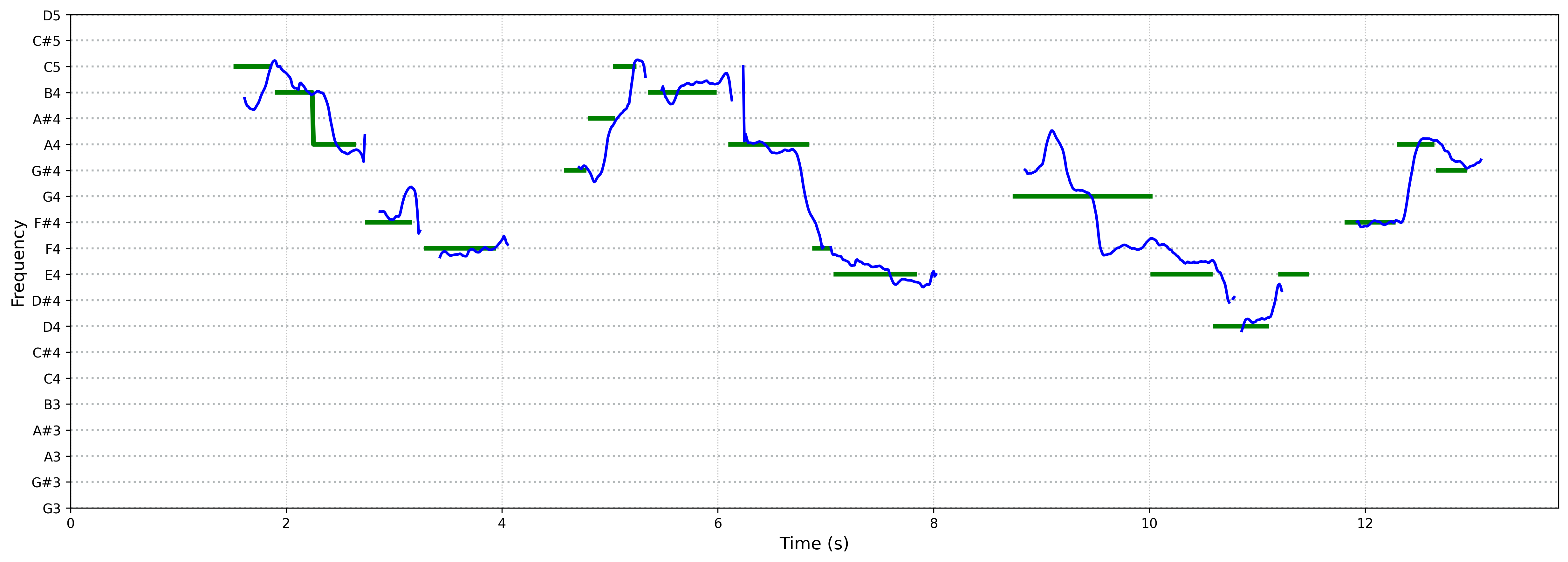
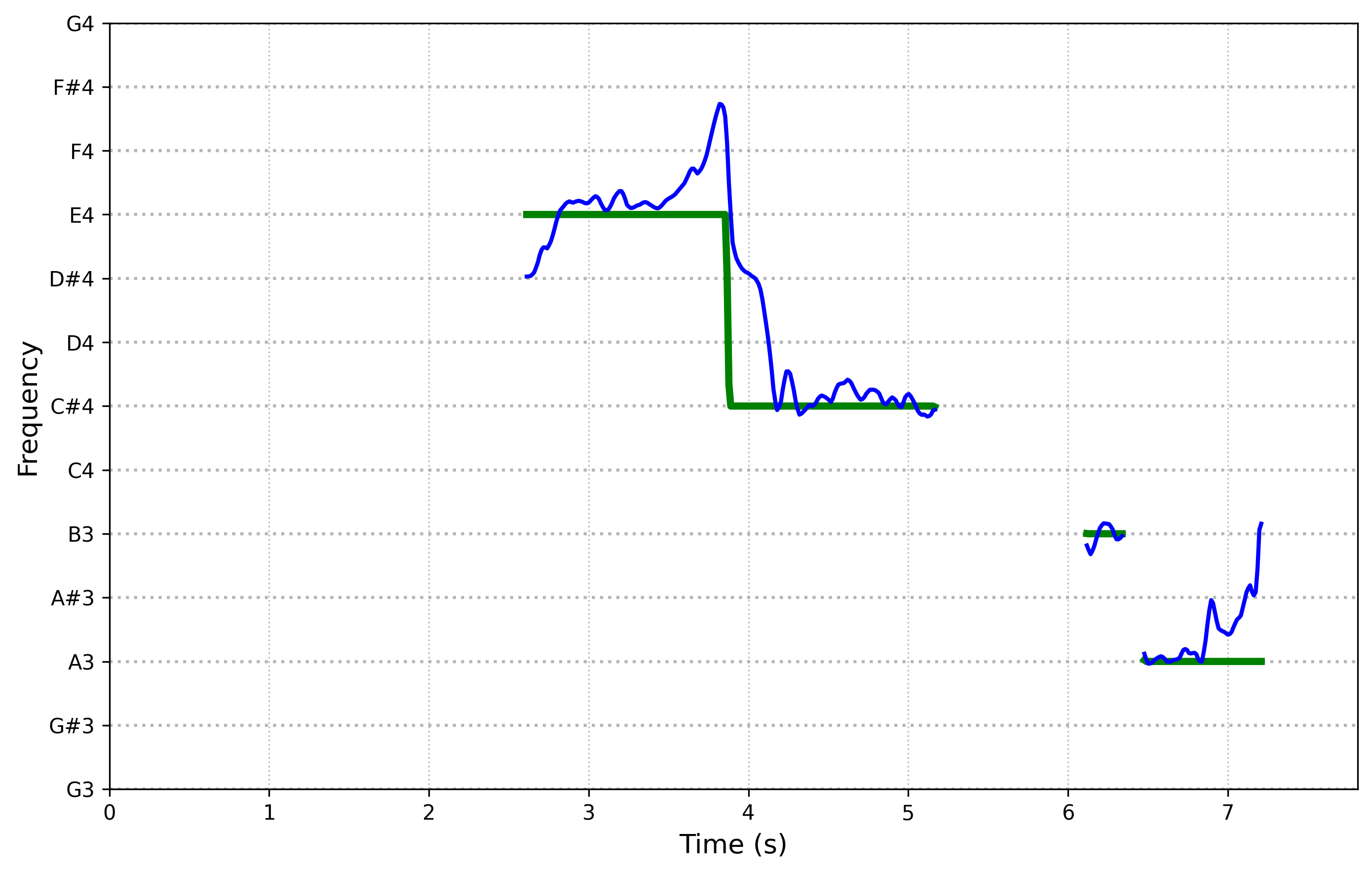
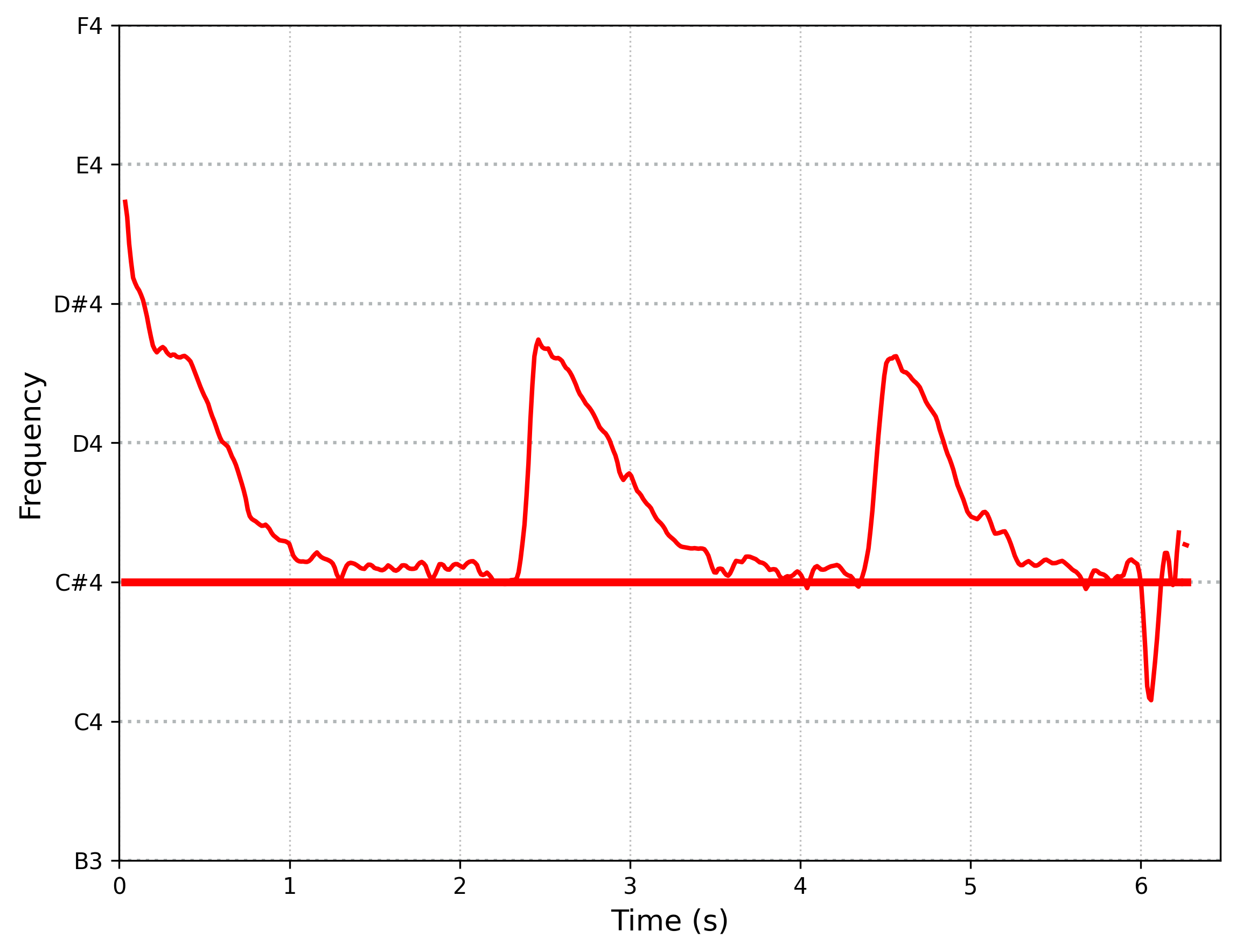
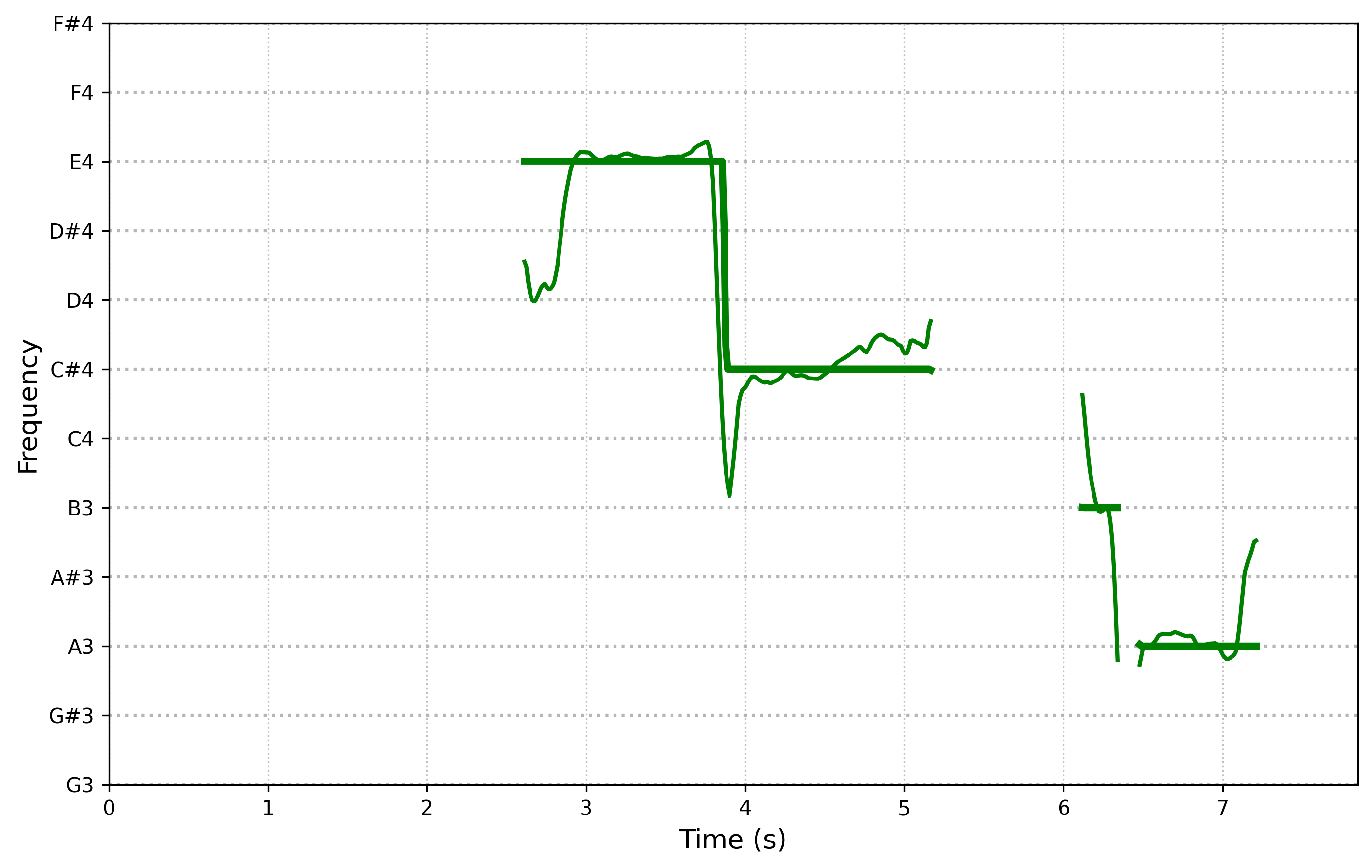
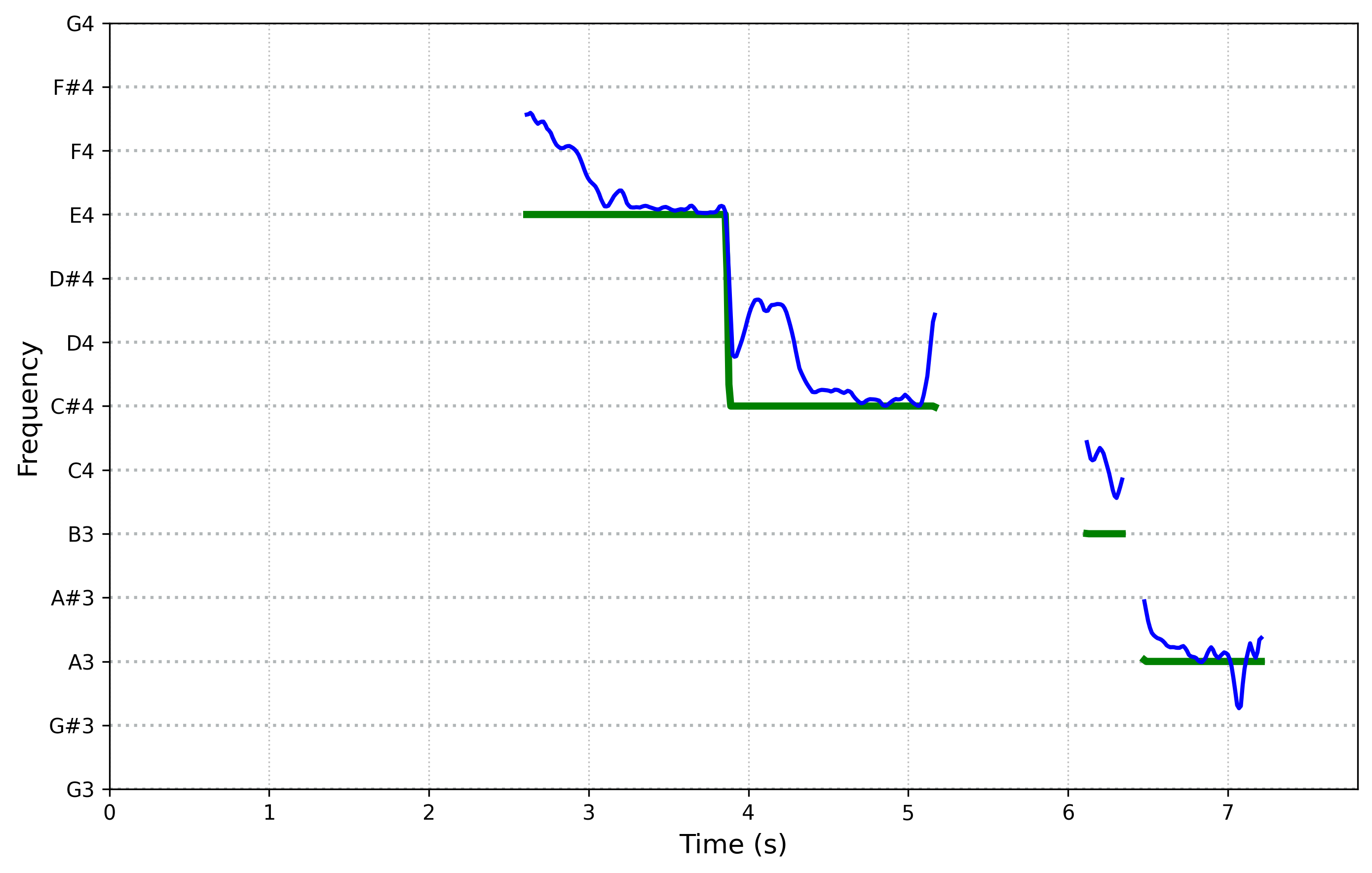
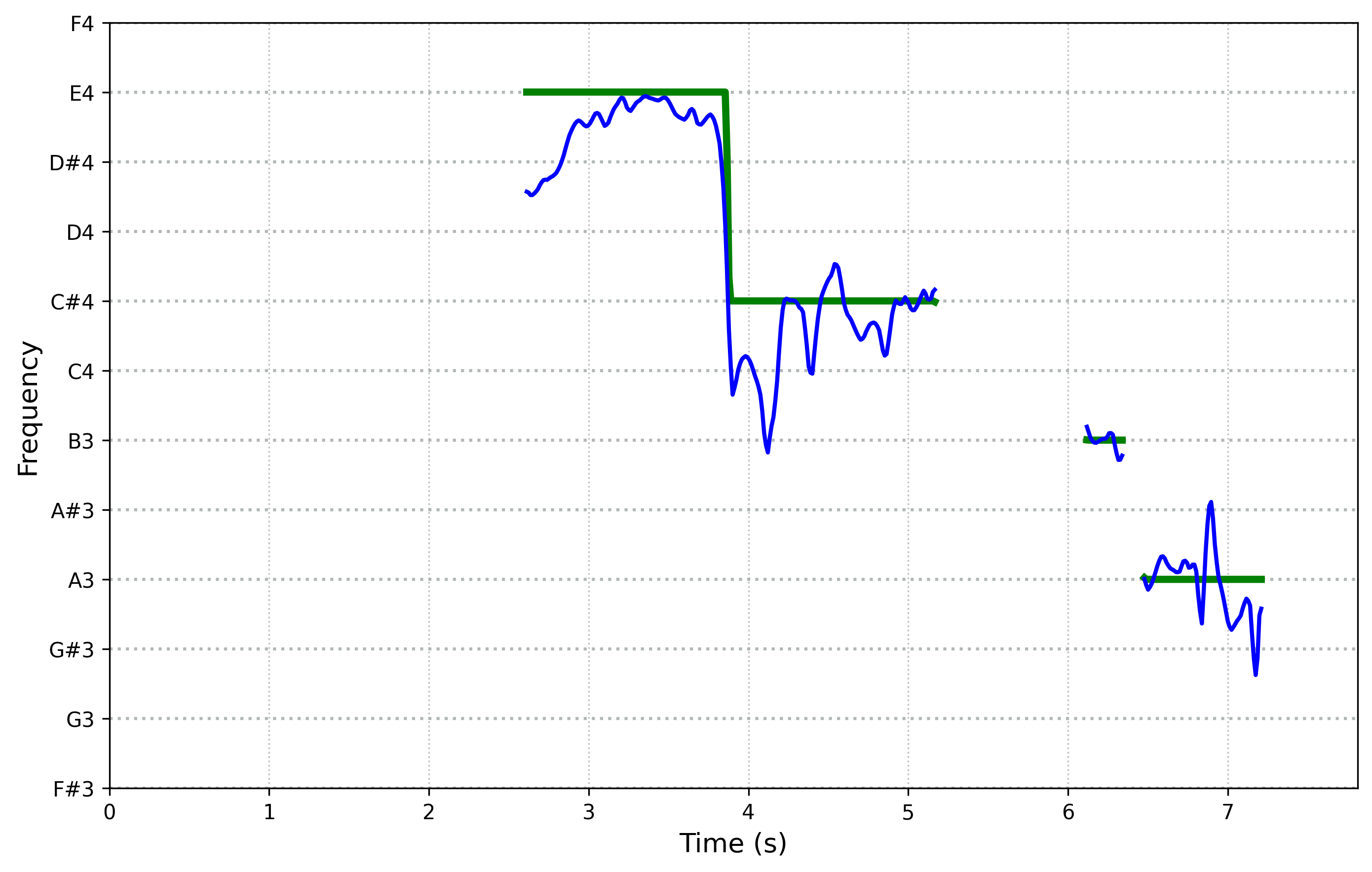
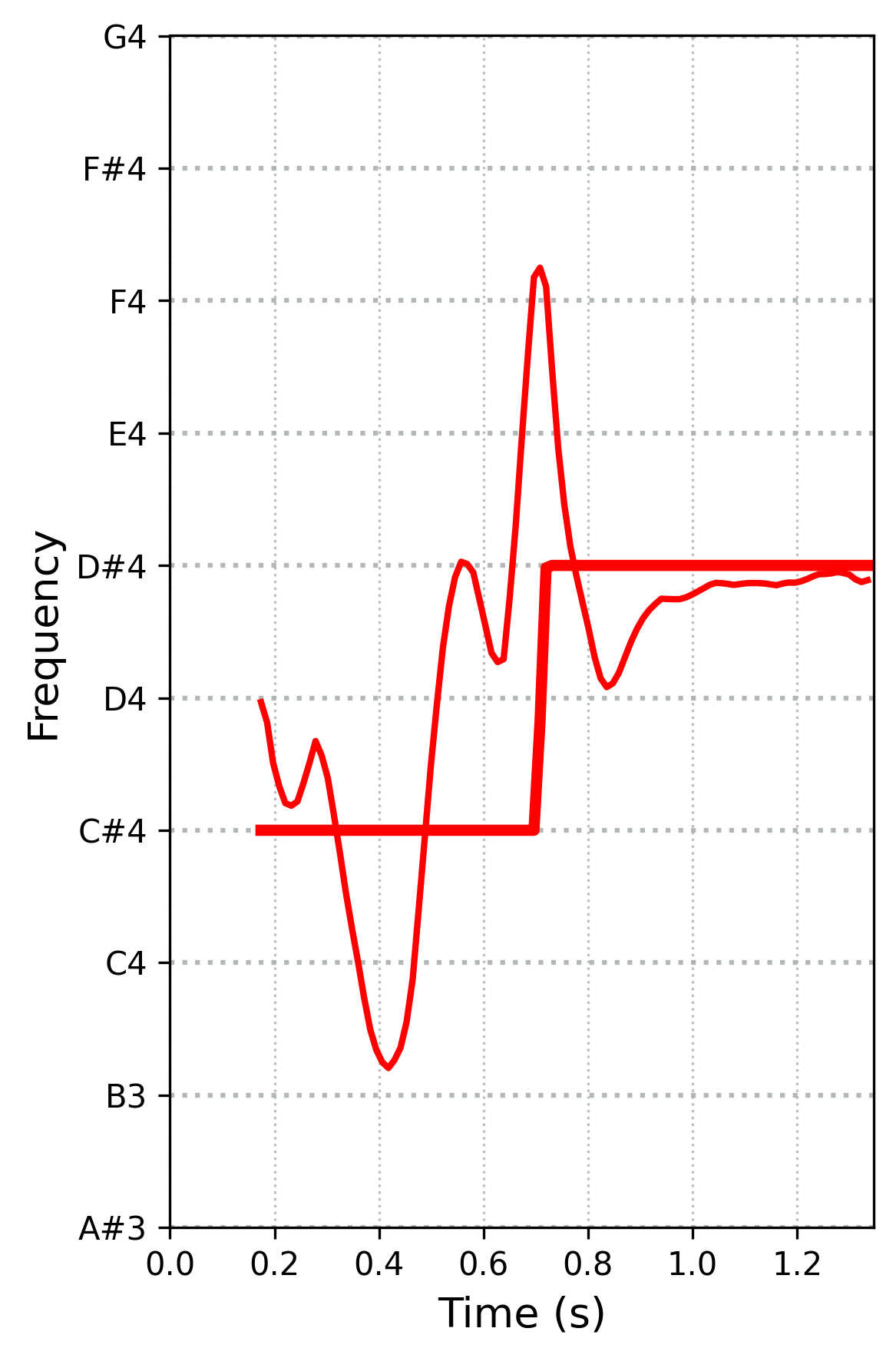
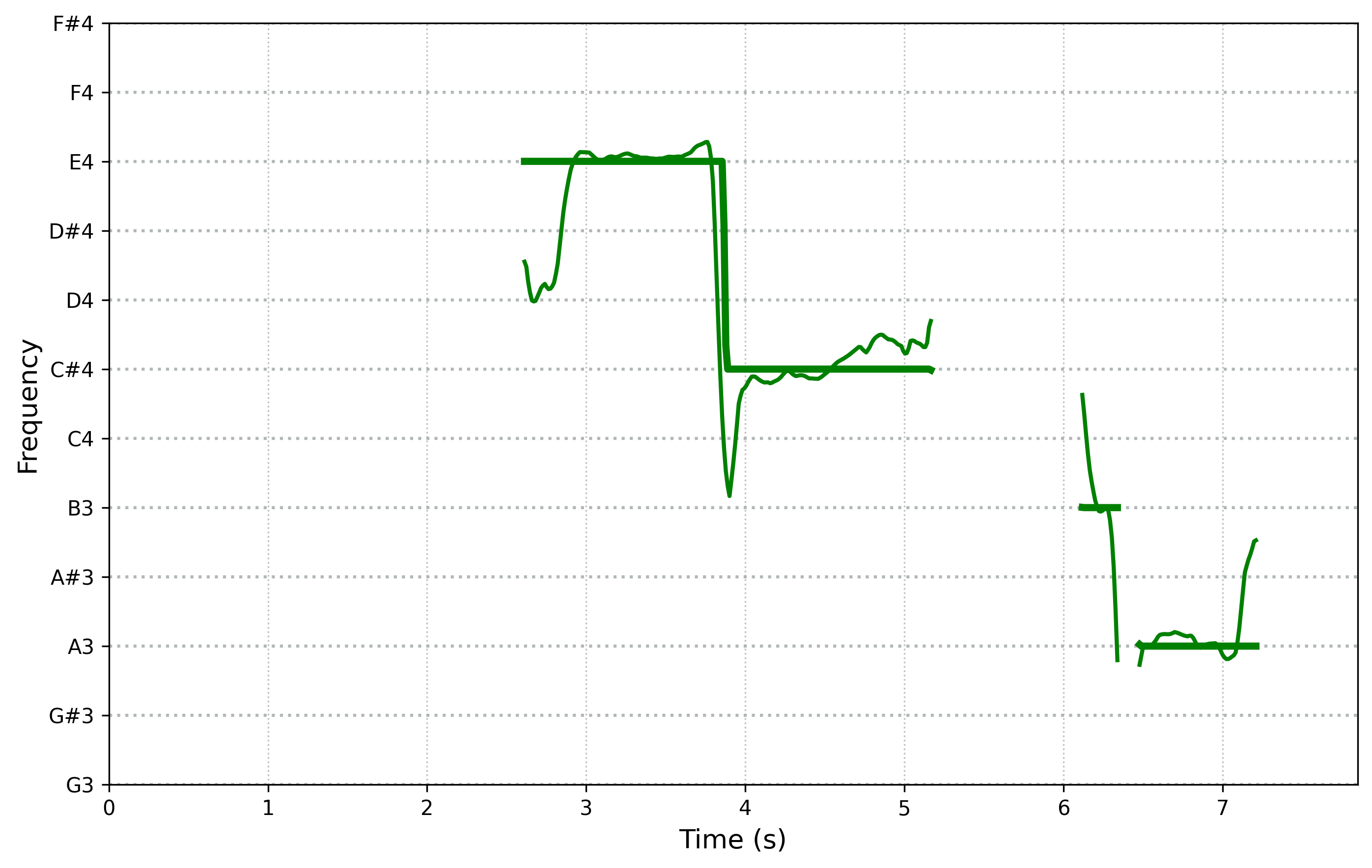
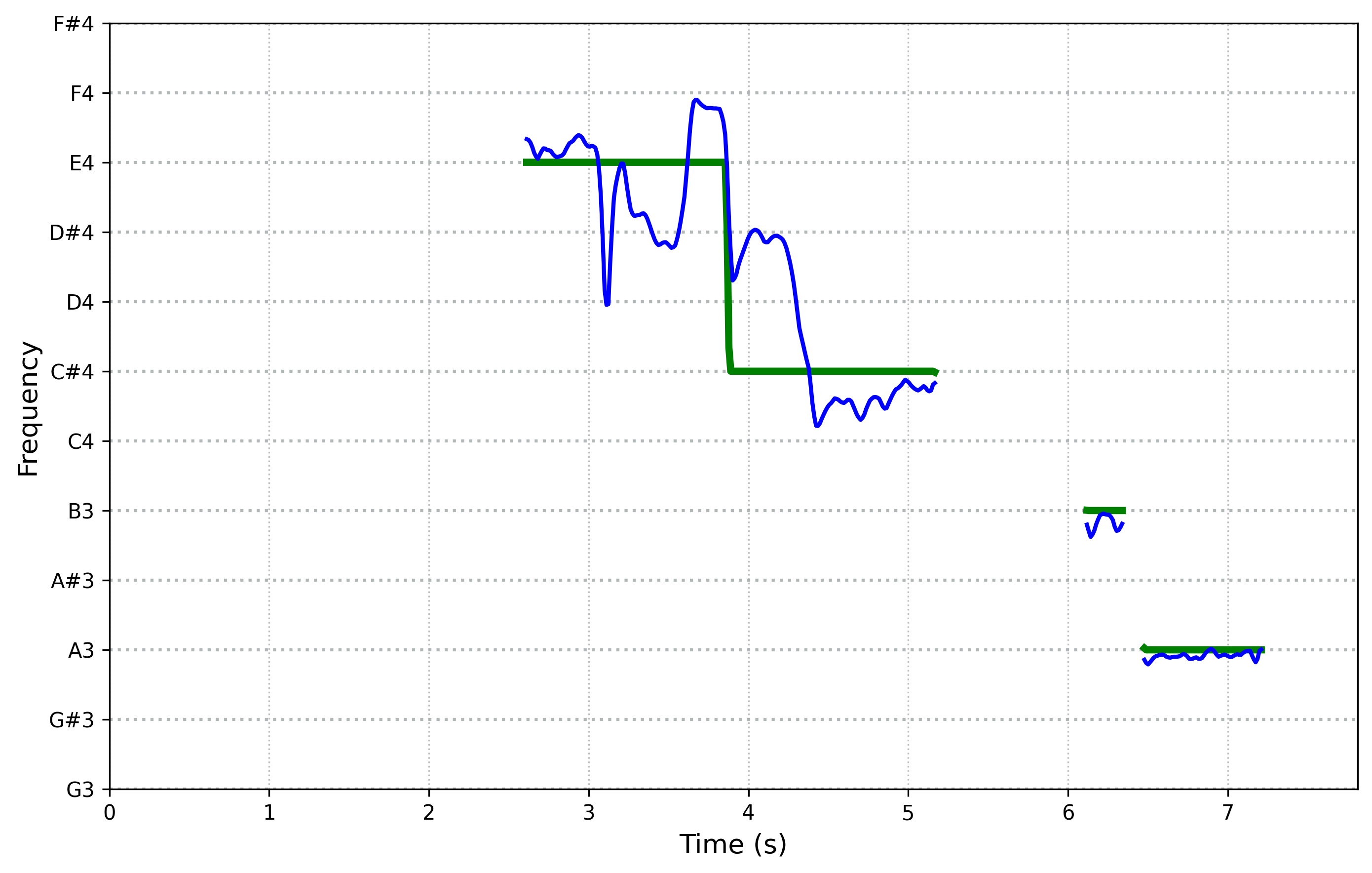
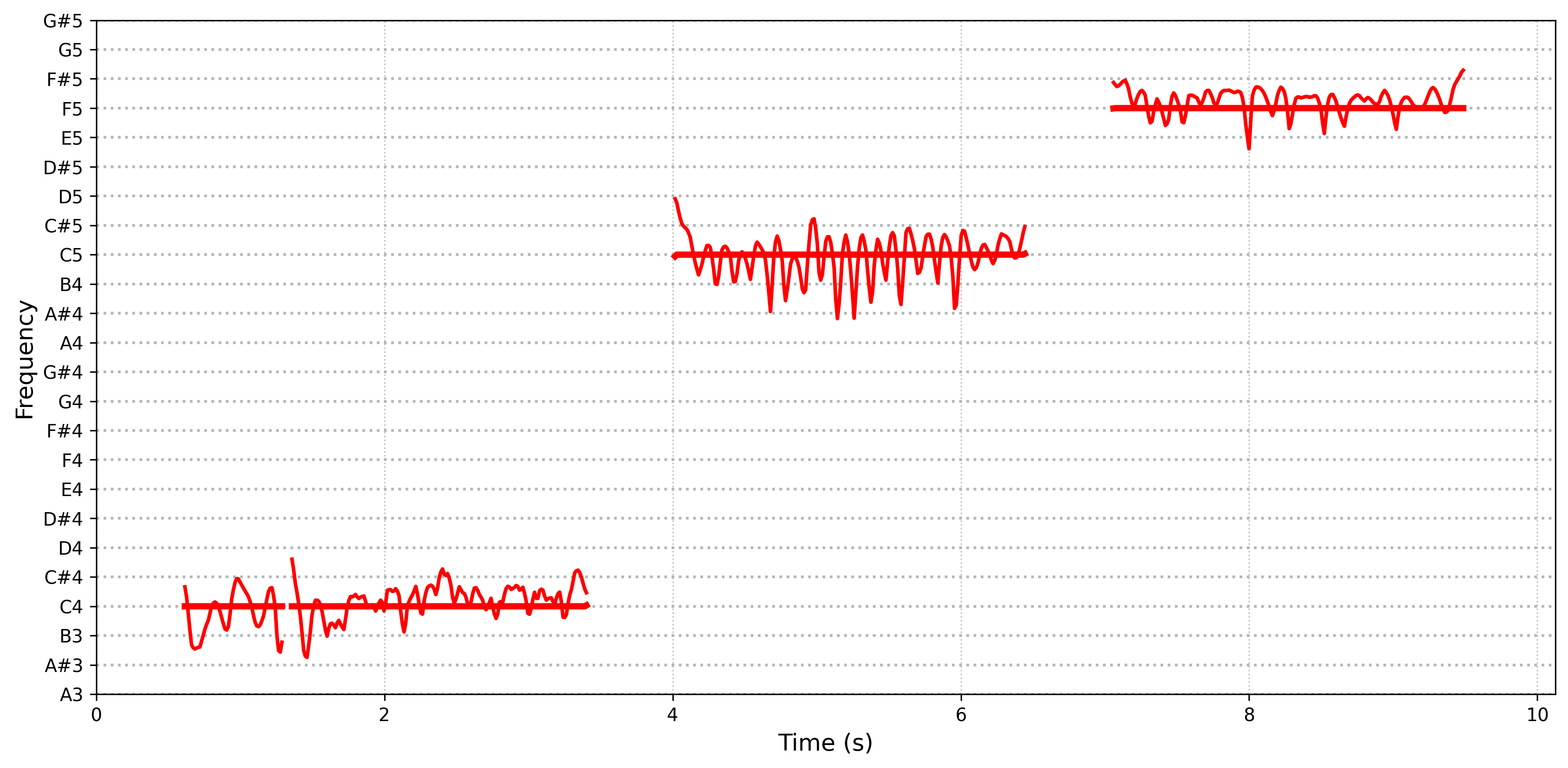
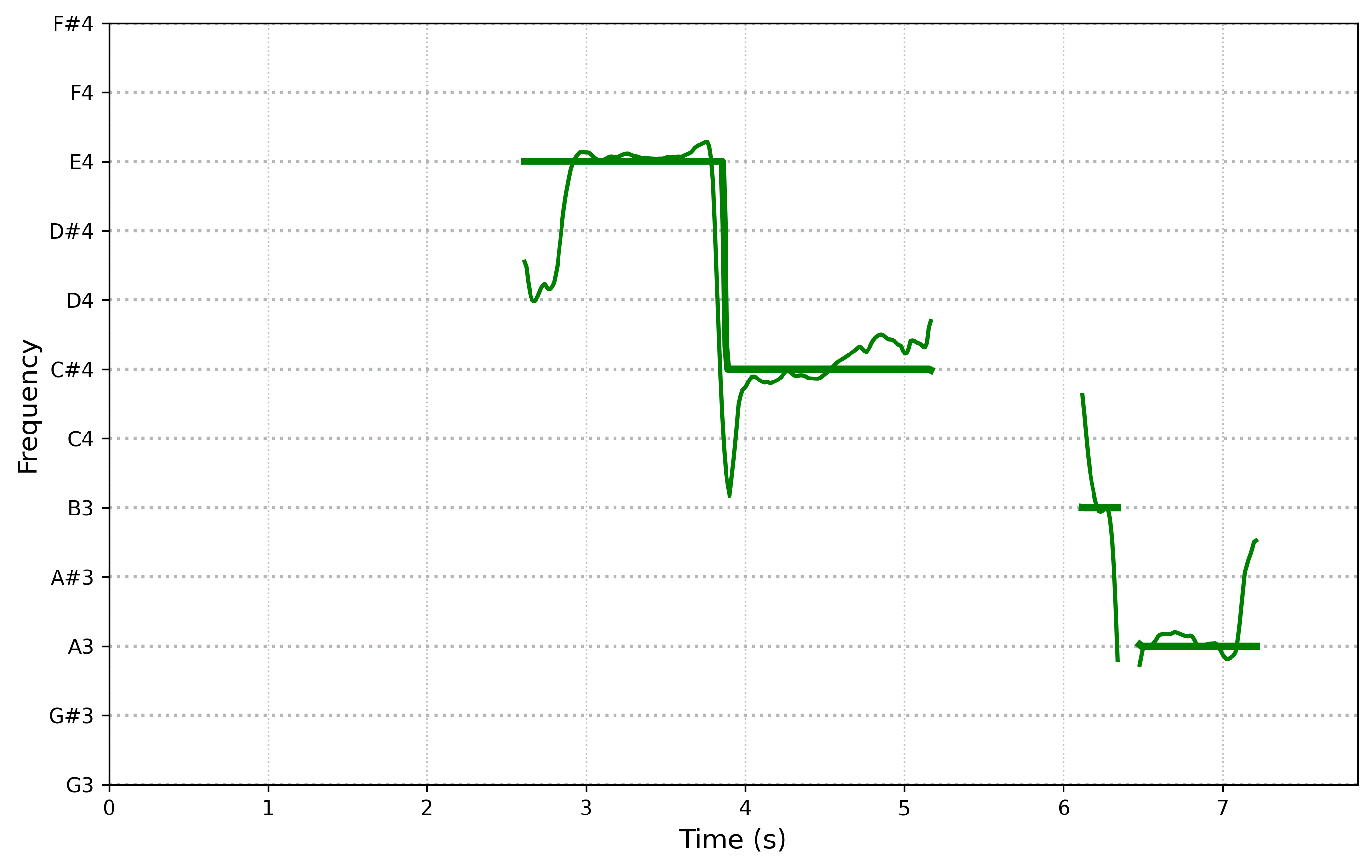
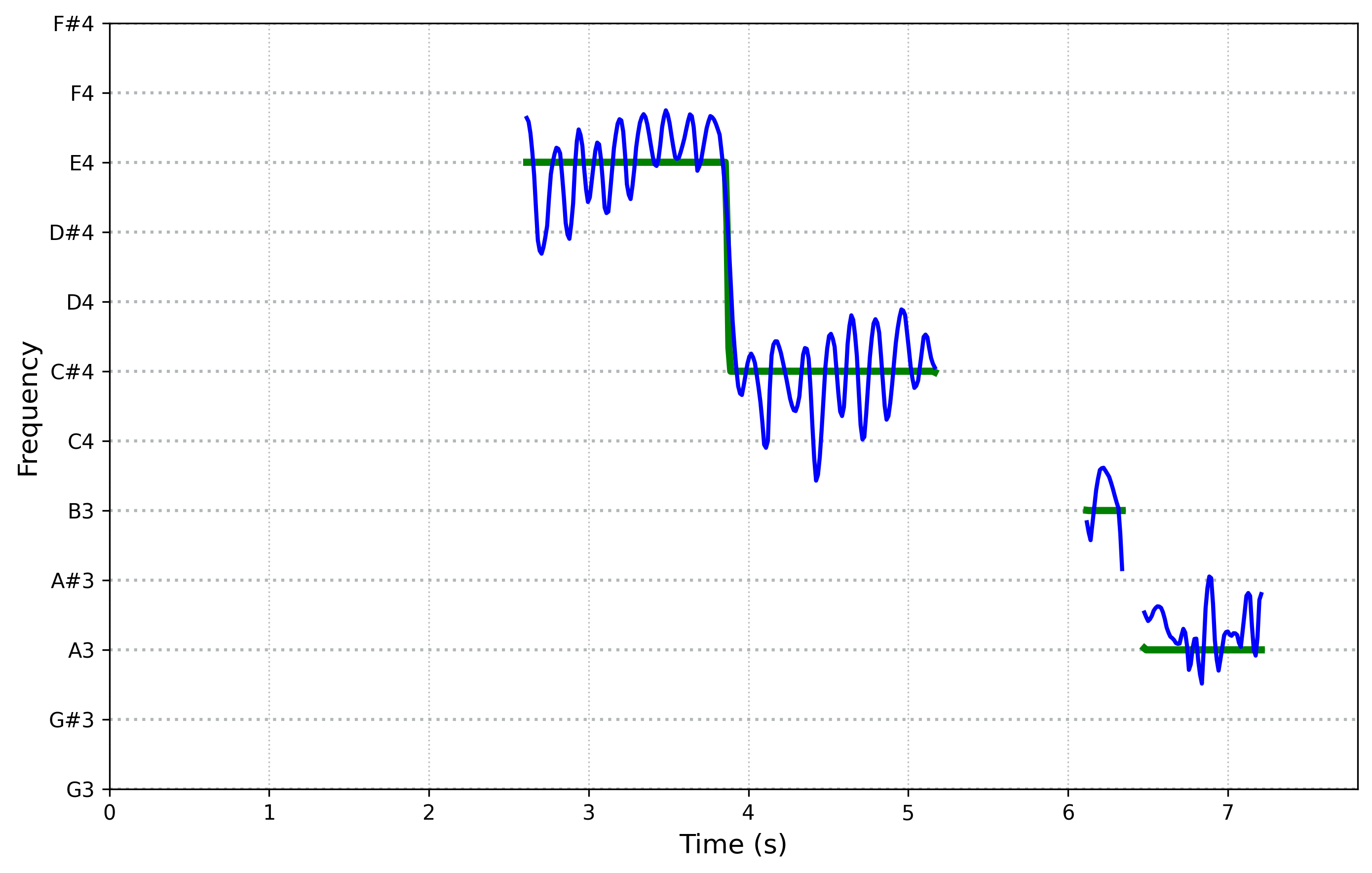
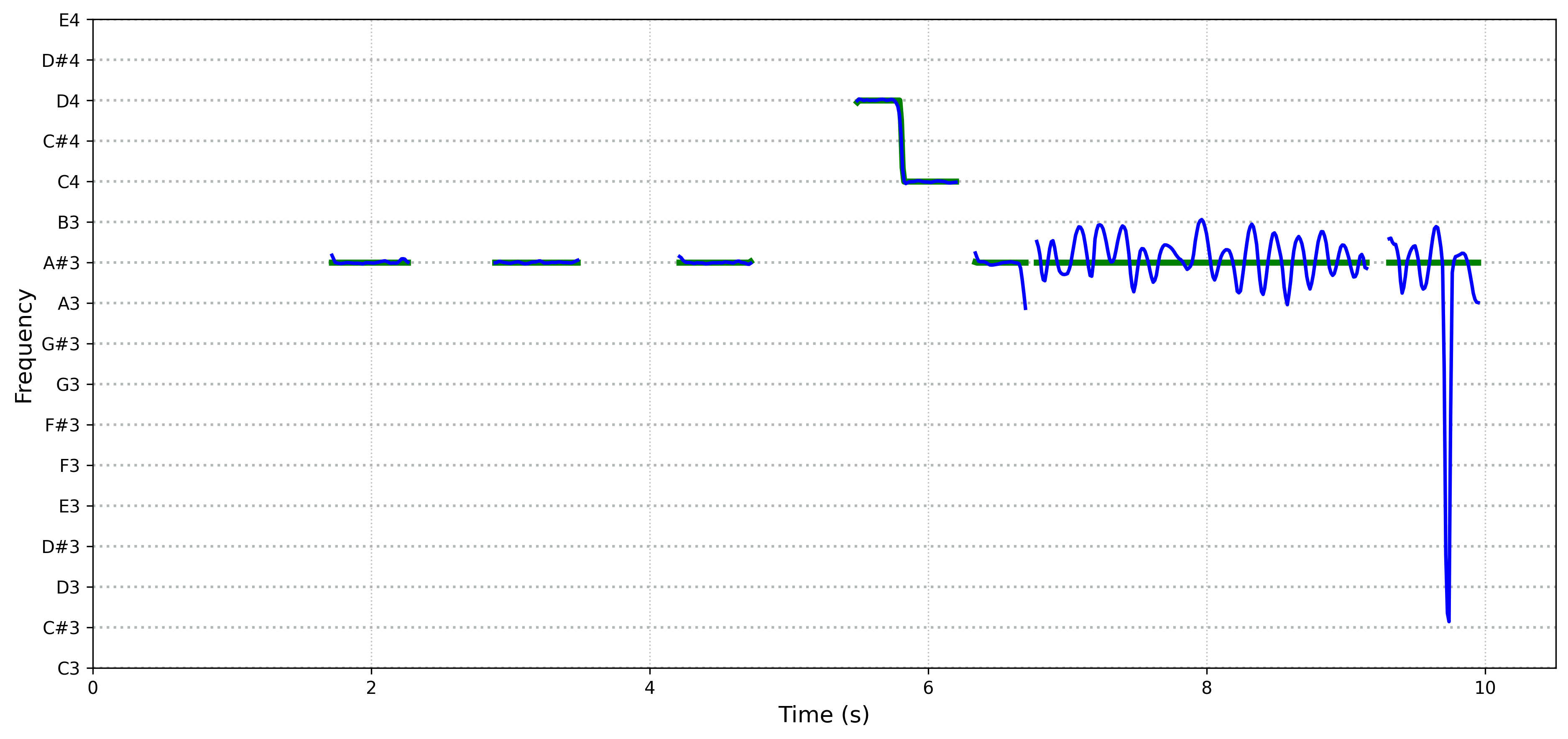
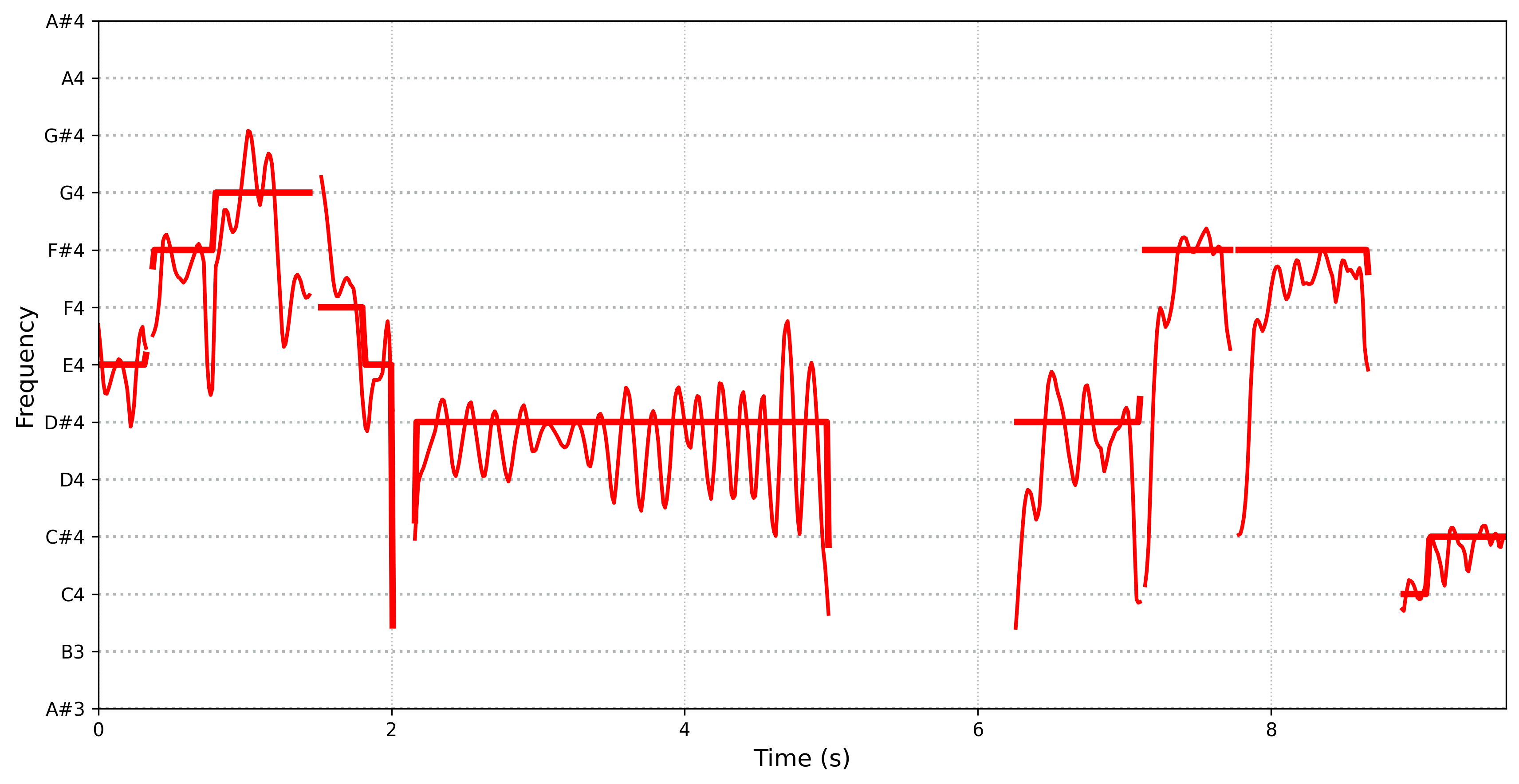
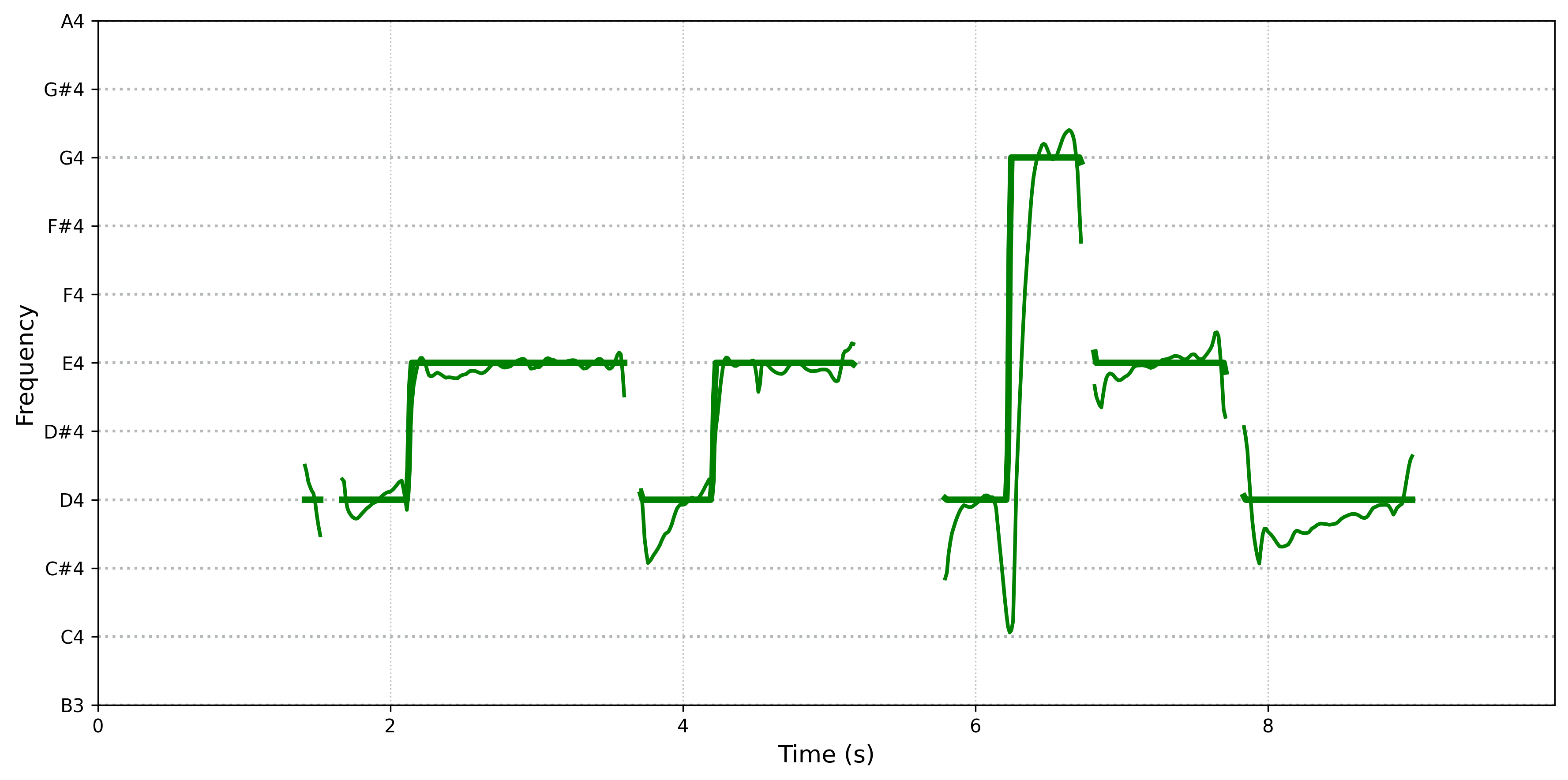
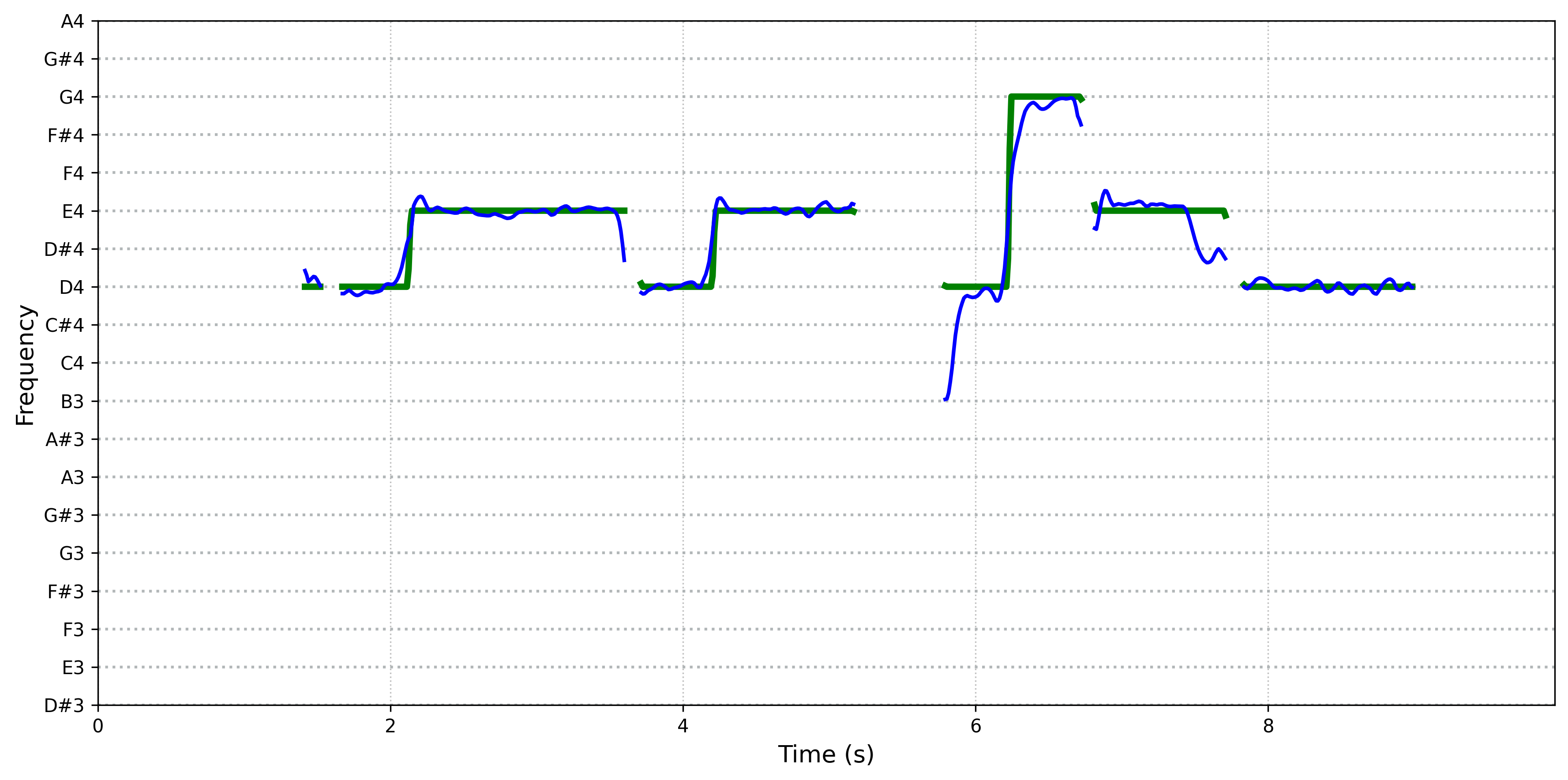
We randomly select a style reference audio and a source content audio for each model and pitch ornament on GTSinger. Below we show their respective transferred audios and pitch curves as well as the selected style reference and source content. The audios were synthesized with a 44.1kHz based NSF-HiFiGAN vocoder by doing analysis and simply subsituting the original source pitch curve with the transferred one before synthesis. The notes extracted for each pitch are plotted as thicker horizontal lines.
In-Domain Transfer
Style references are taken from the training set and source contents are taken from the test set of our GTSinger split. Select one reference below to inspect.
|
Style Reference
Content (Notes)
|
|||
|
PitchSTAR
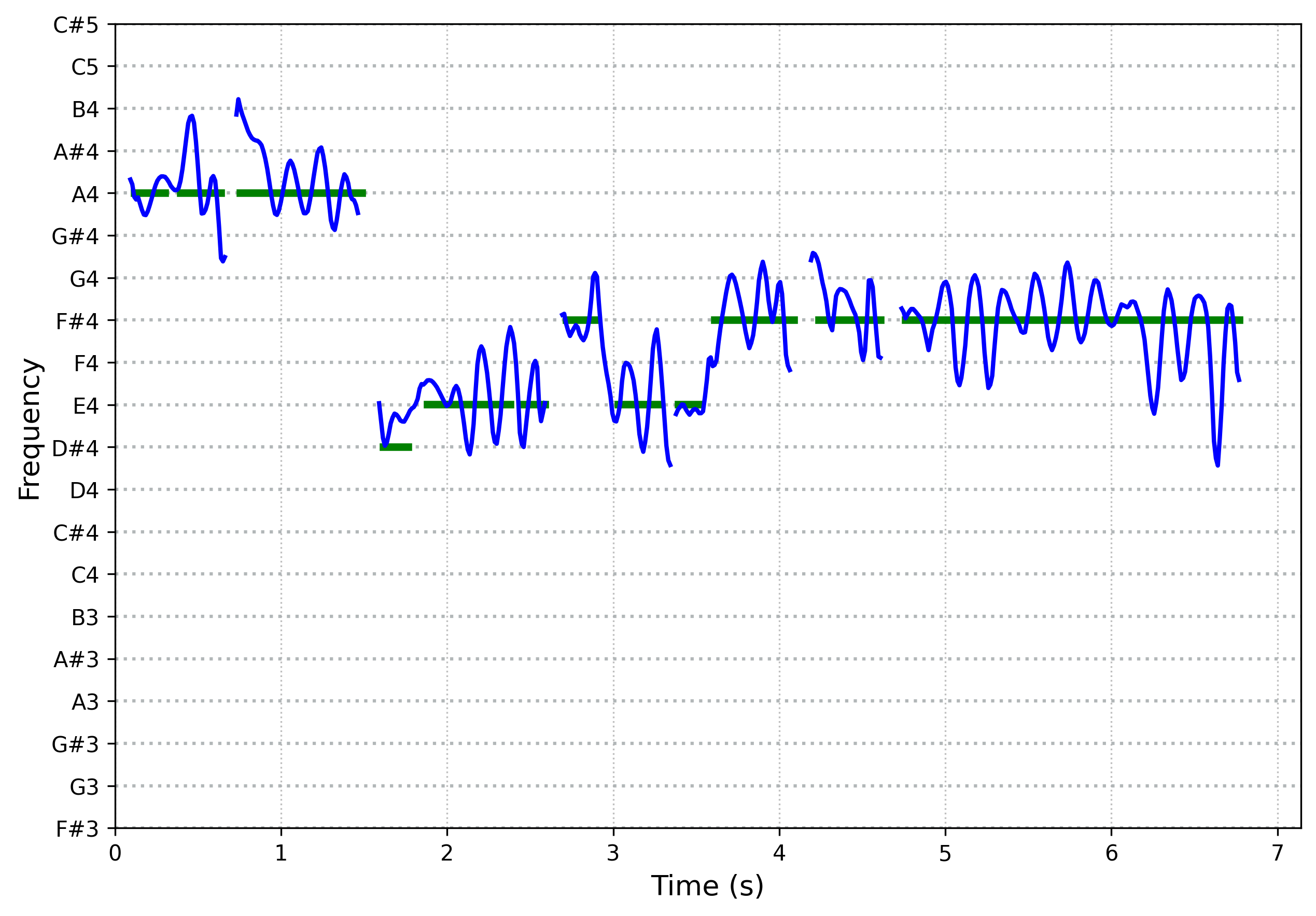
|
StylePitcher w/ Mod
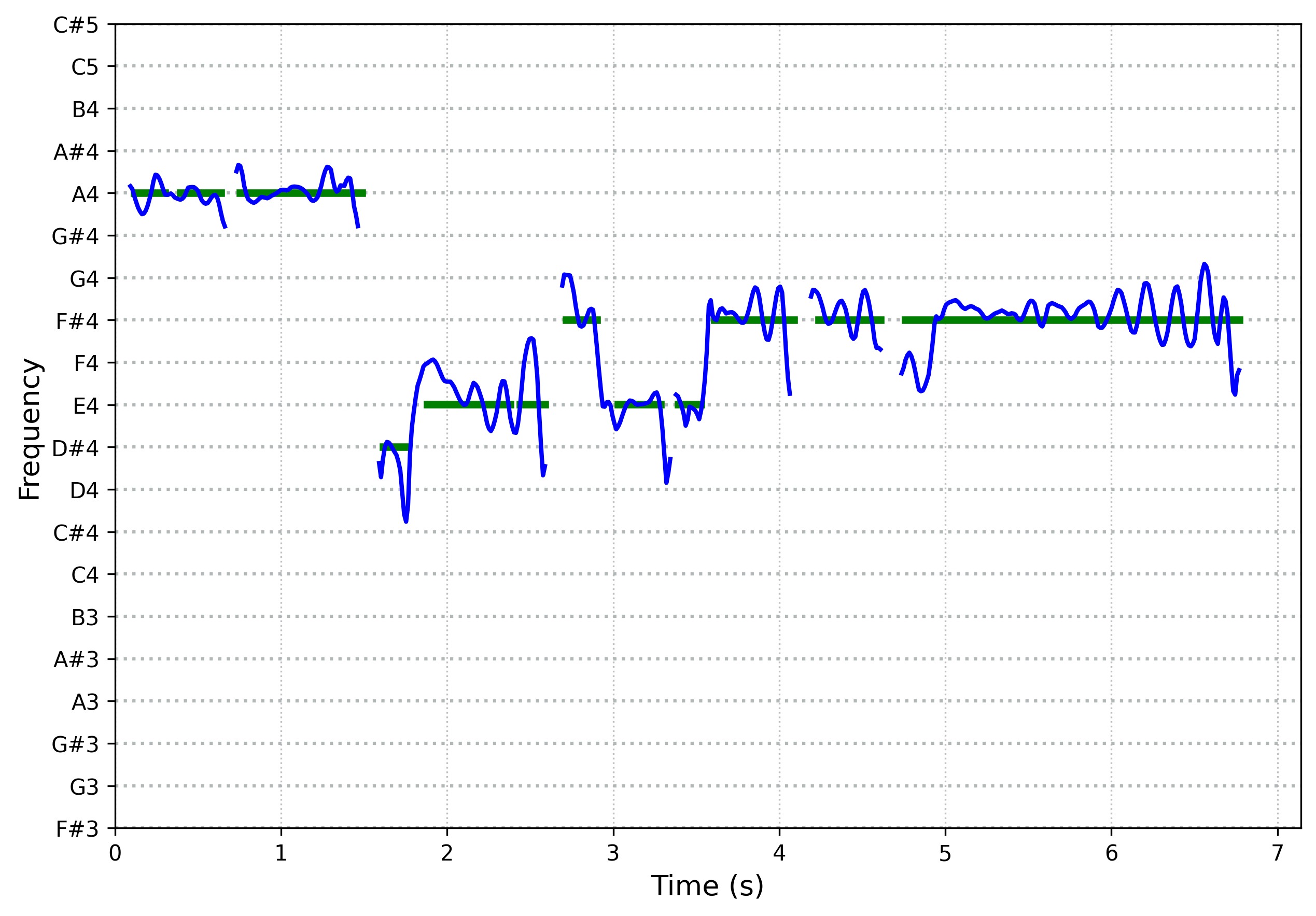
|
StylePitcher
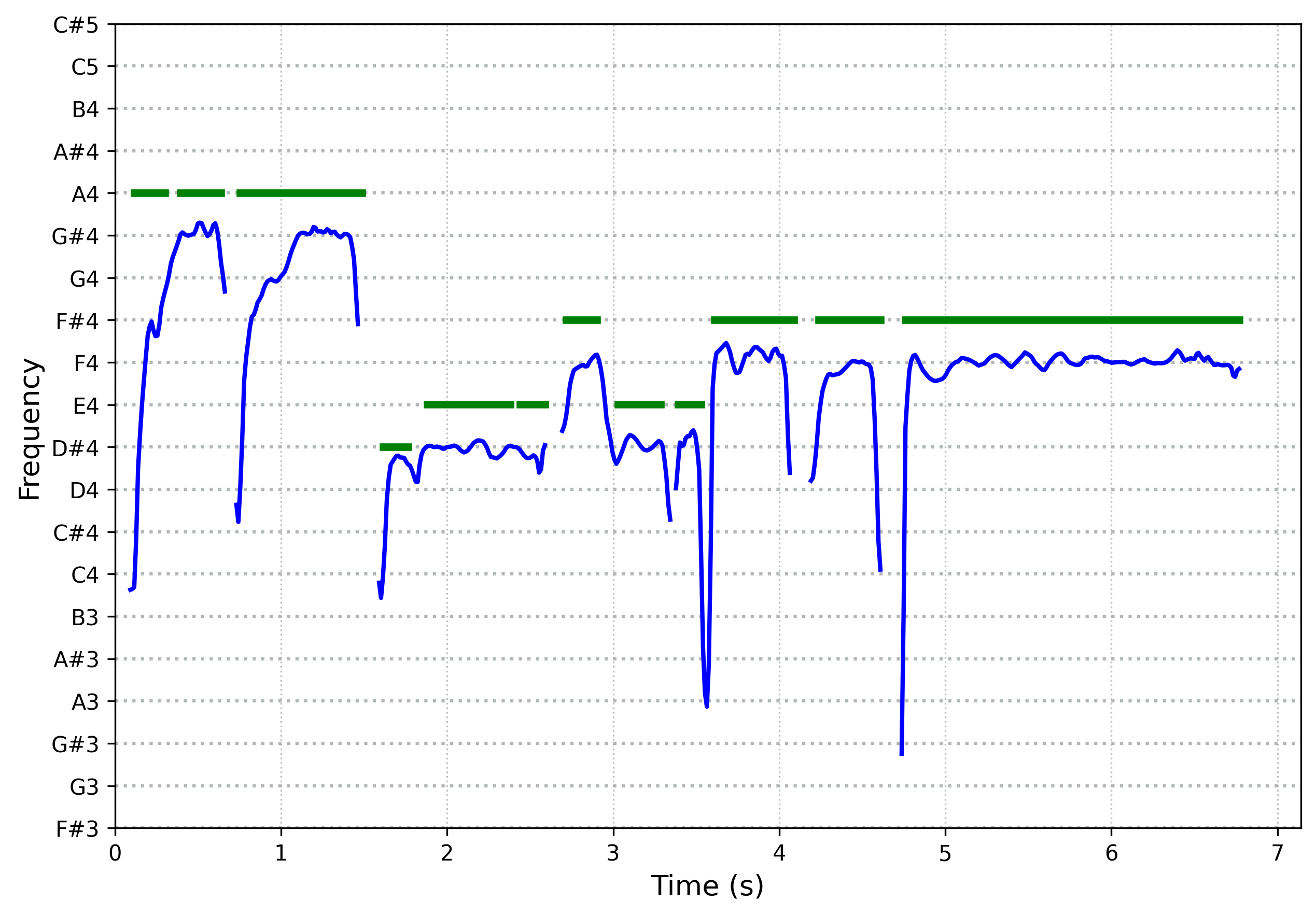
|
VEVO 2
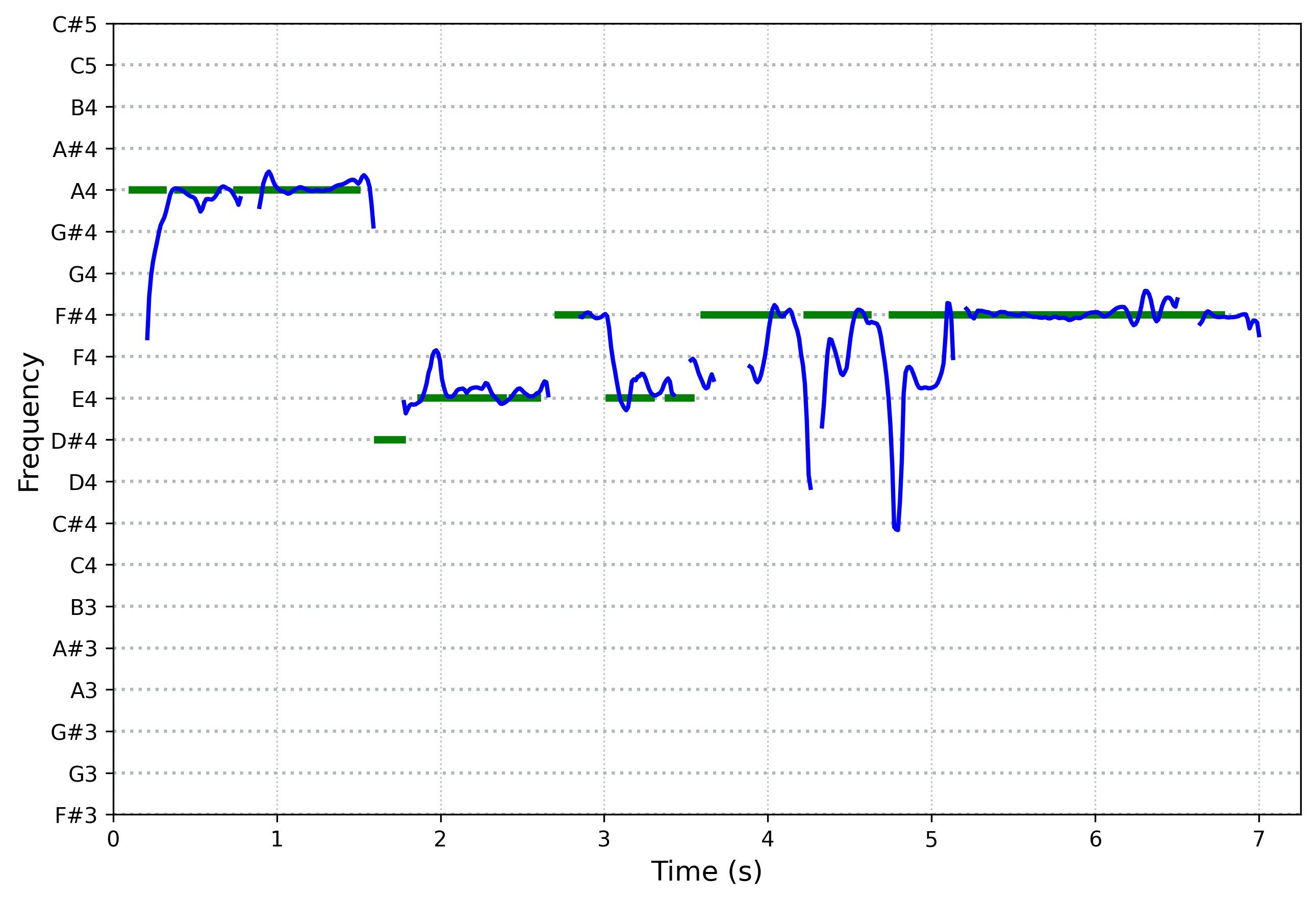
|
|
Style Reference
Content
|
|||
|
PitchSTAR
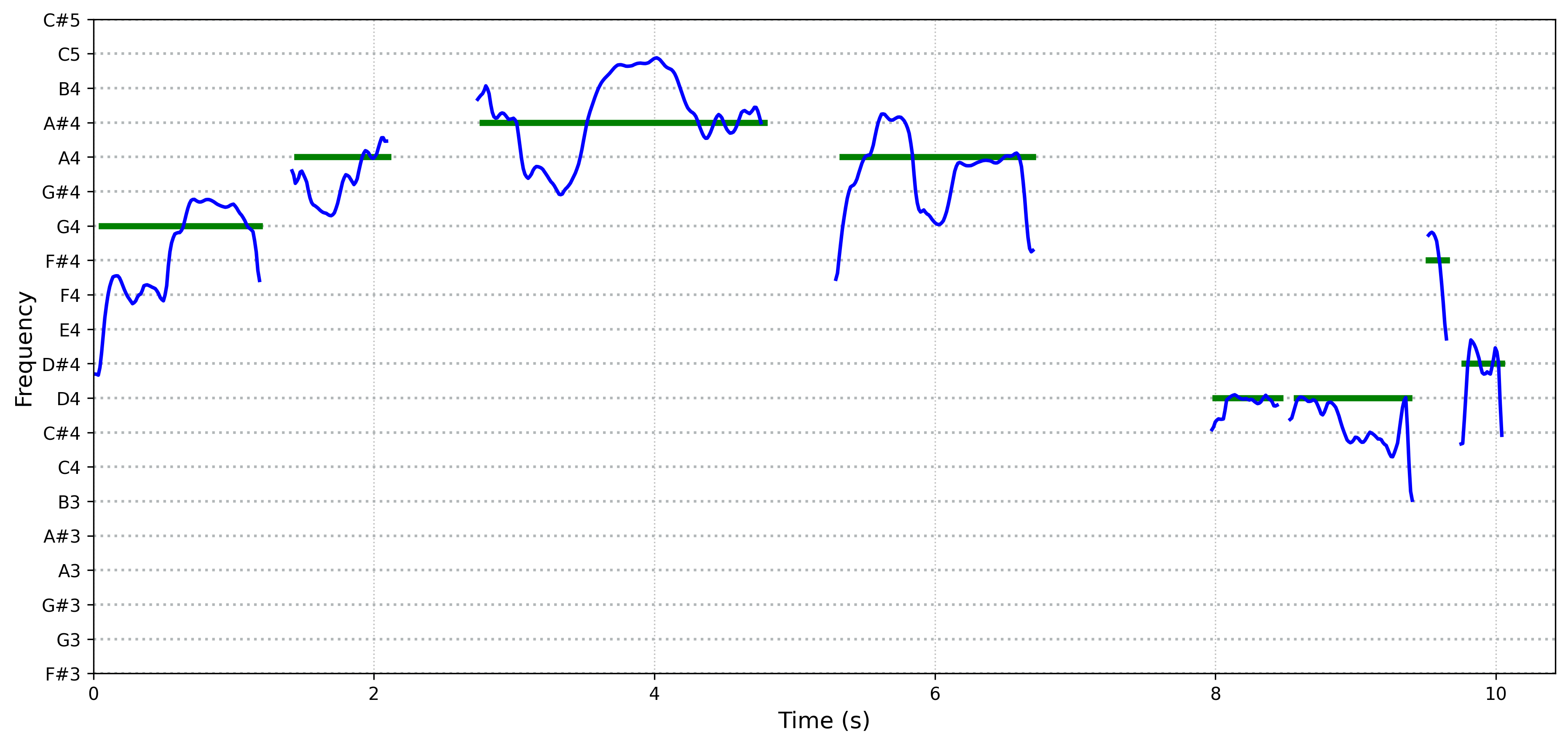
|
StylePitcher w/ Mod
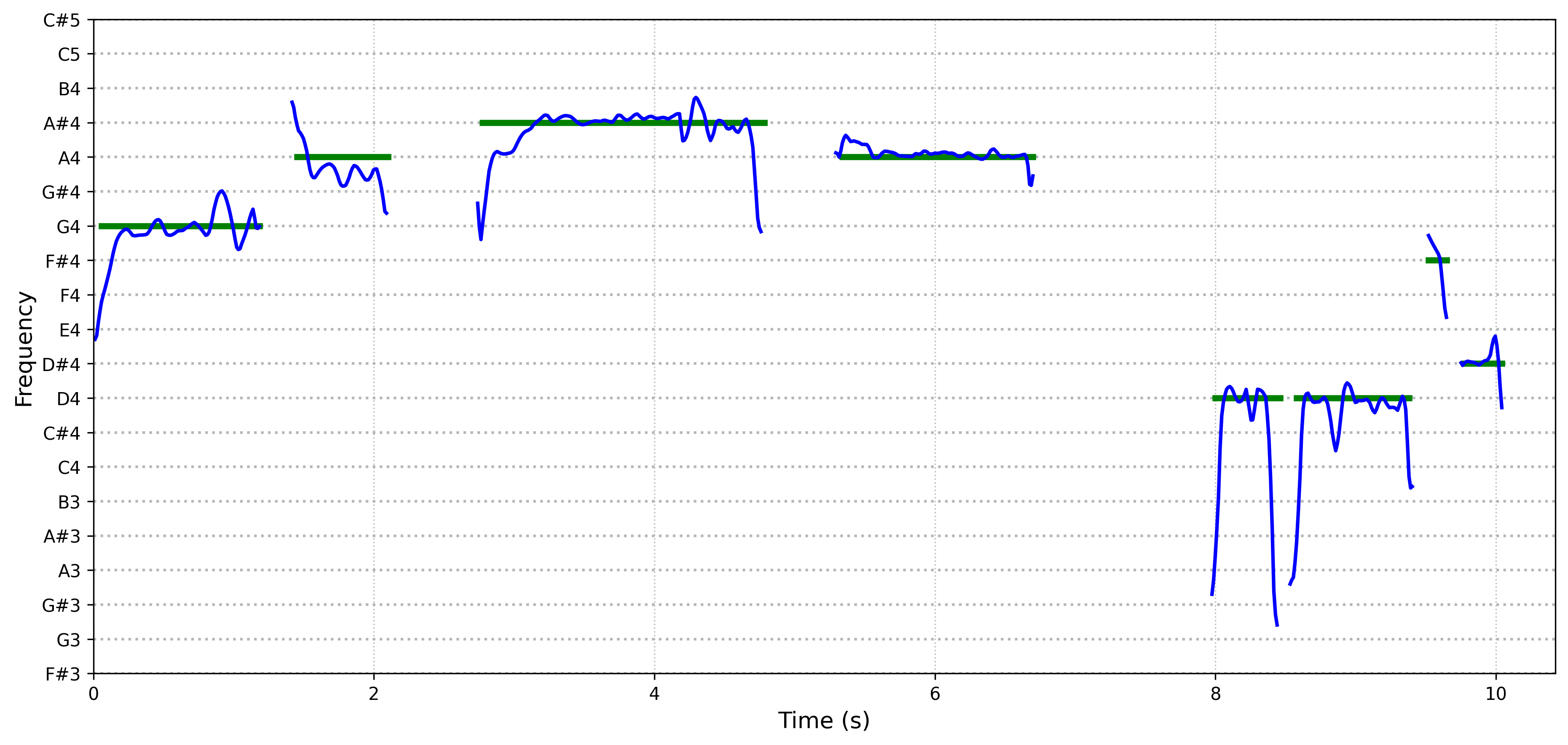
|
StylePitcher
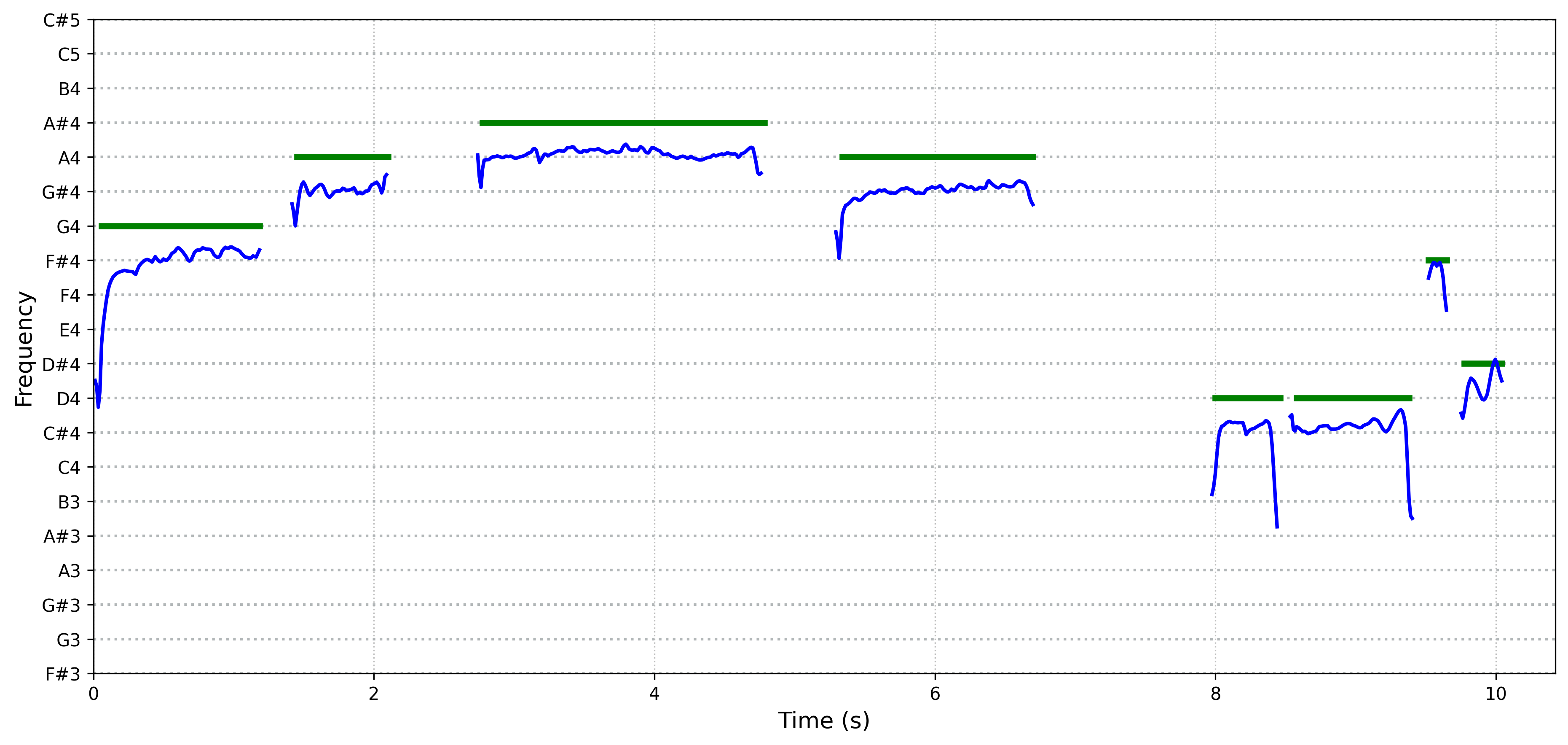
|
VEVO 2
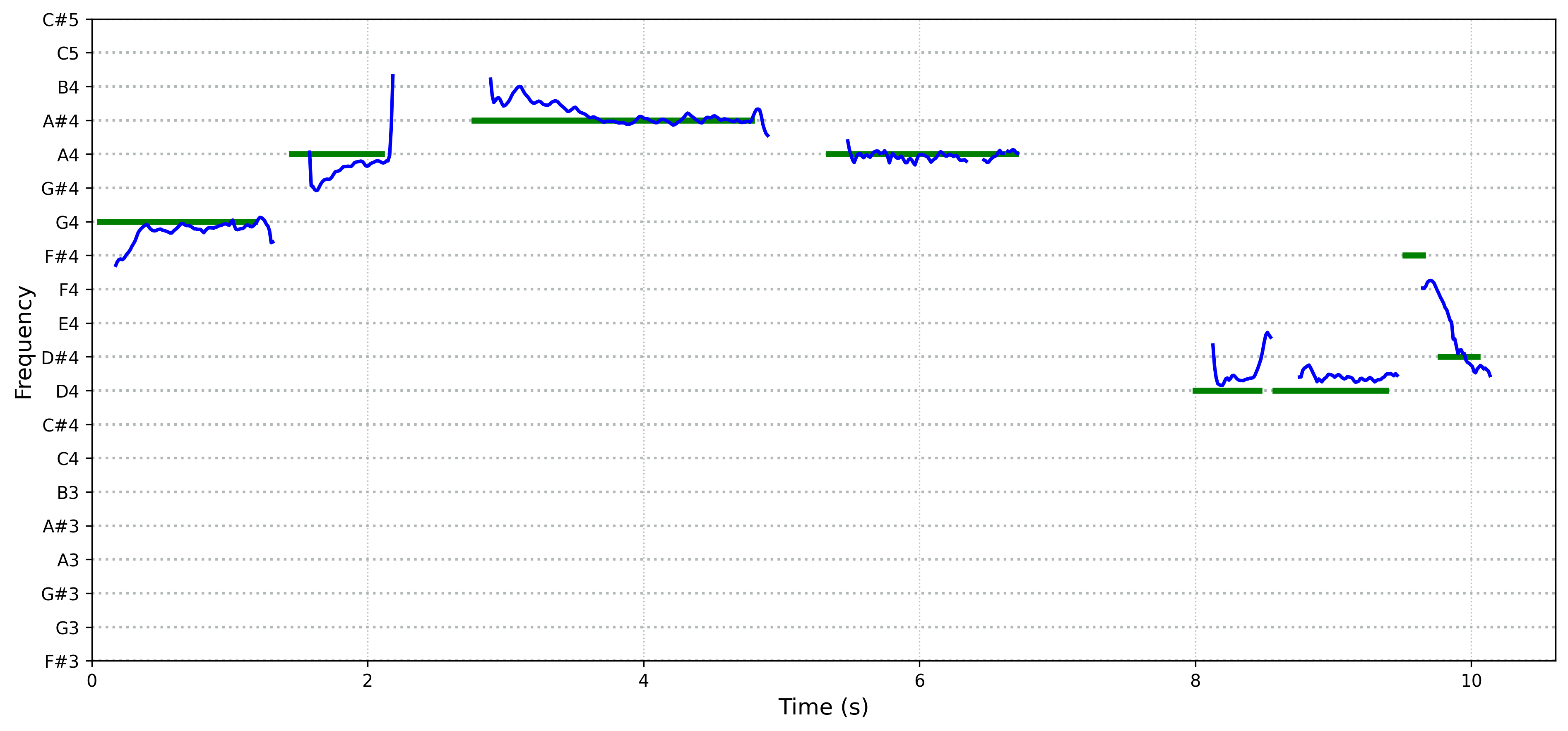
|
|
Style Reference
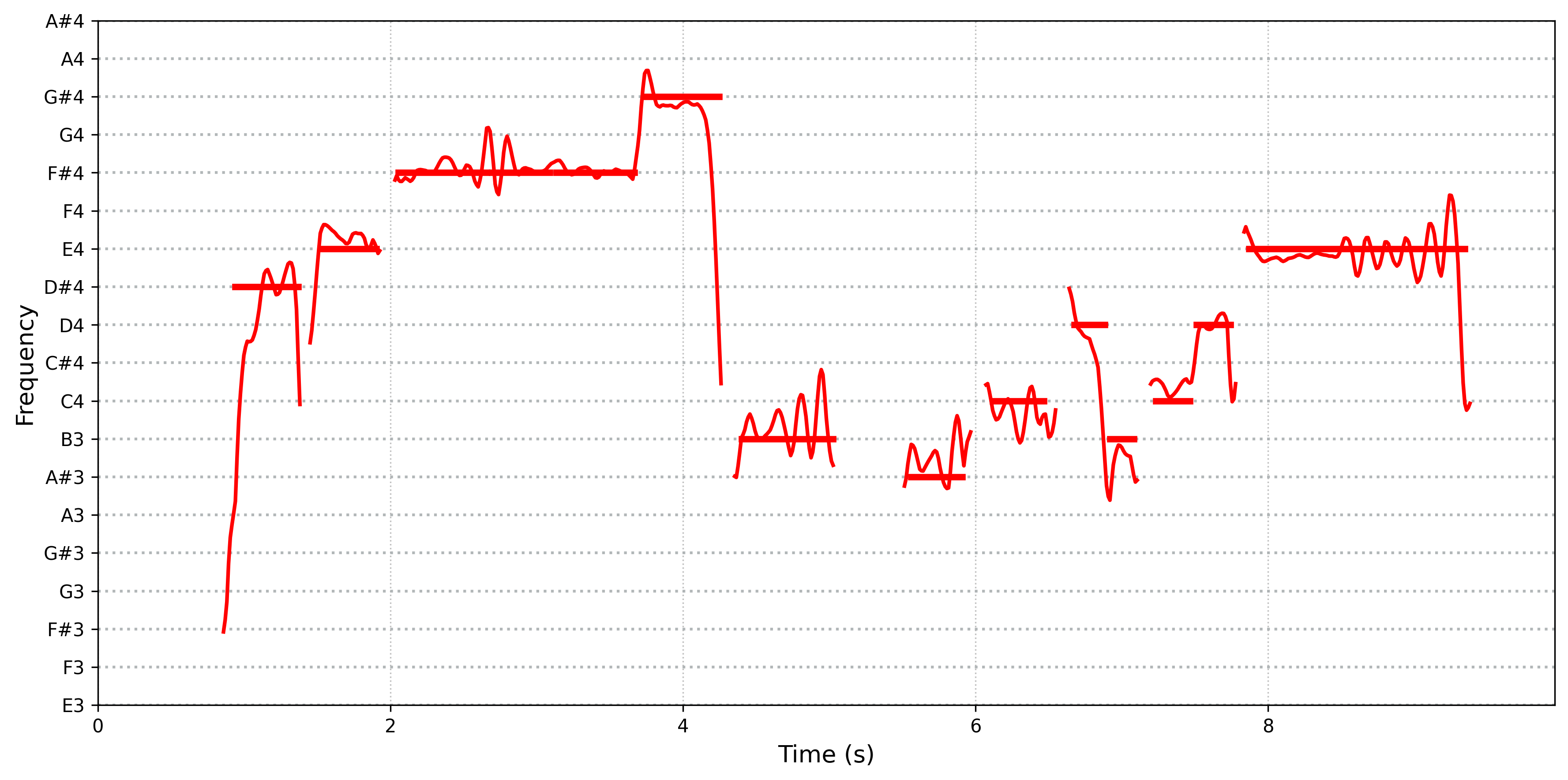
Content
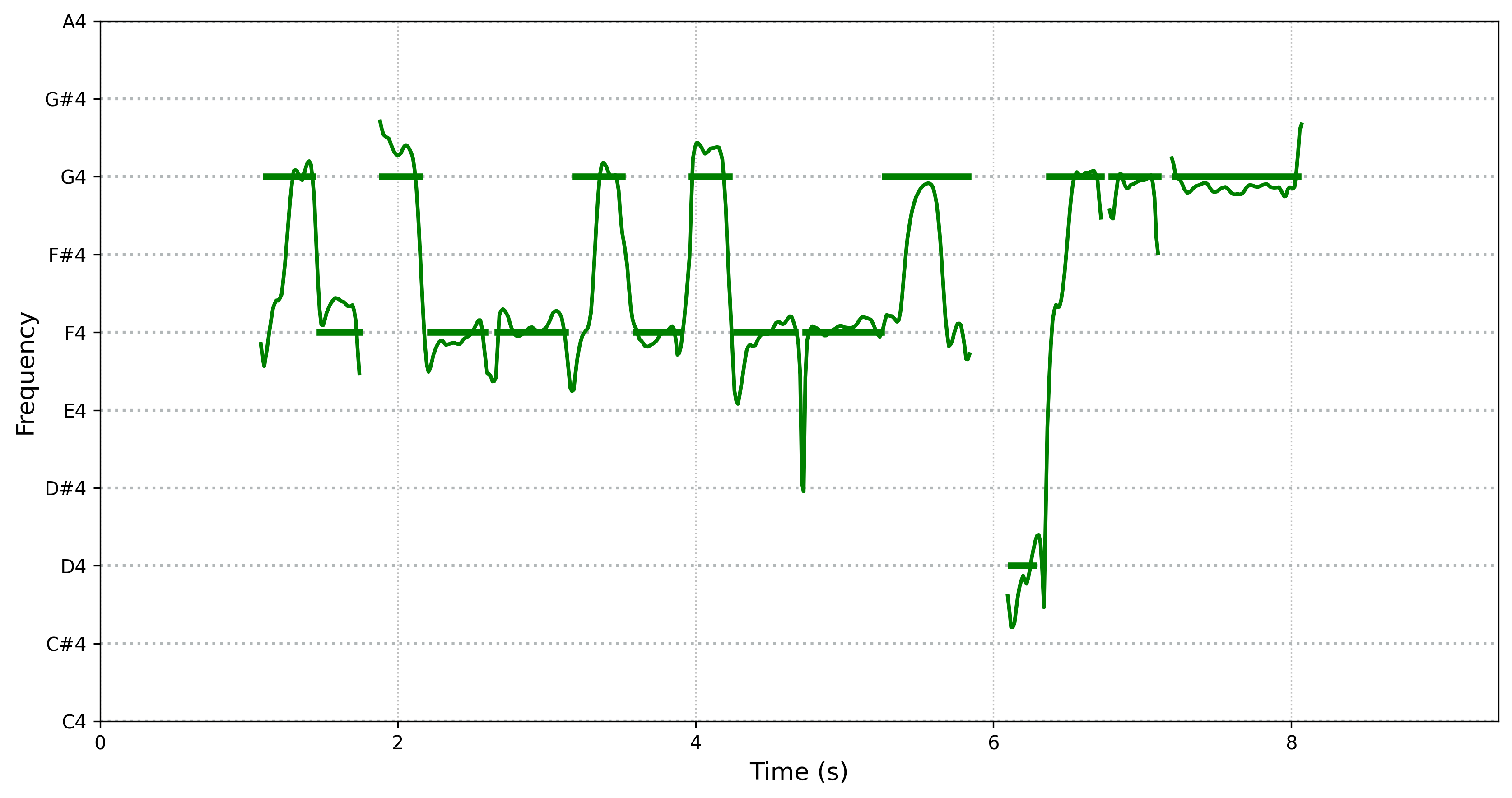
|
|||
|
PitchSTAR
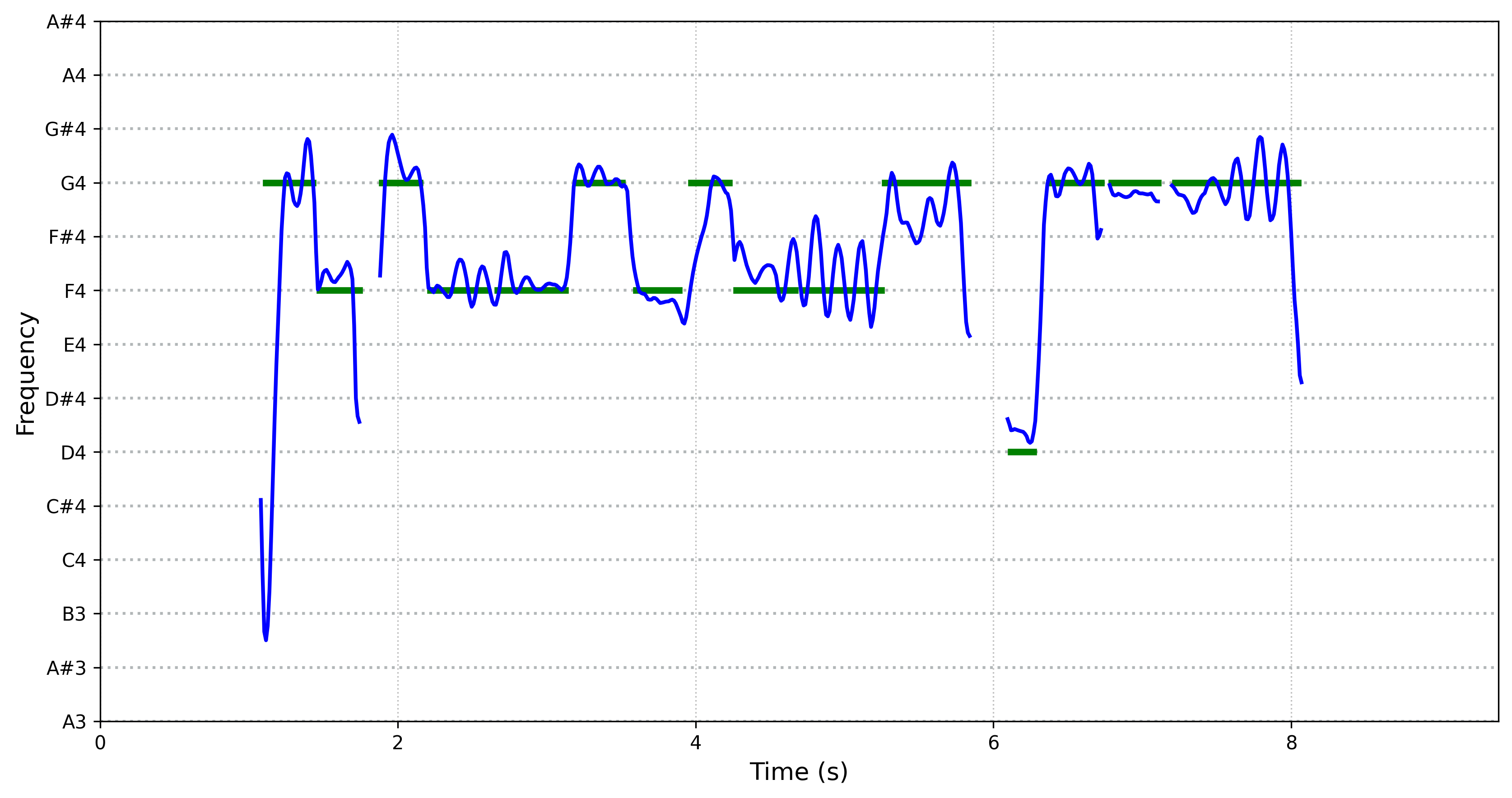
|
StylePitcher w/ Mod
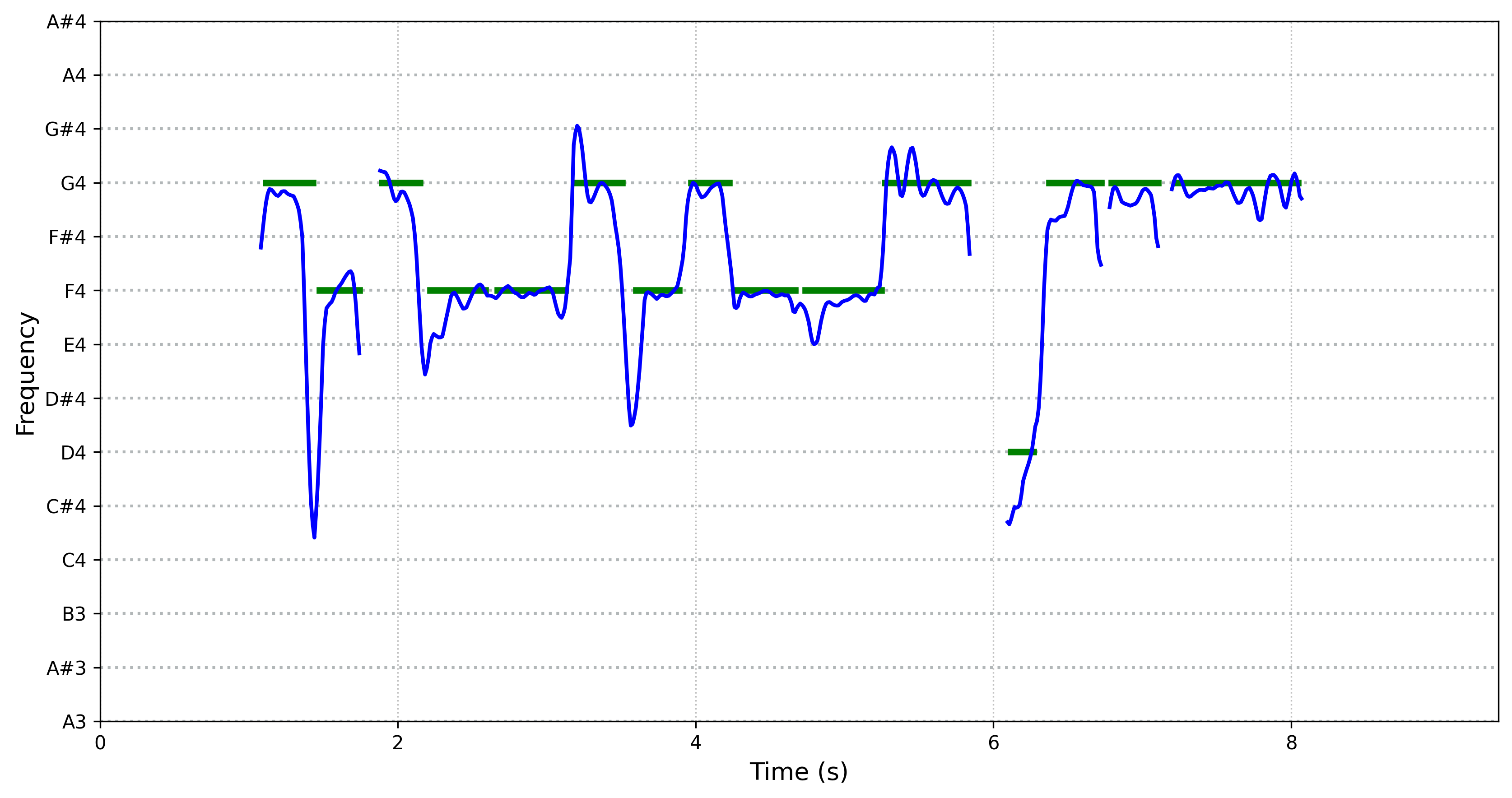
|
StylePitcher
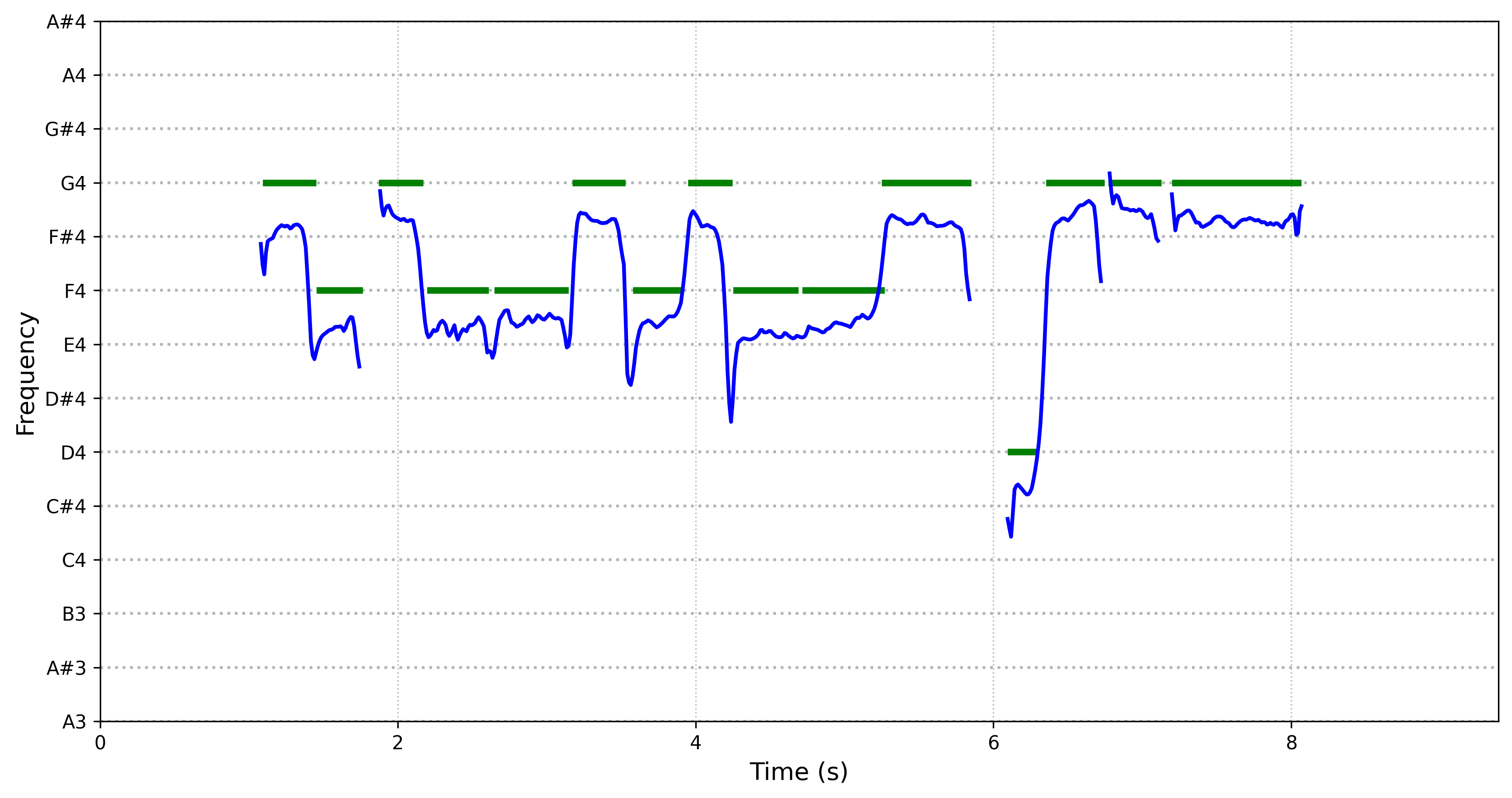
|
VEVO 2
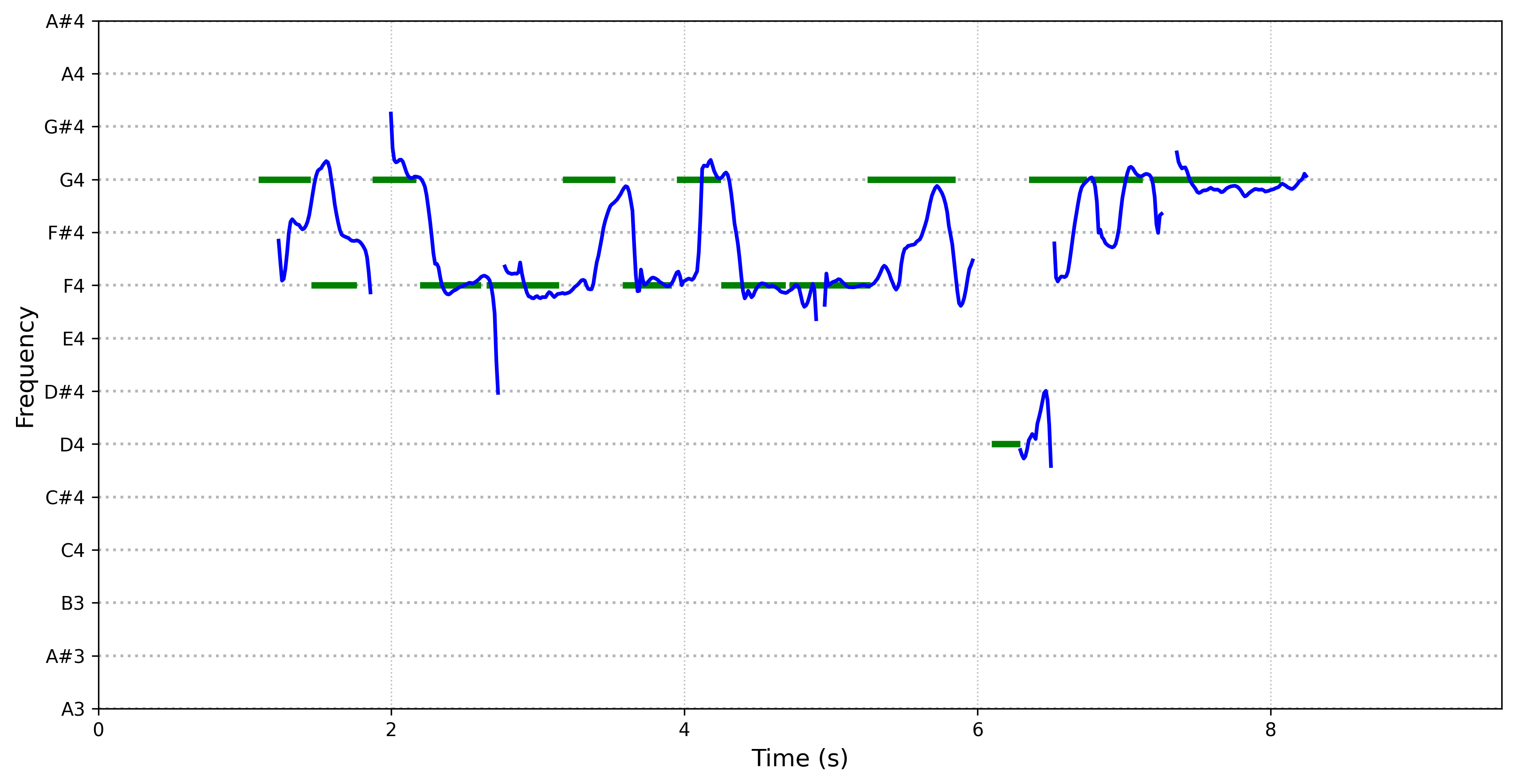
|
|
Style Reference
Content
|
|||
|
PitchSTAR
|
StylePitcher w/ Mod
|
StylePitcher
|
VEVO 2
|
Out-of-Domain Transfer
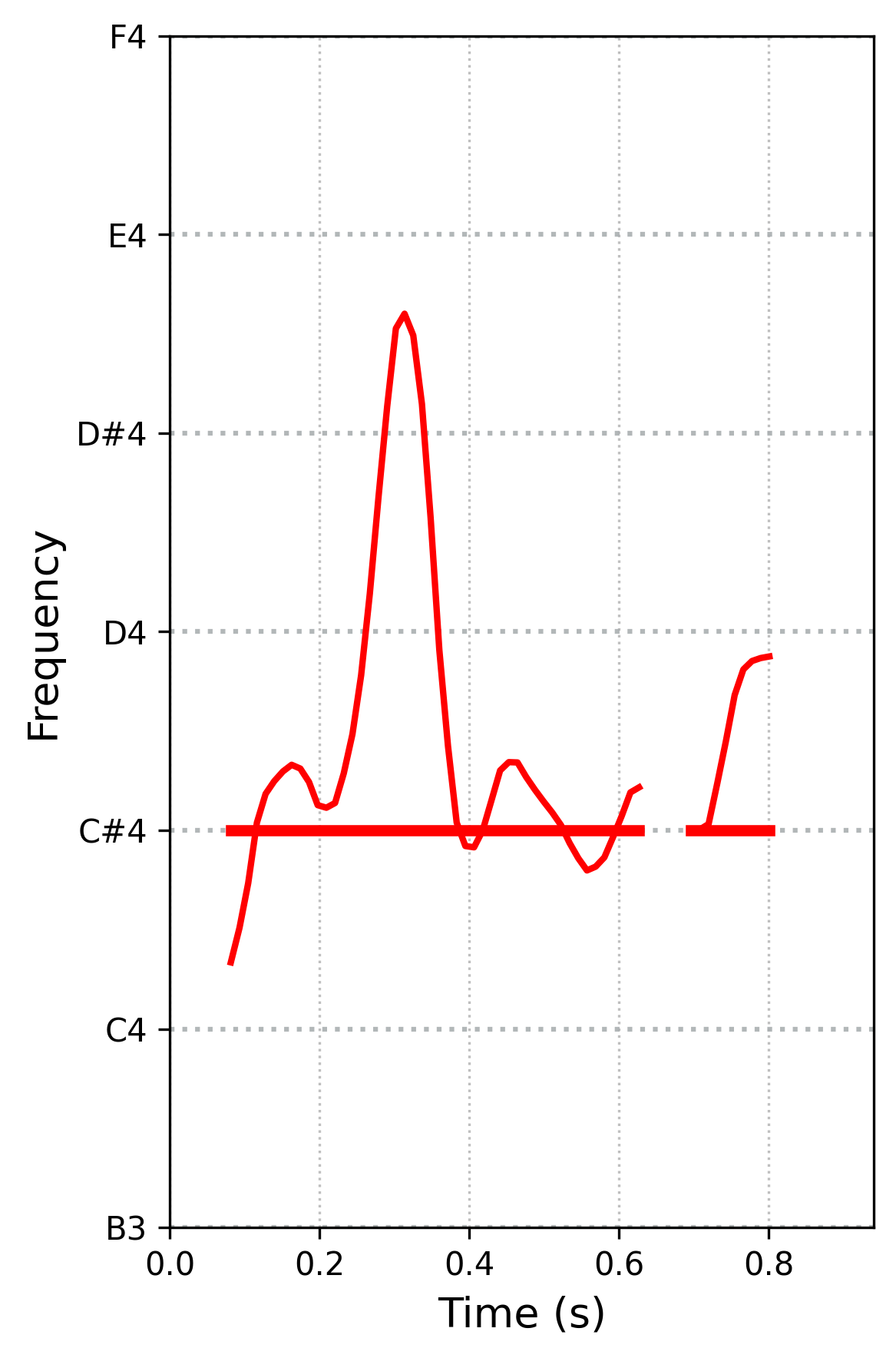
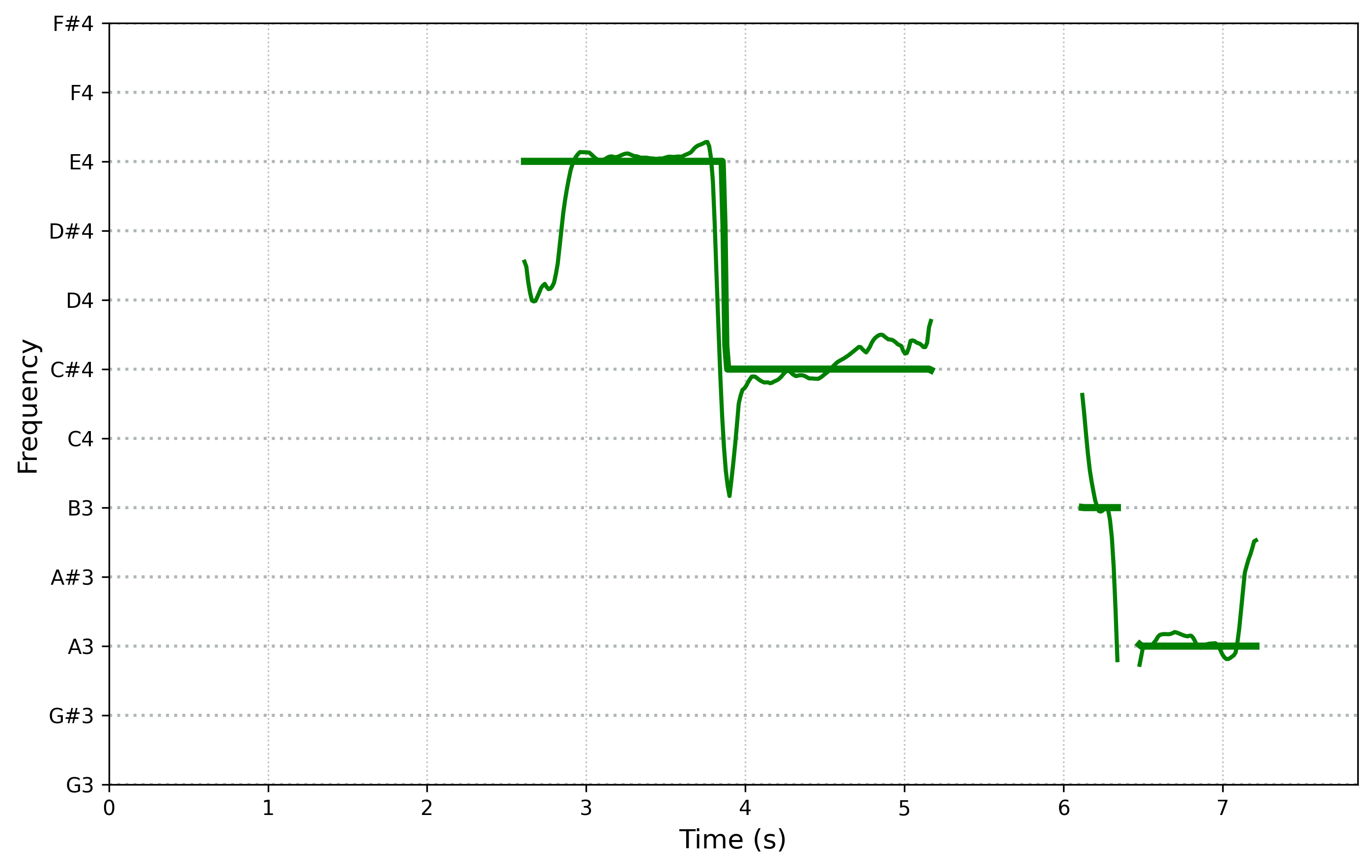
Style references are taken from an external dataset and source contents are taken from the test set of our GTSinger split.
A brief upward pitch excursion to a neighboring note, immediately returning to the original pitch. Extracted from the AdoVoc Dataset.
|
Style Reference
|
Content
|
PitchSTAR
|
A gentle swing or oscillation that begins from a fixed note and reaches the periphery of another note. During these oscillations, it touches various microtones present between the notes. Extracted from the Raga Ornament Detection Dataset.
|
Style Reference
|
Content
|
PitchSTAR
|
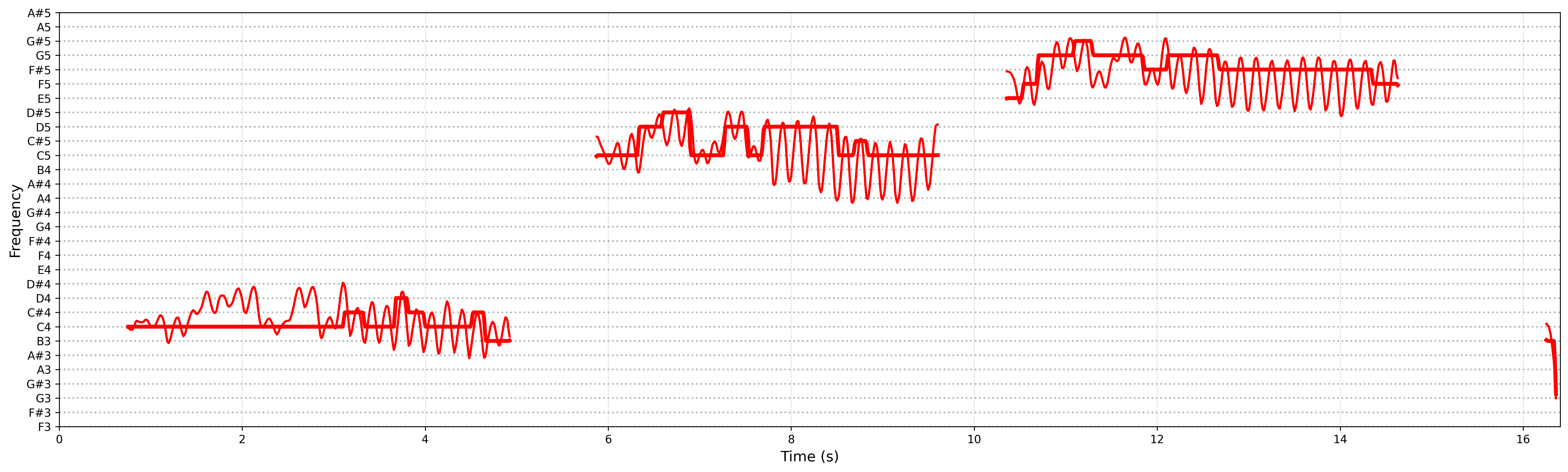
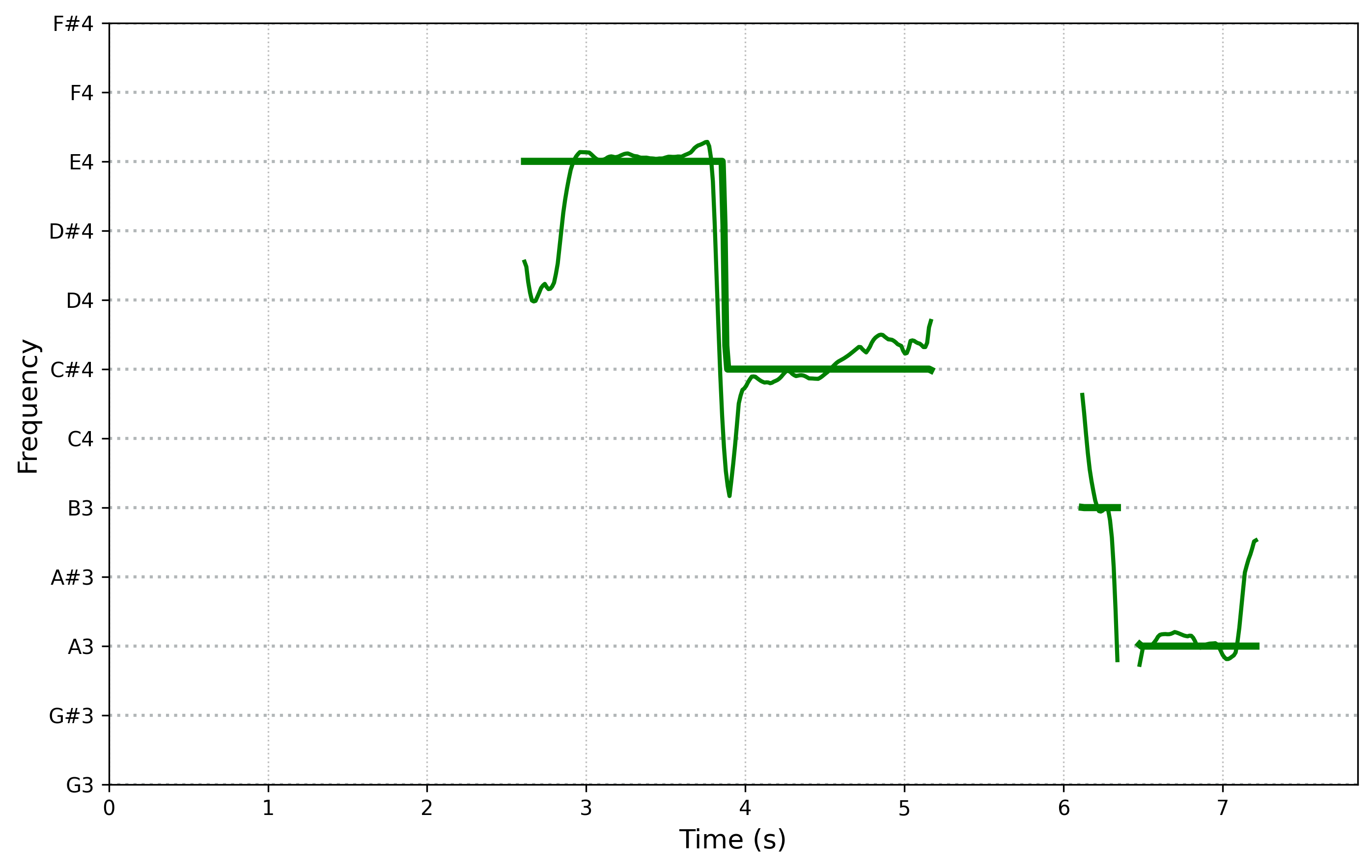
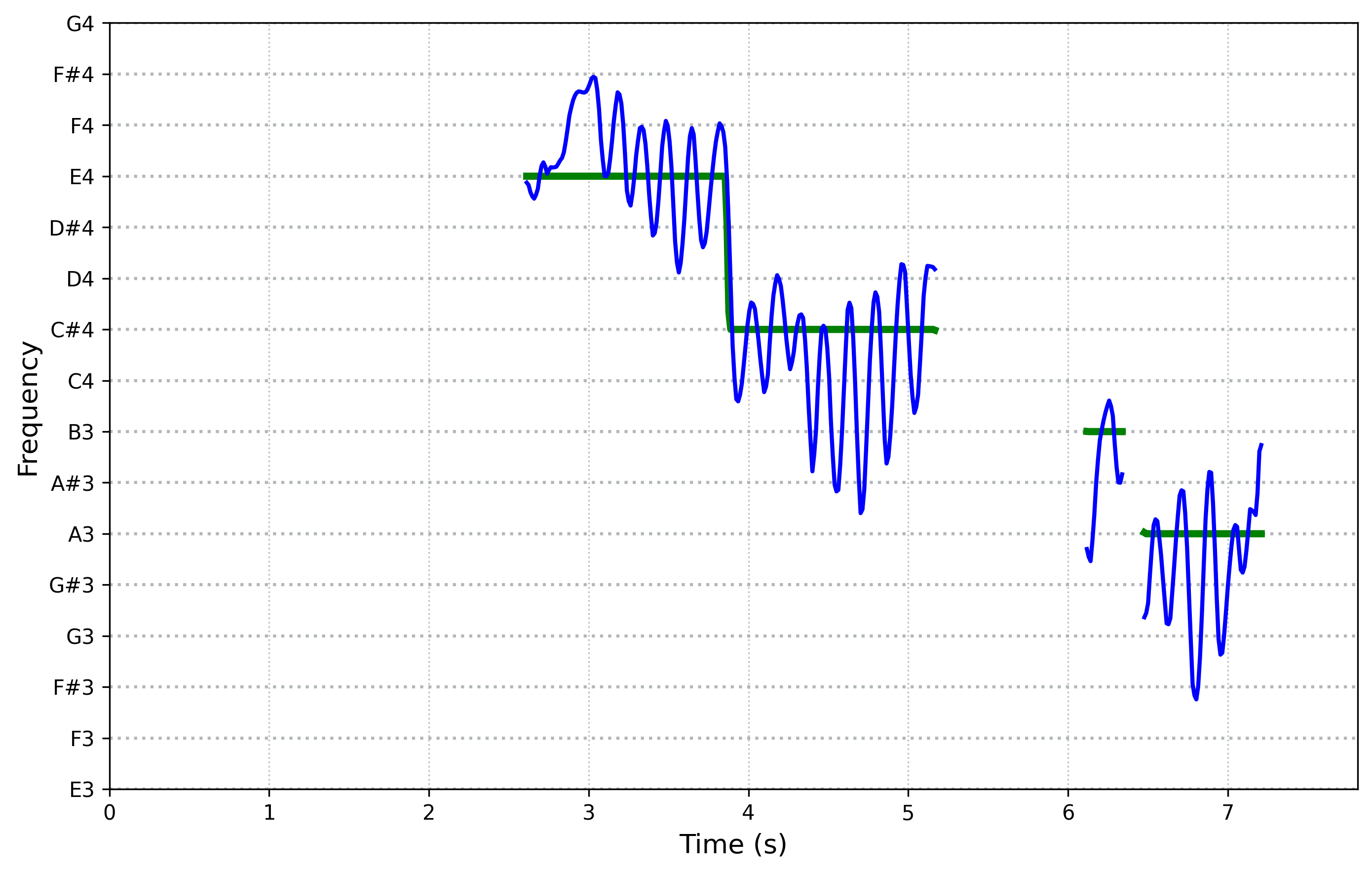
A rapid, repeated alternation between two adjacent musical pitches. Extracted from the VocalSet dataset.
|
Style Reference
|
Content
|
PitchSTAR
|
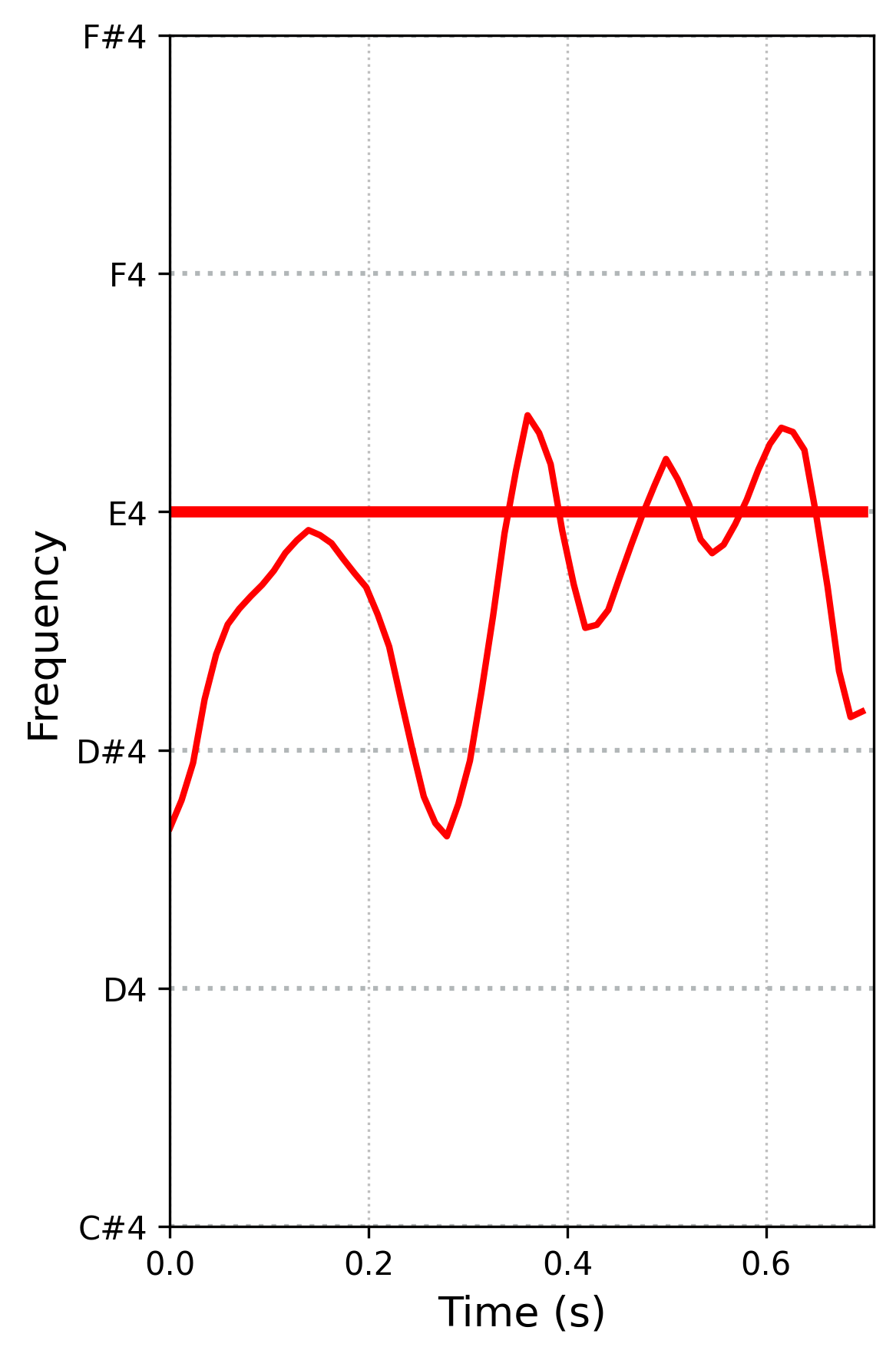
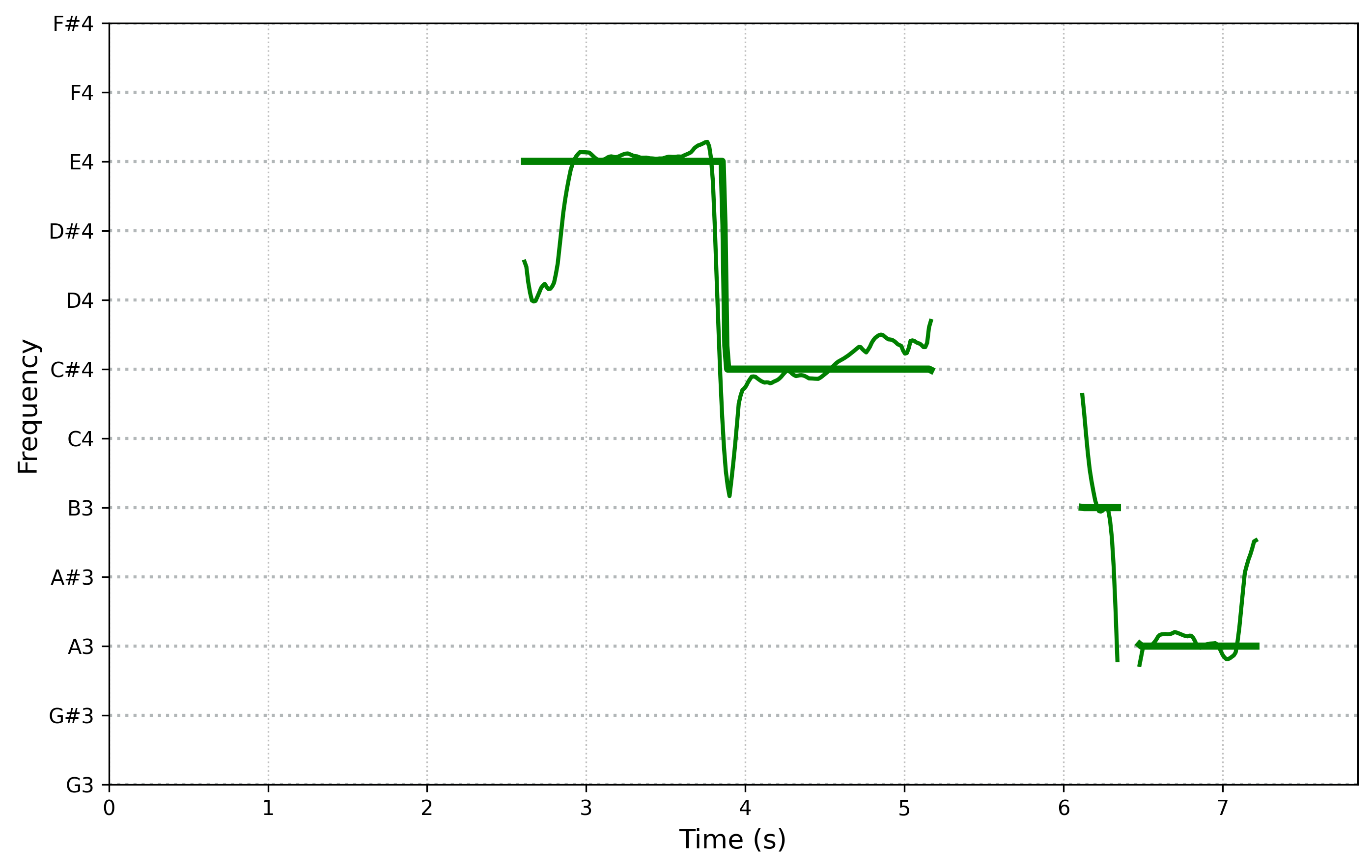
A brief downward pitch excursion to a neighboring note, immediately returning to the original pitch. Extracted from the AdoVoc Dataset.
|
Style Reference
|
Content
|
PitchSTAR
|
A fast, light ornamental sequence of several neighboring pitches. Extracted from the Raga Ornament Detection Dataset.
|
Style Reference
|
Content
|
PitchSTAR
|
Rapid repetition of the same pitch through rhythmic interruptions of vocal phonation. Extracted from the VocalSet Dataset
|
Style Reference
|
Content
|
PitchSTAR
|
Placement Analysis
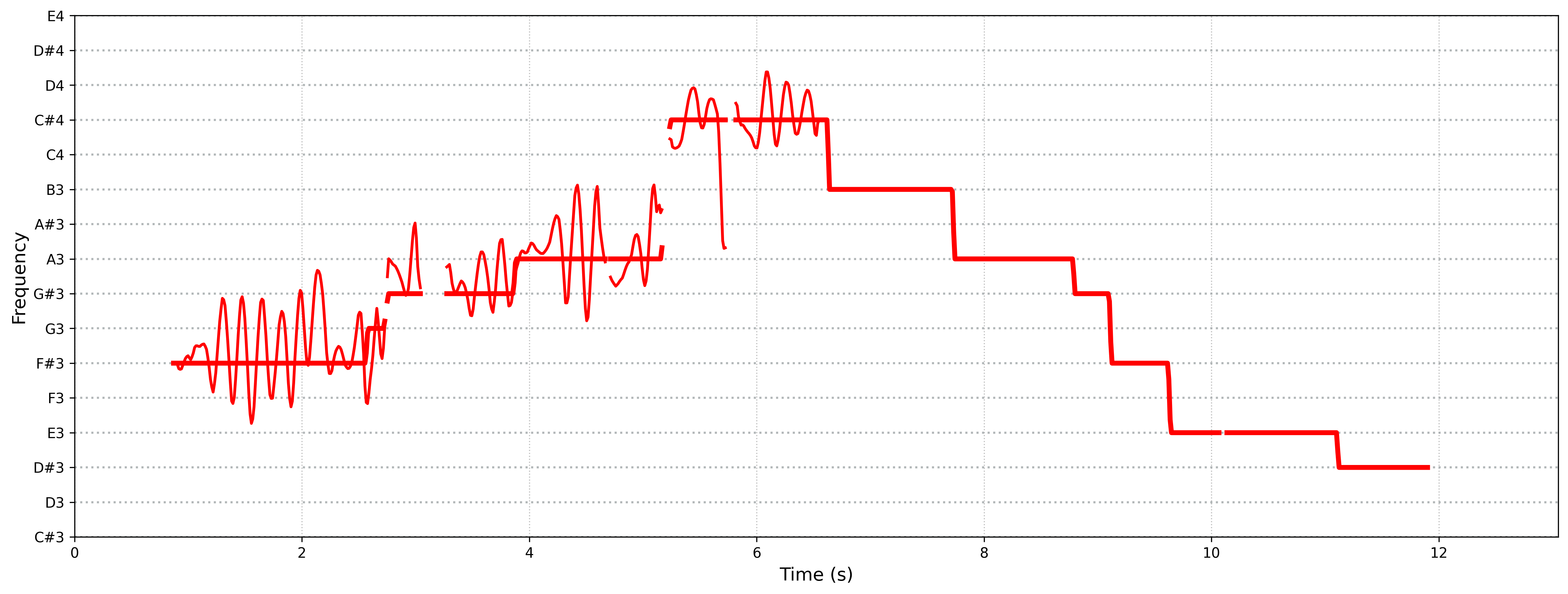
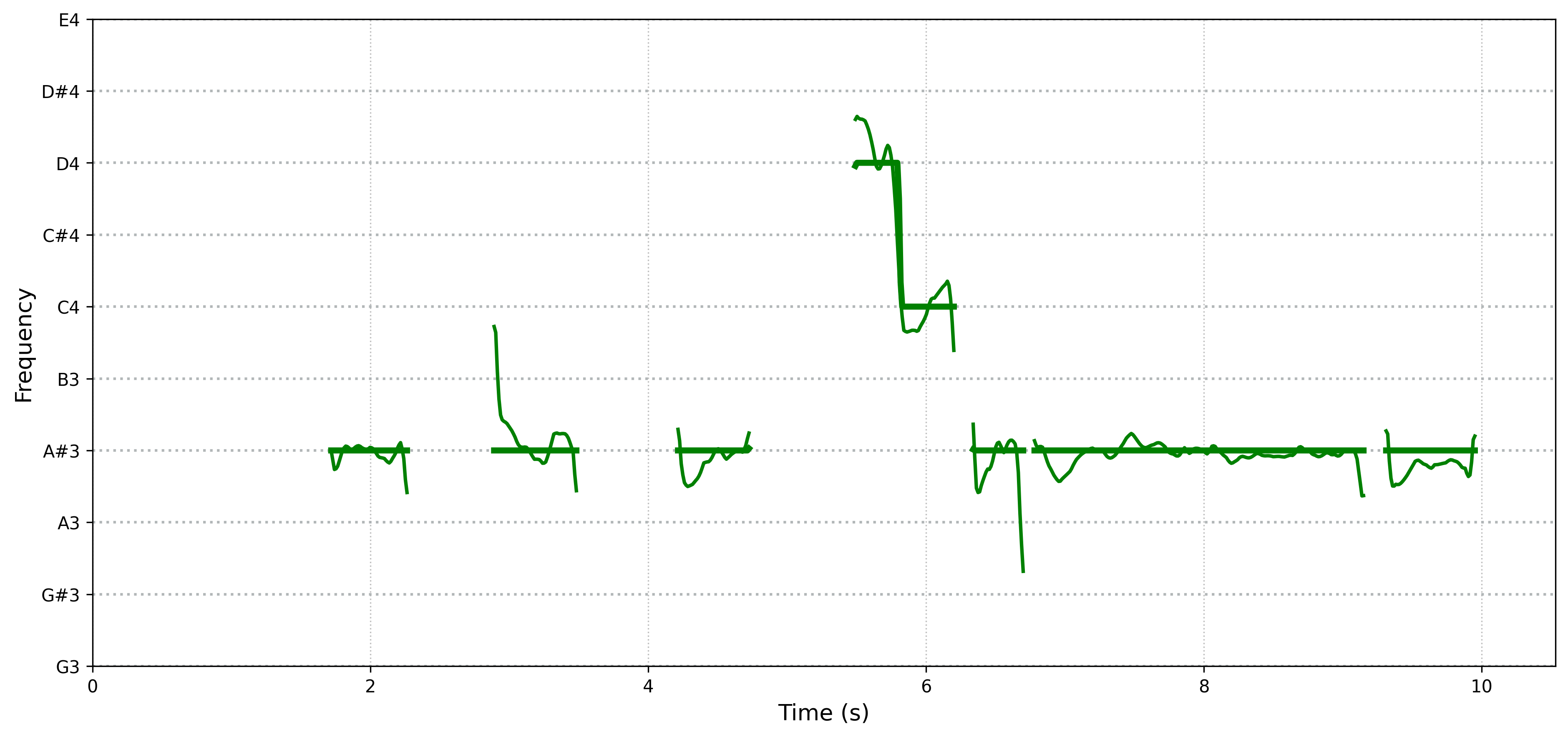
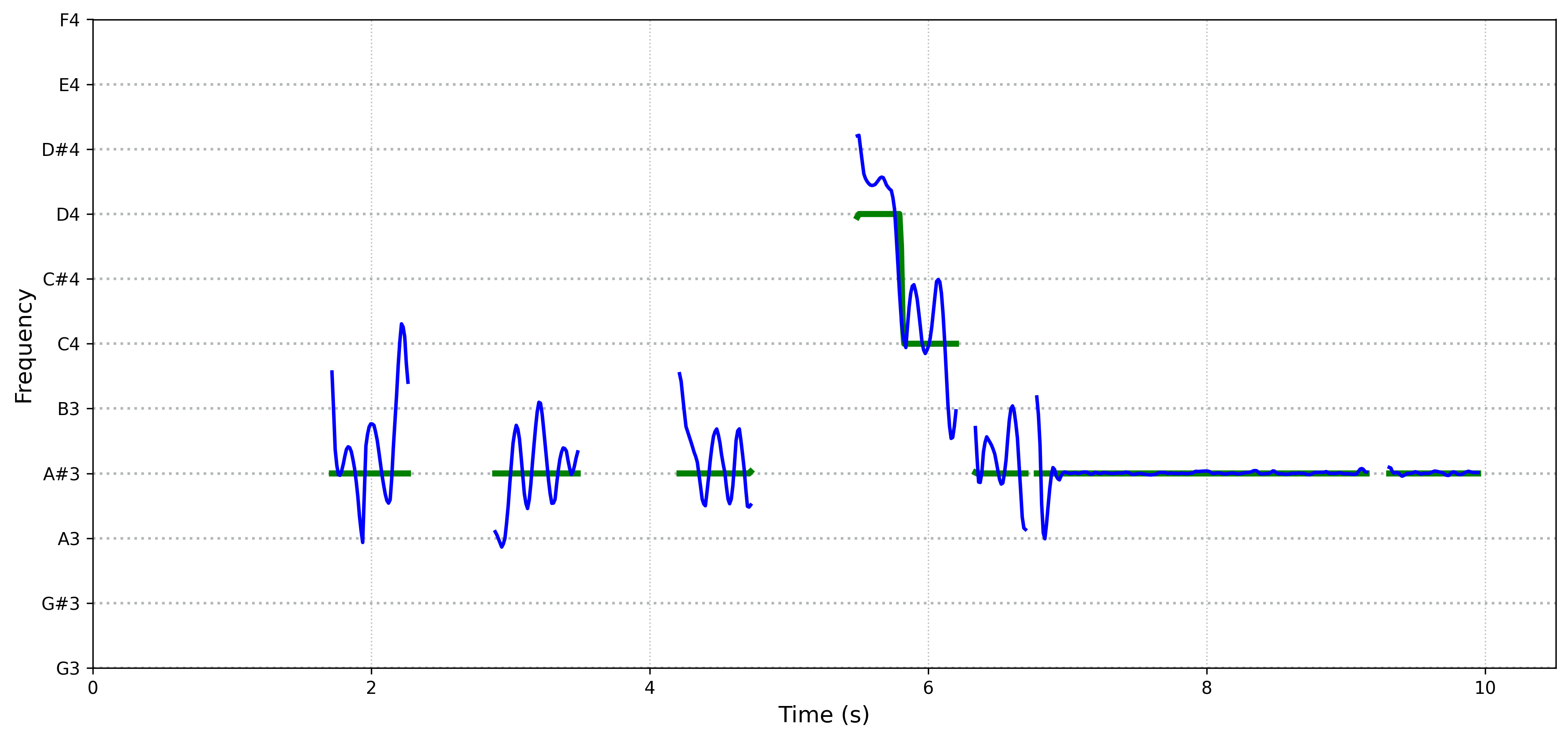
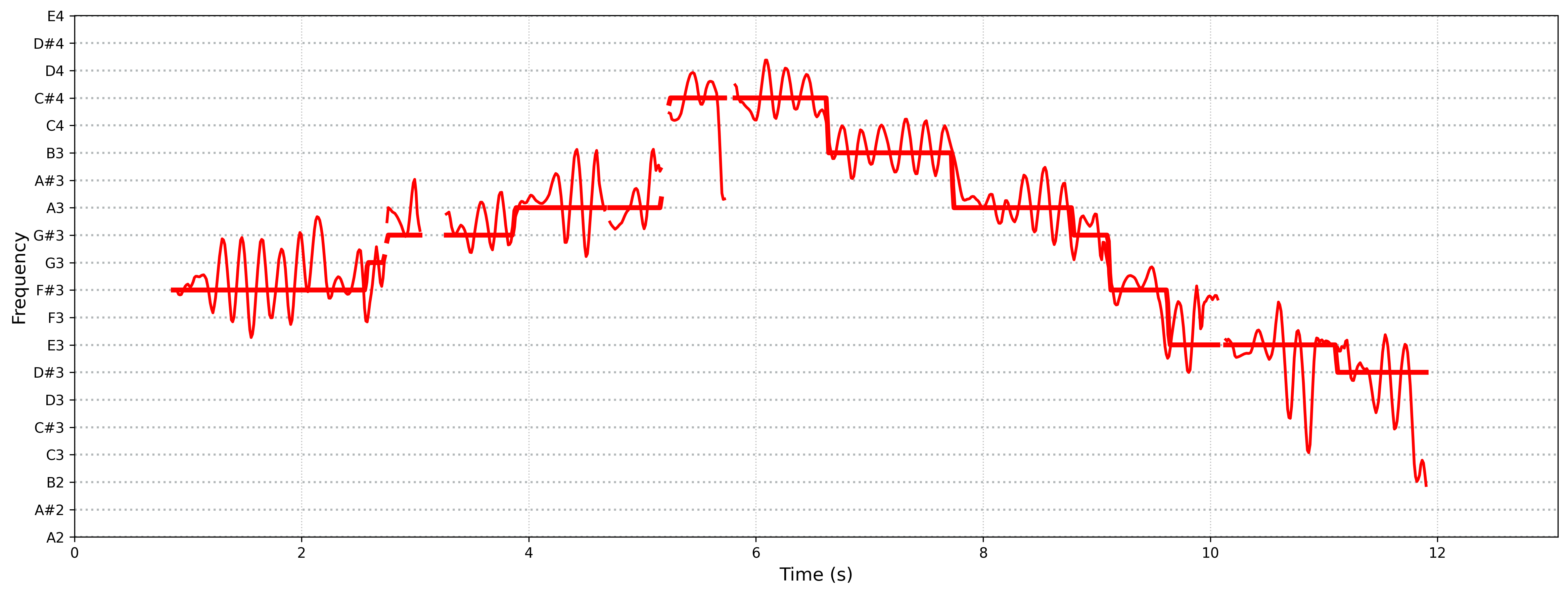
We artificially manipulate a reference to demonstrate that the model respects ornament placing.
|
Style Reference
|
Content
|
PitchSTAR
|
|
Style Reference
|
Content
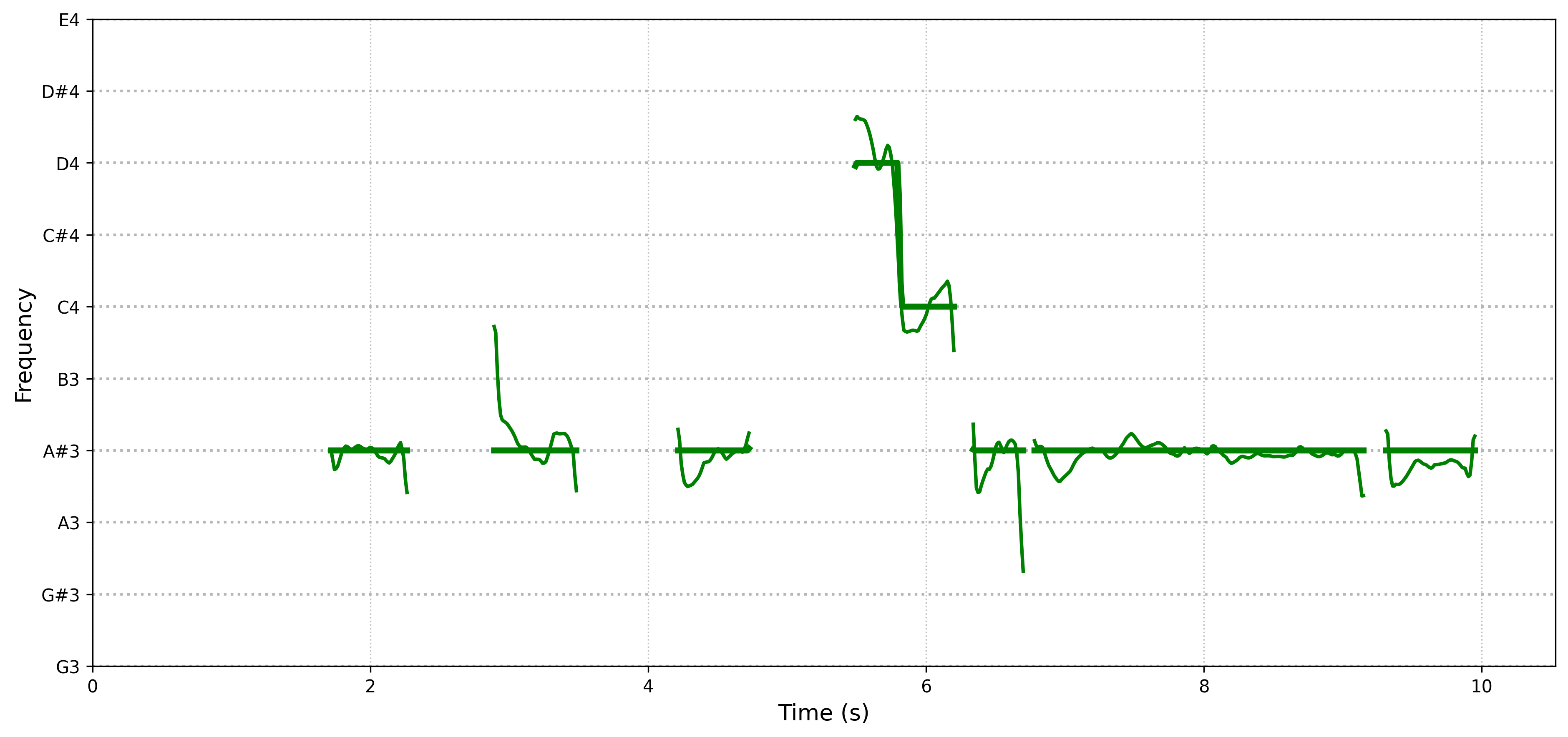
|
PitchSTAR
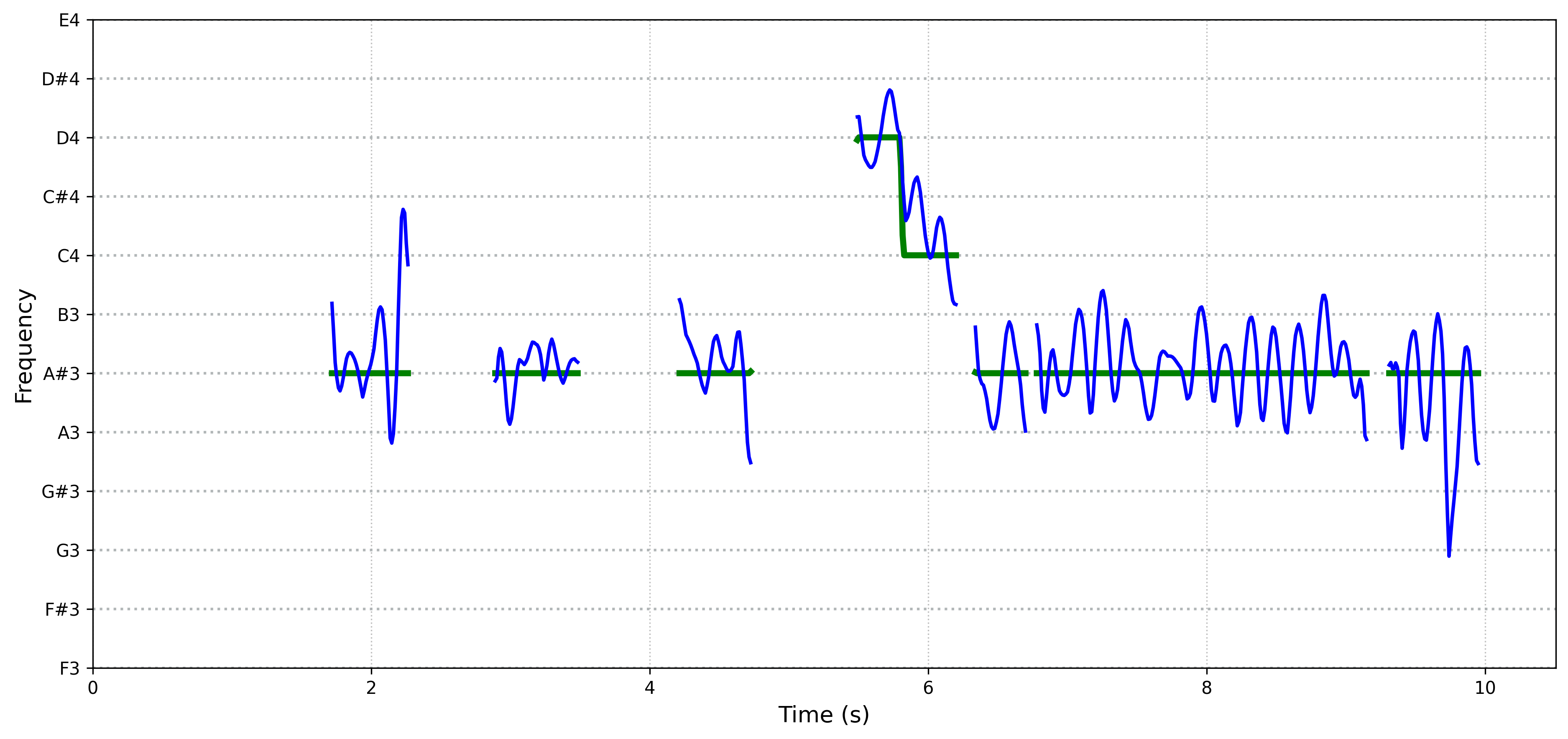
|
|
Style Reference
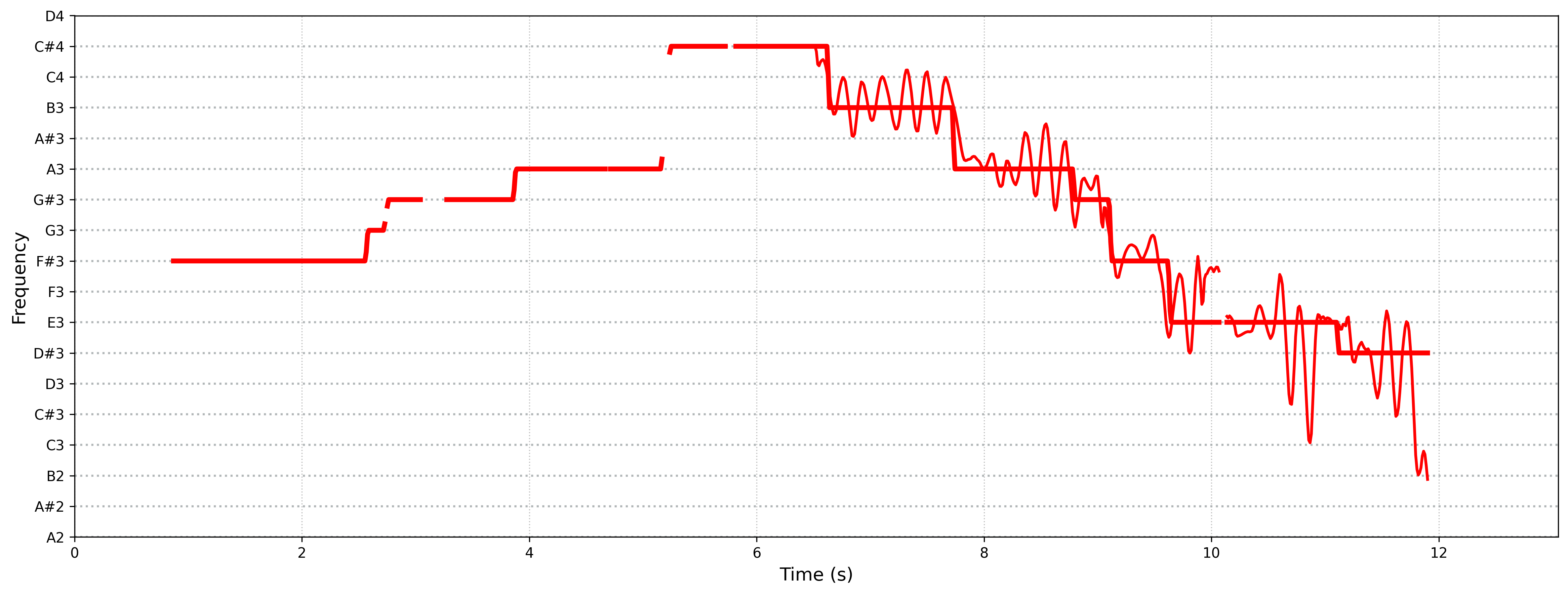
|
Content
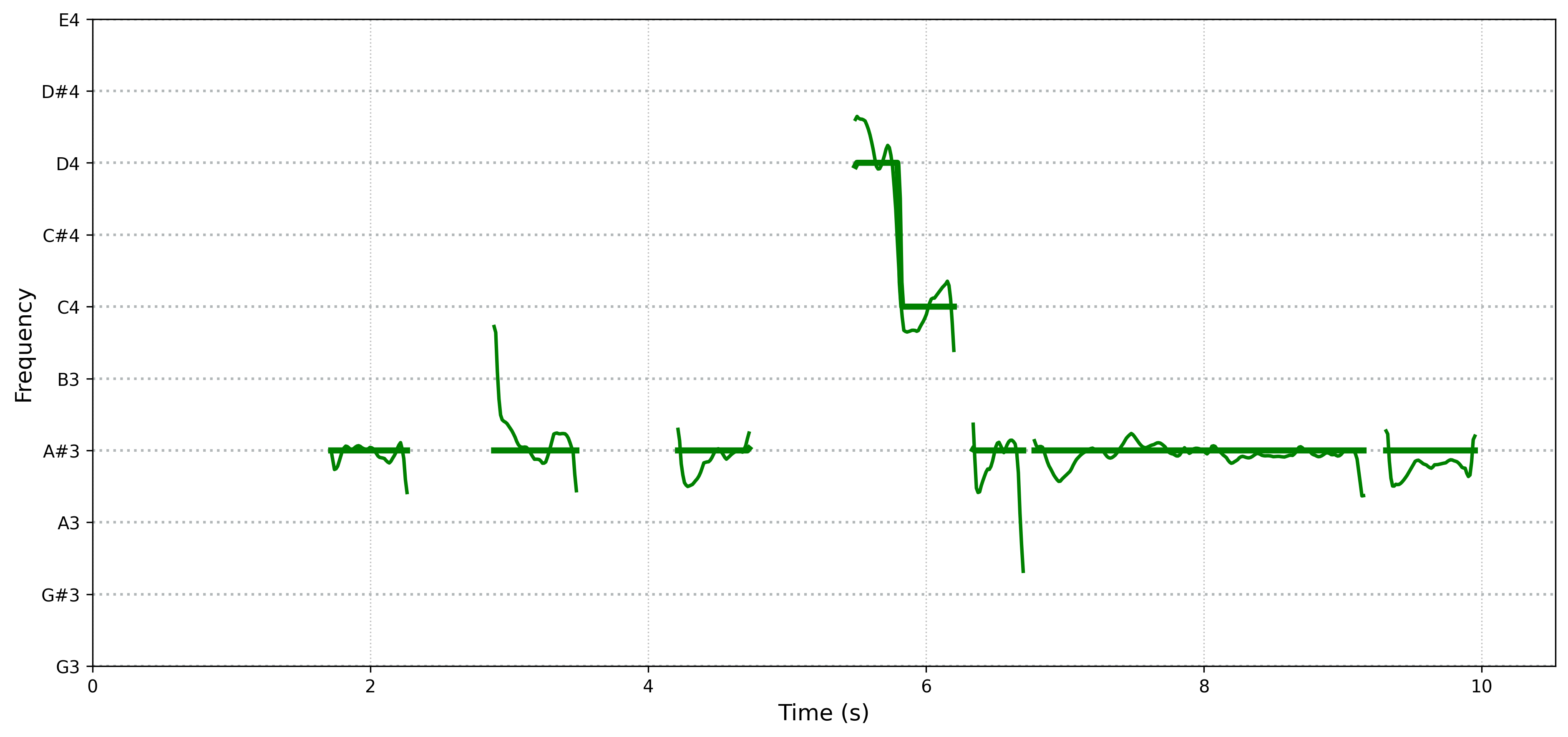
|
PitchSTAR
|
CFG Effect
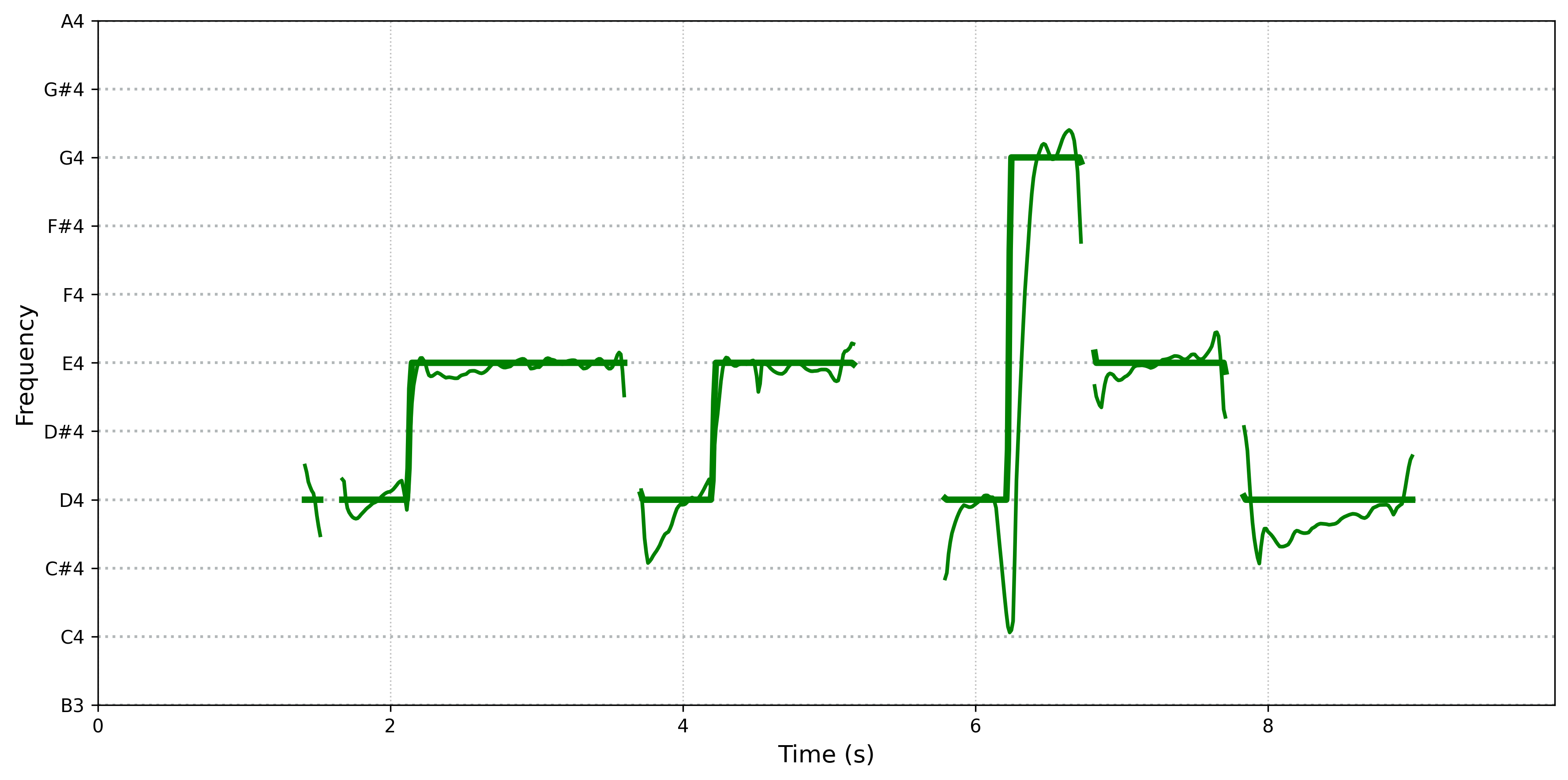
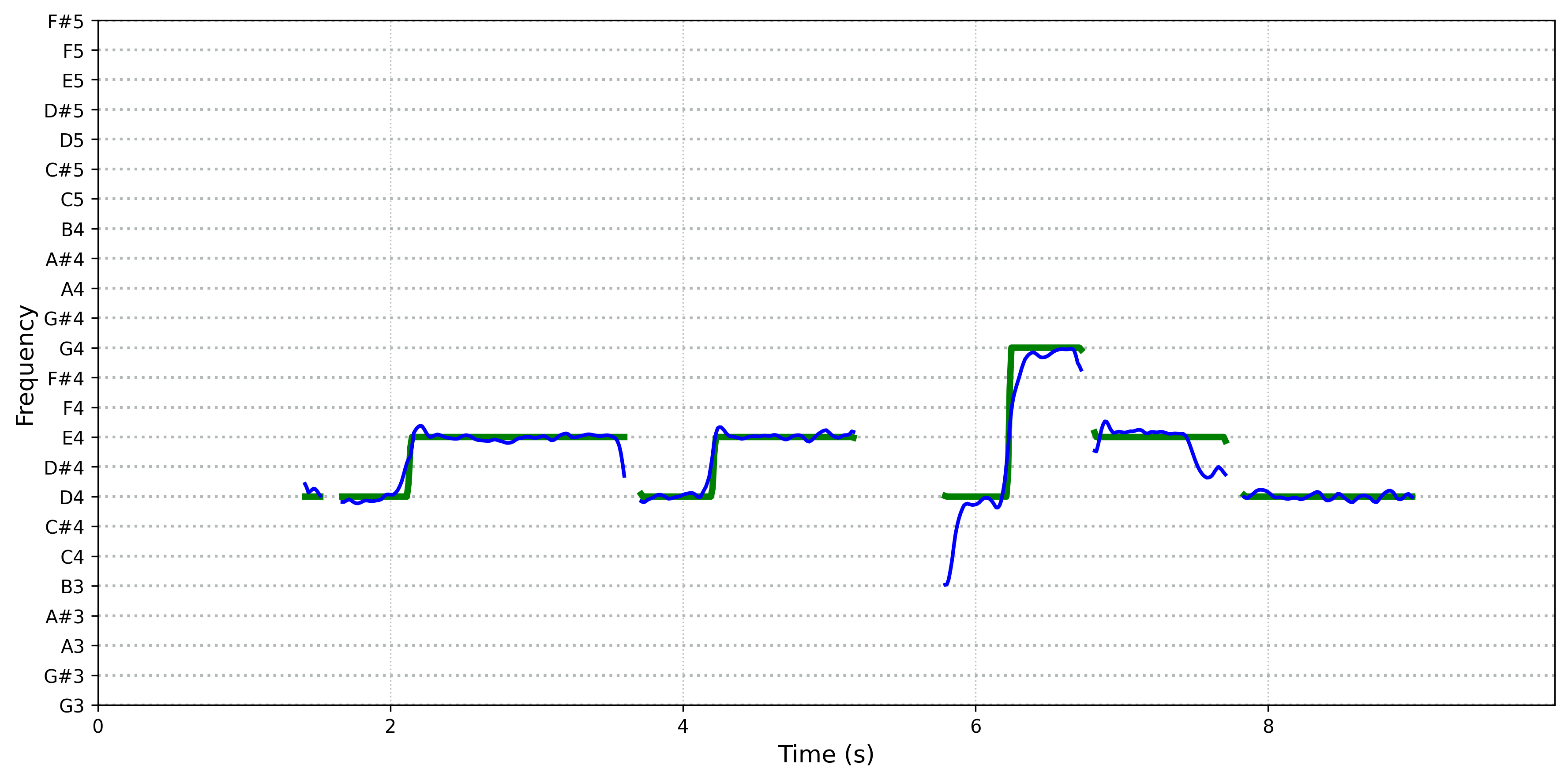
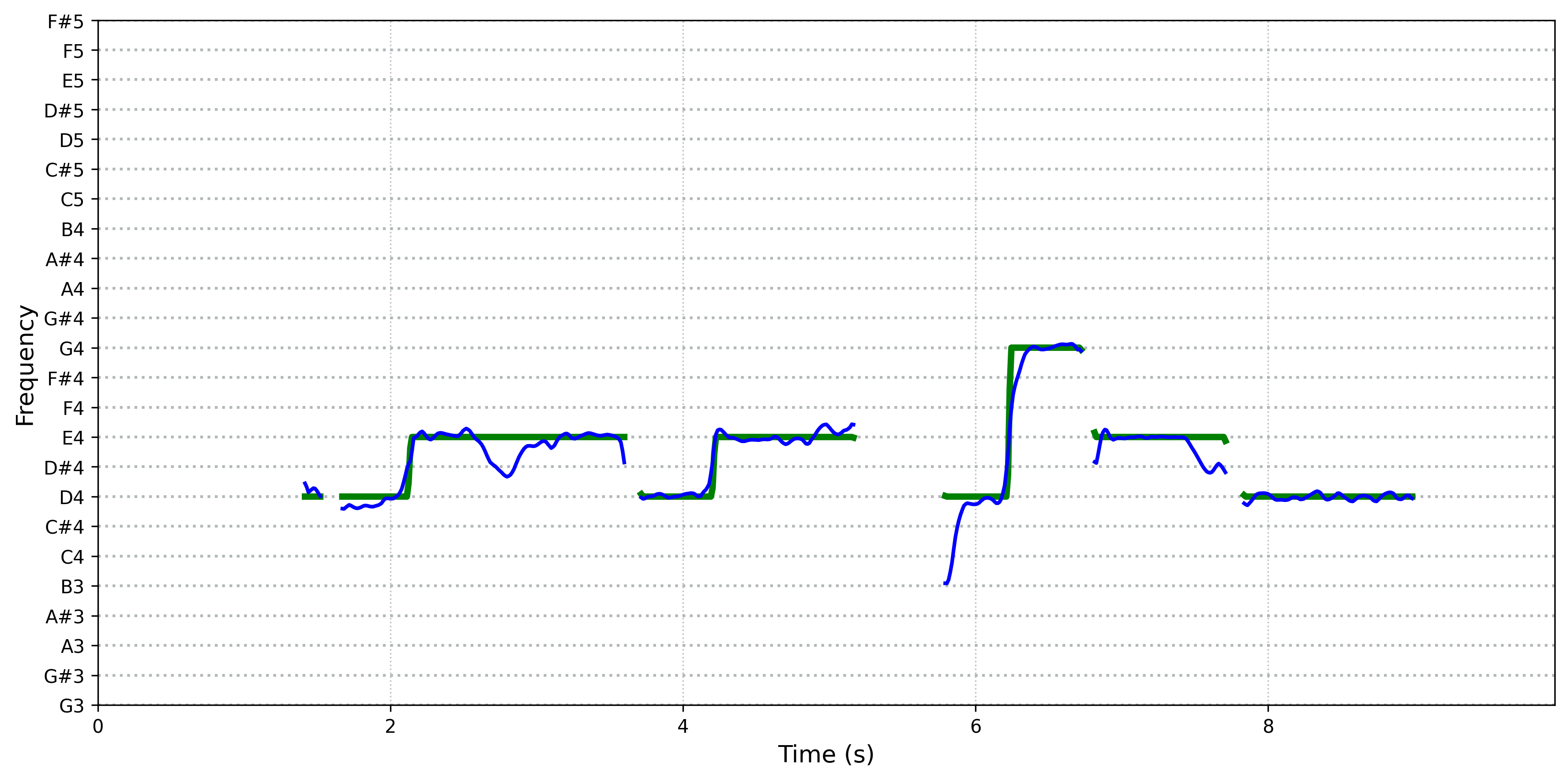
In this section we show the effect of the CFG scale, which balances guidance by style and unguided generation. We use an in-domain setting.
|
Style Reference
Content
|
||||
|
CFG=0.0
|
CFG=0.25
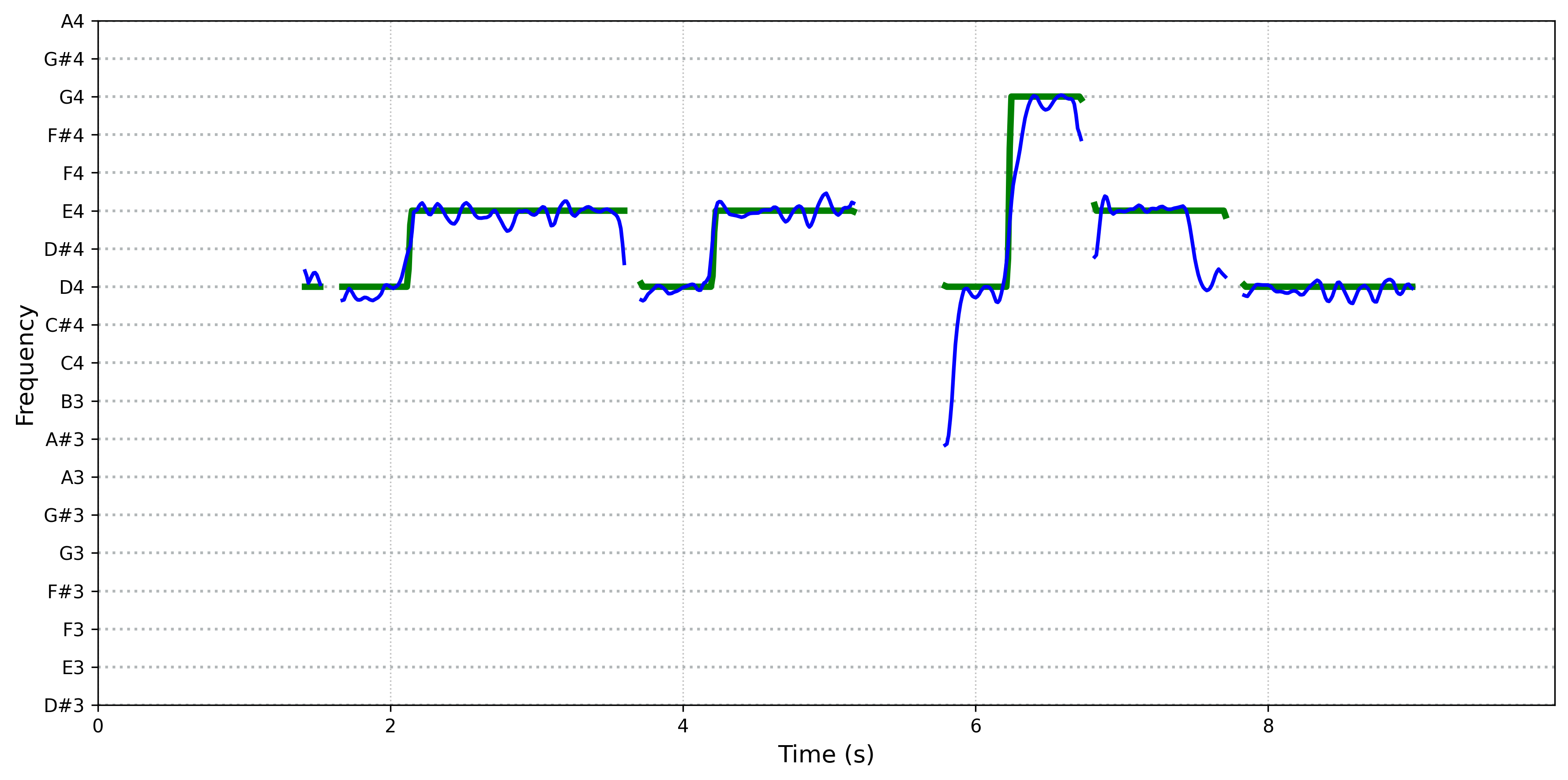
|
CFG=0.50
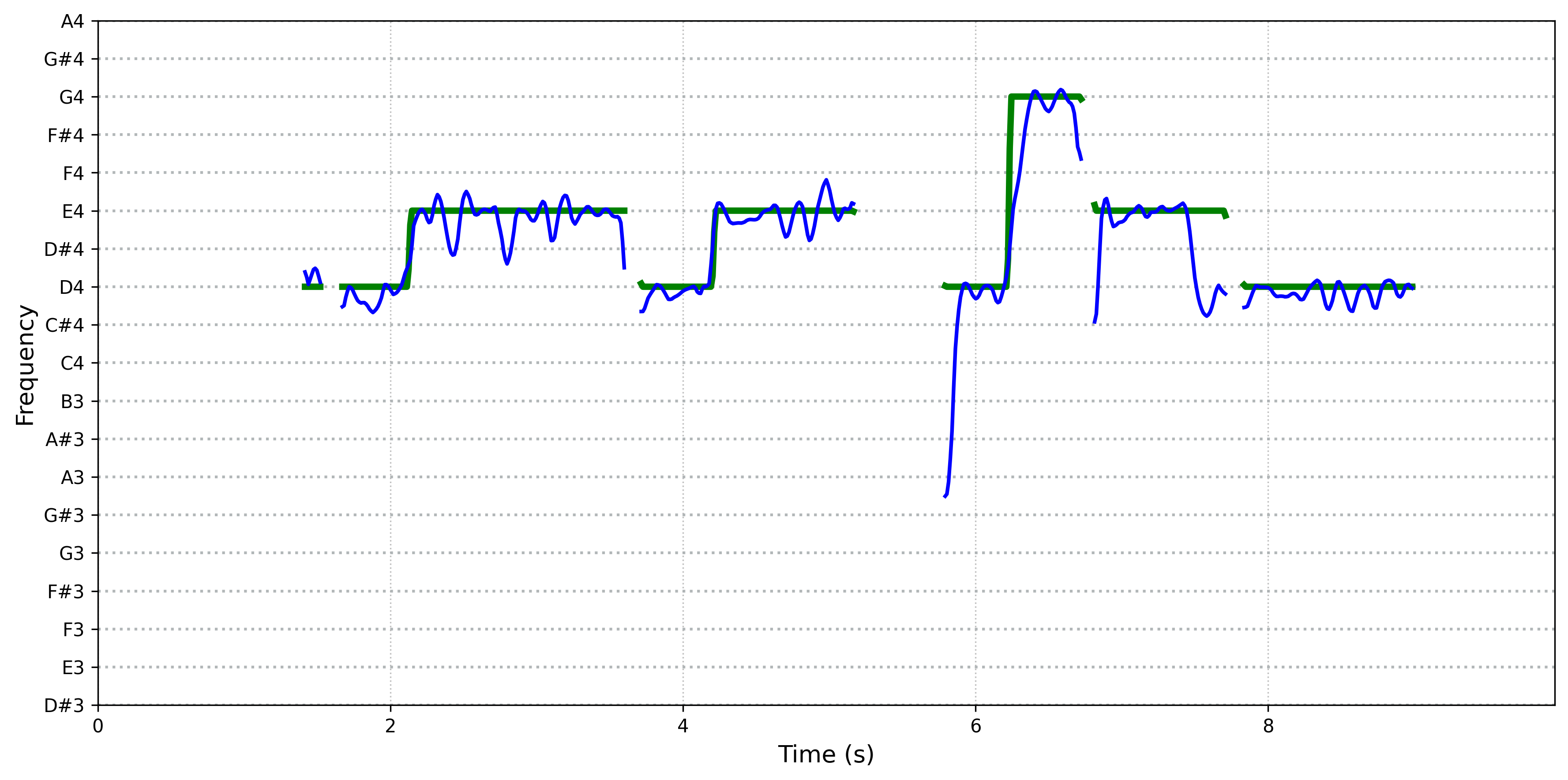
|
CFG=1.00
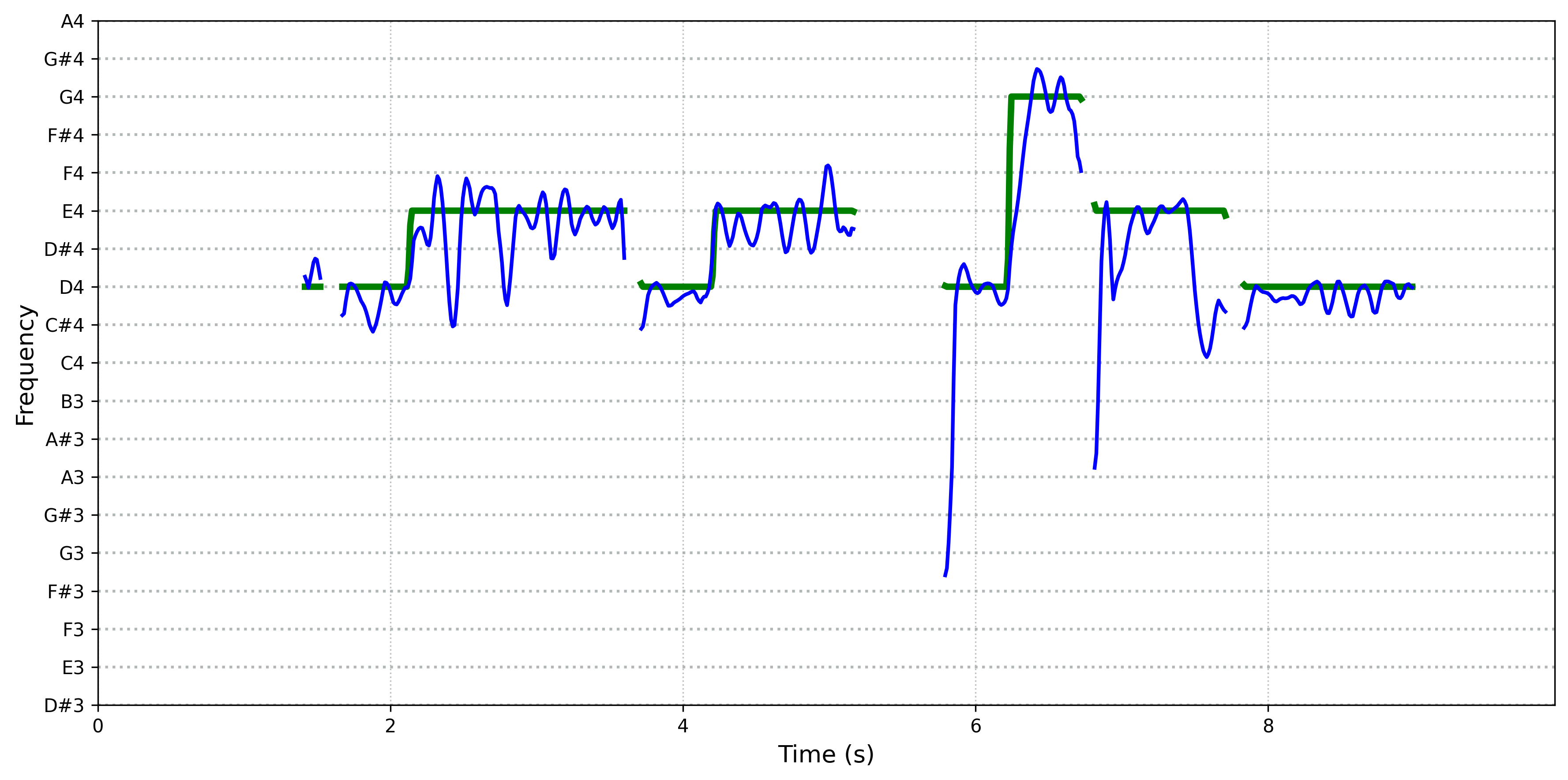
|
CFG=1.50
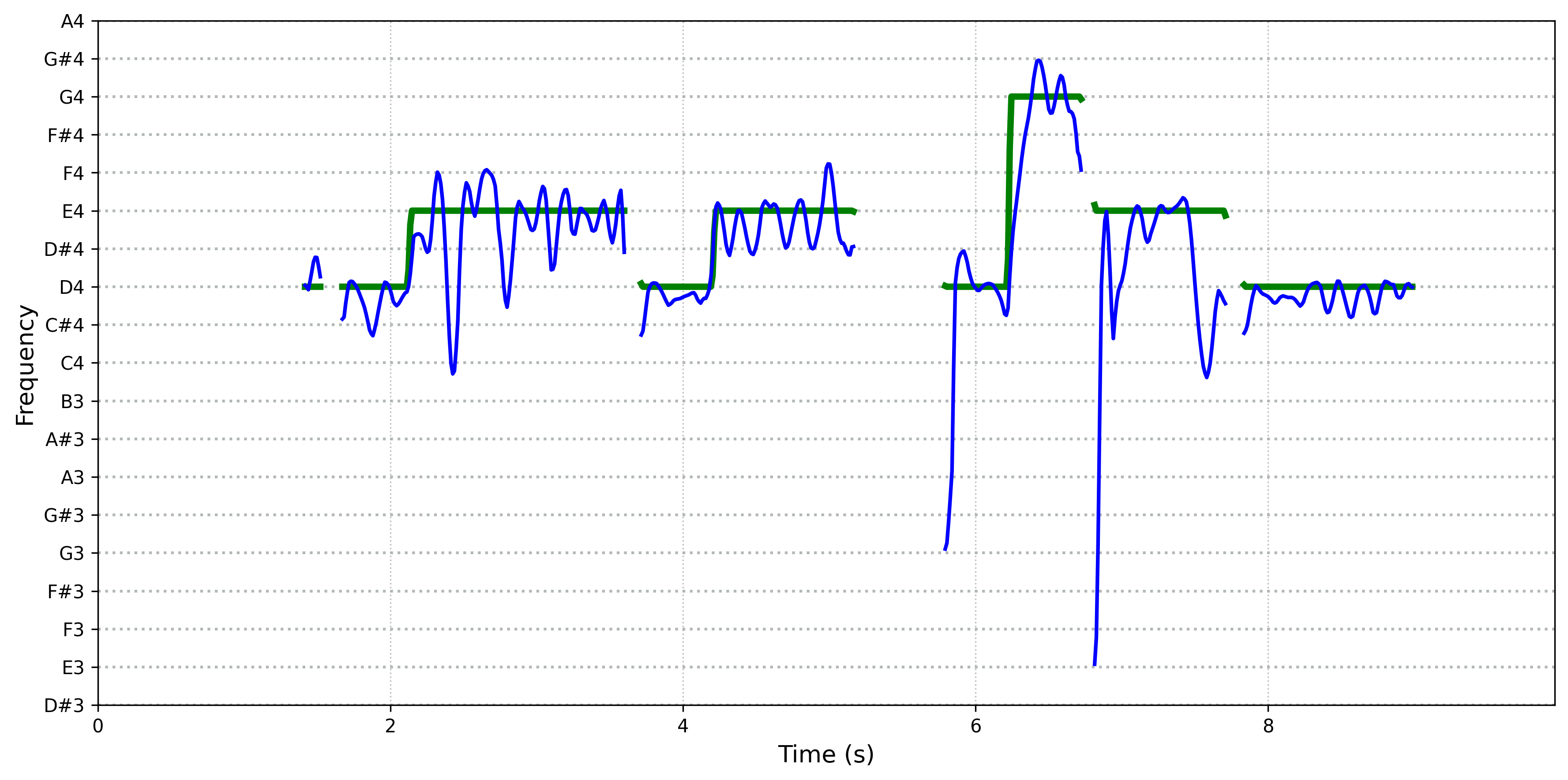
|
|
Style Reference
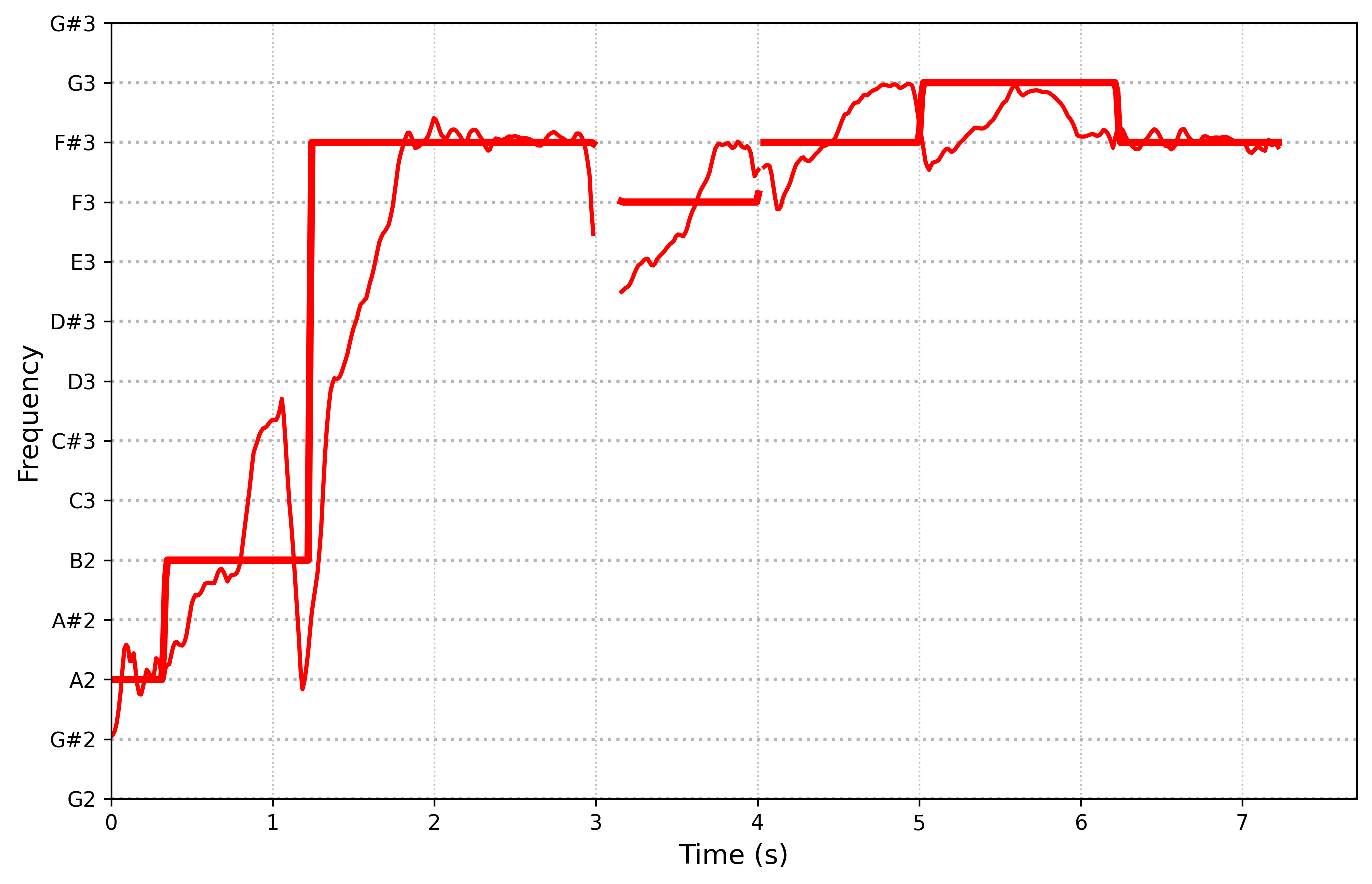
Content
|
||||
|
CFG=0.0
|
CFG=0.25
|
CFG=0.50
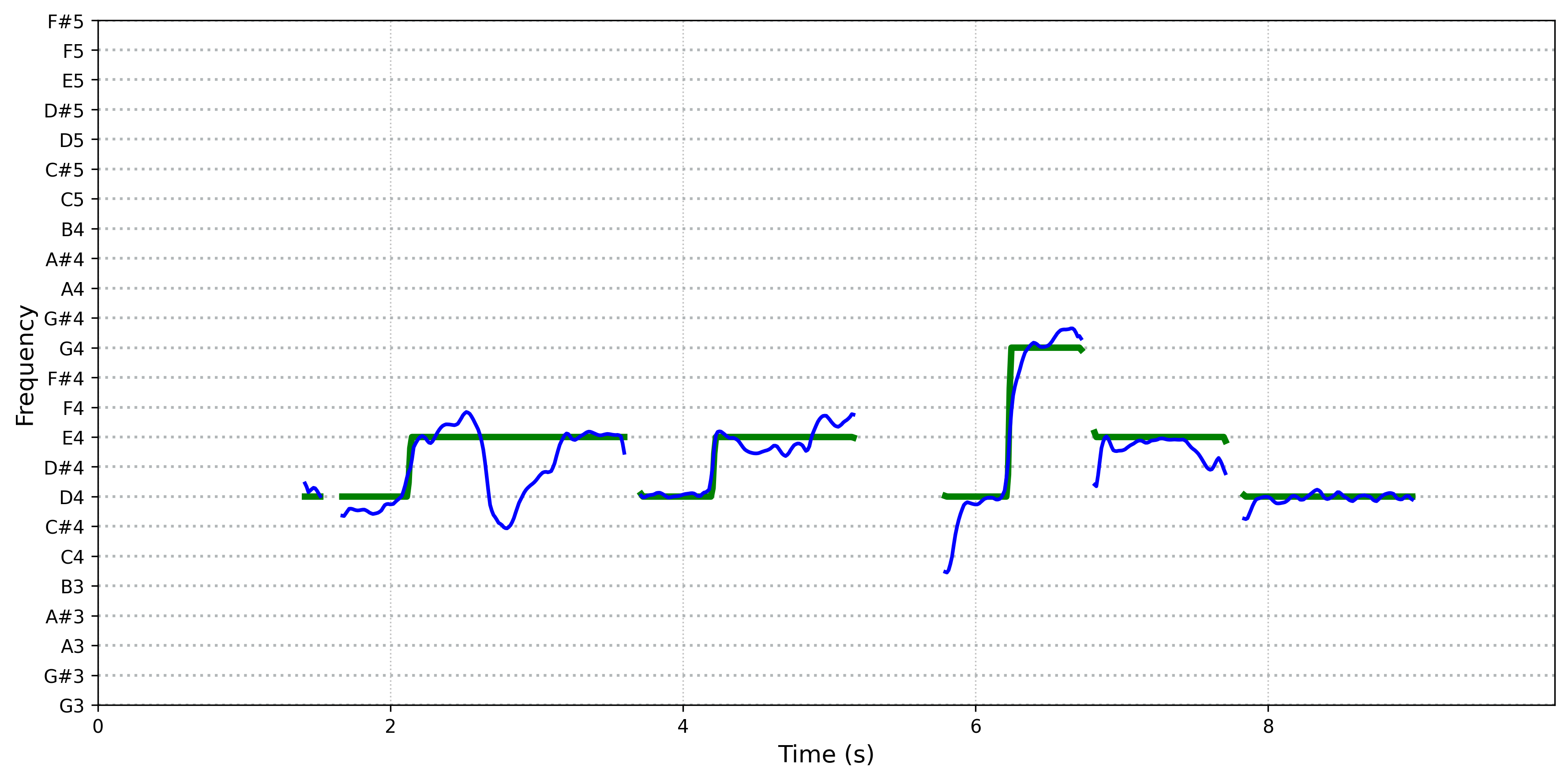
|
CFG=1.00
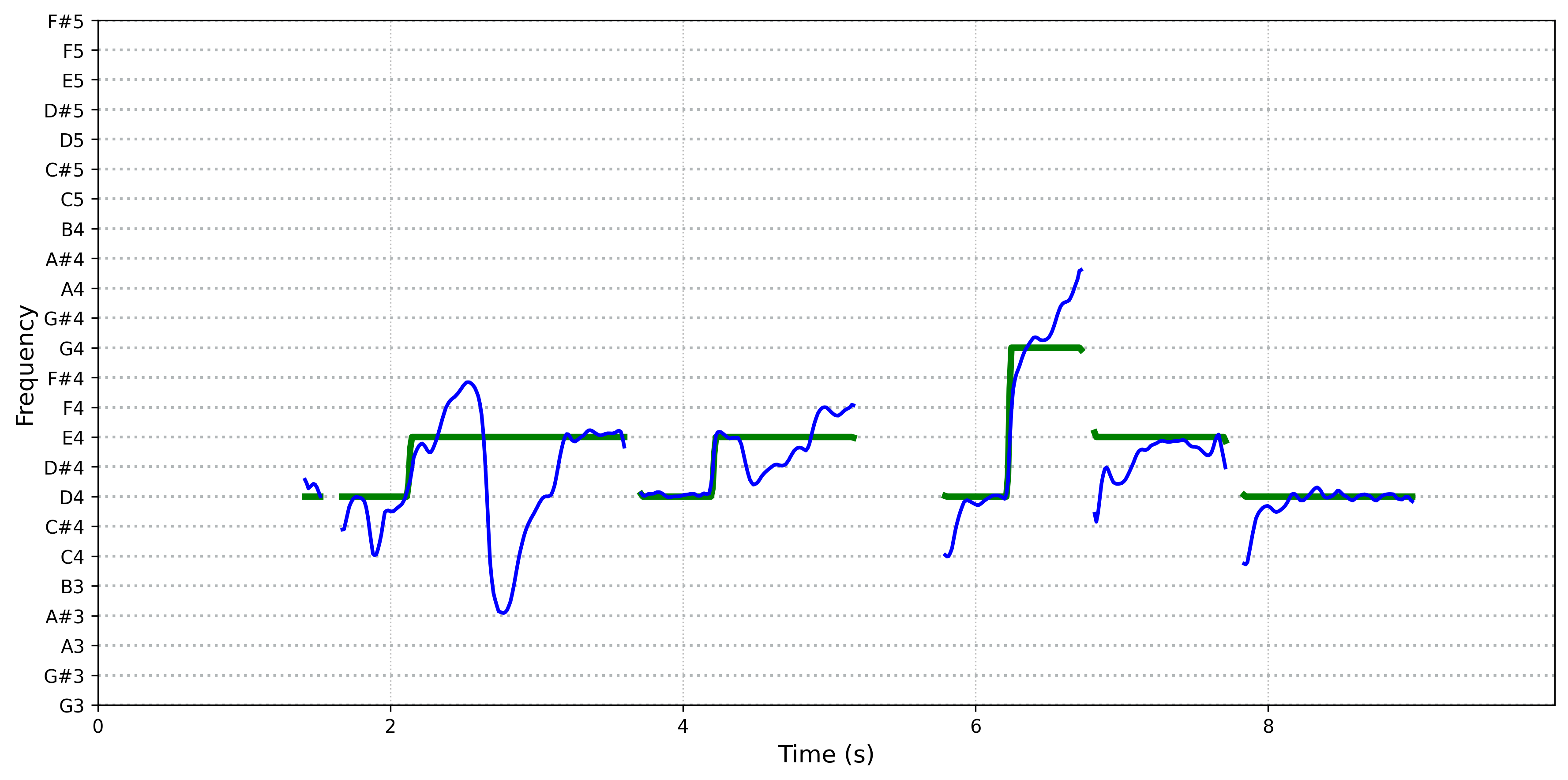
|
CFG=1.50
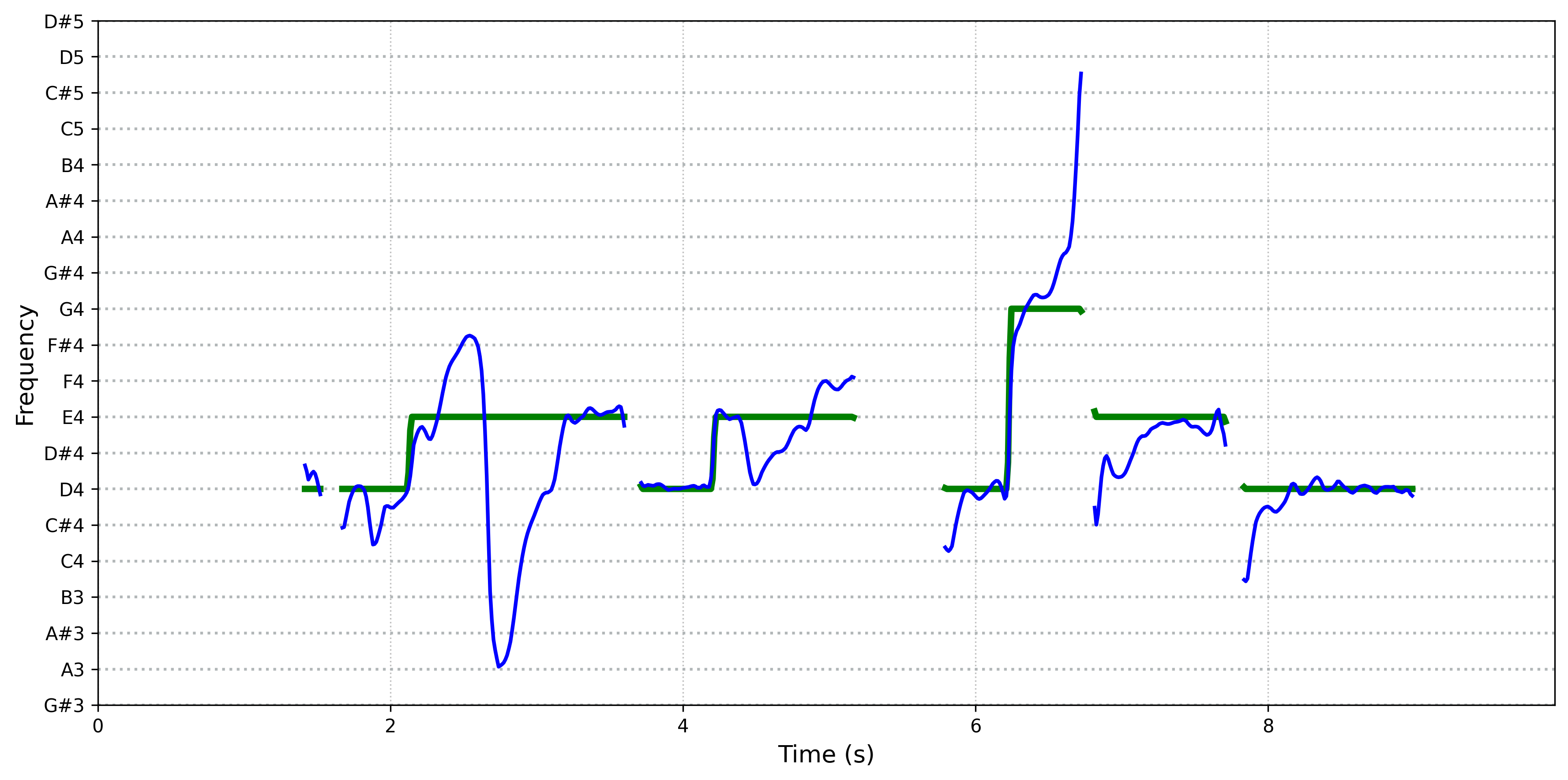
|
Style Classifier Consistency
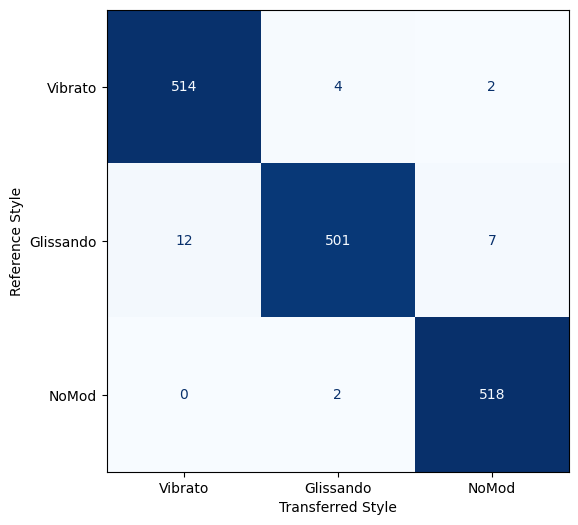
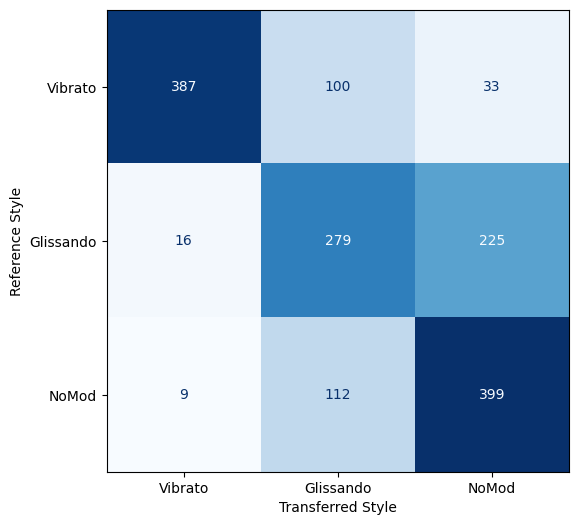
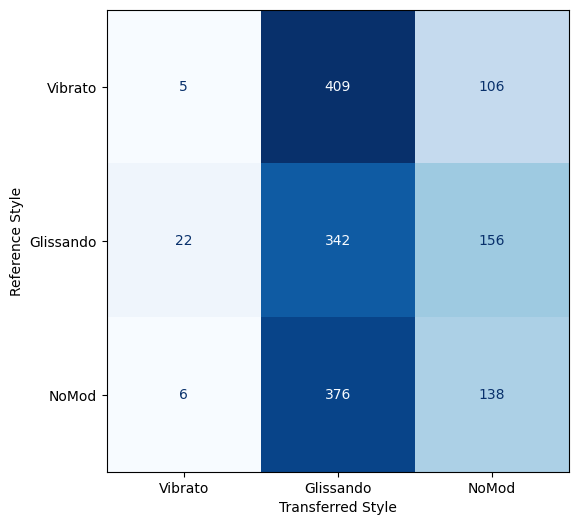
These are the confusion matrices obtained applying the trained Pitch Style Classifier on the transfers of each of the models.
Synthetic Dataset Samples
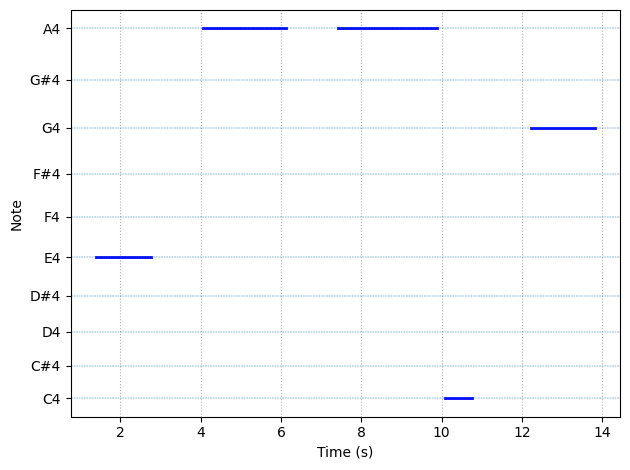
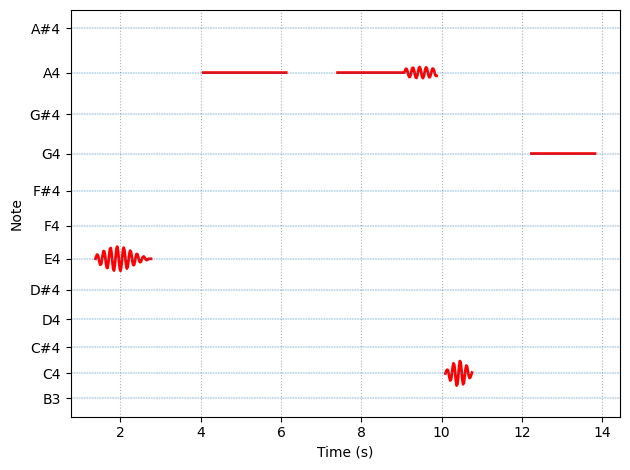
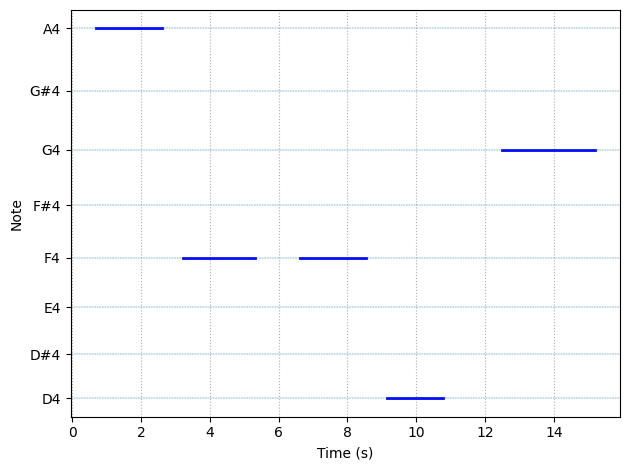
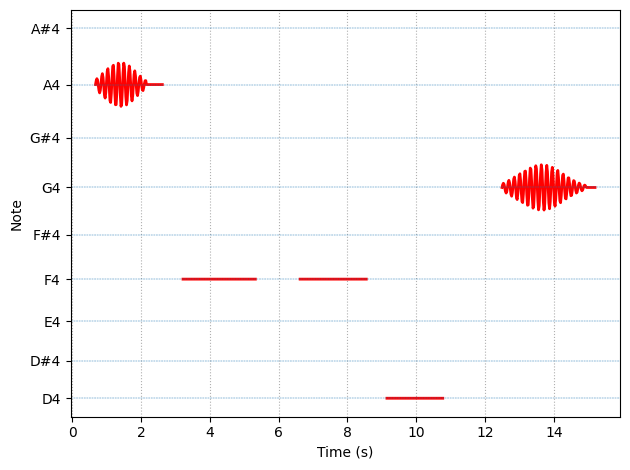
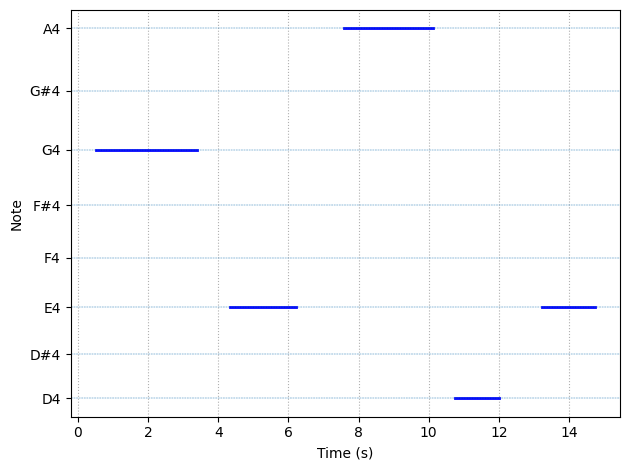
Four examples of the synthetic ornament dataset are shown. Two with ornament and two without ornament.
With Ornament 1
With Ornament 2
Without Ornament 1
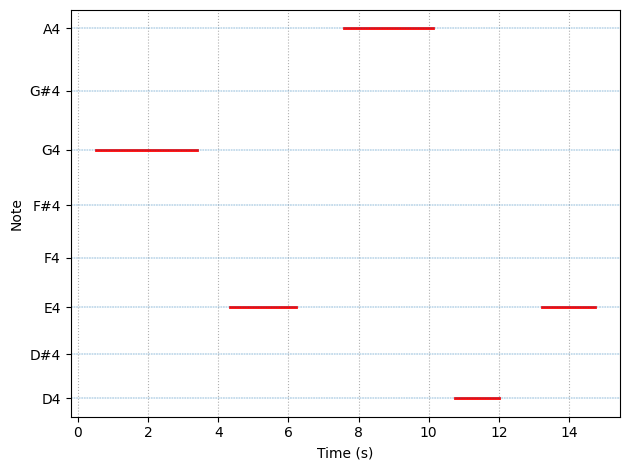
Without Ornament 2